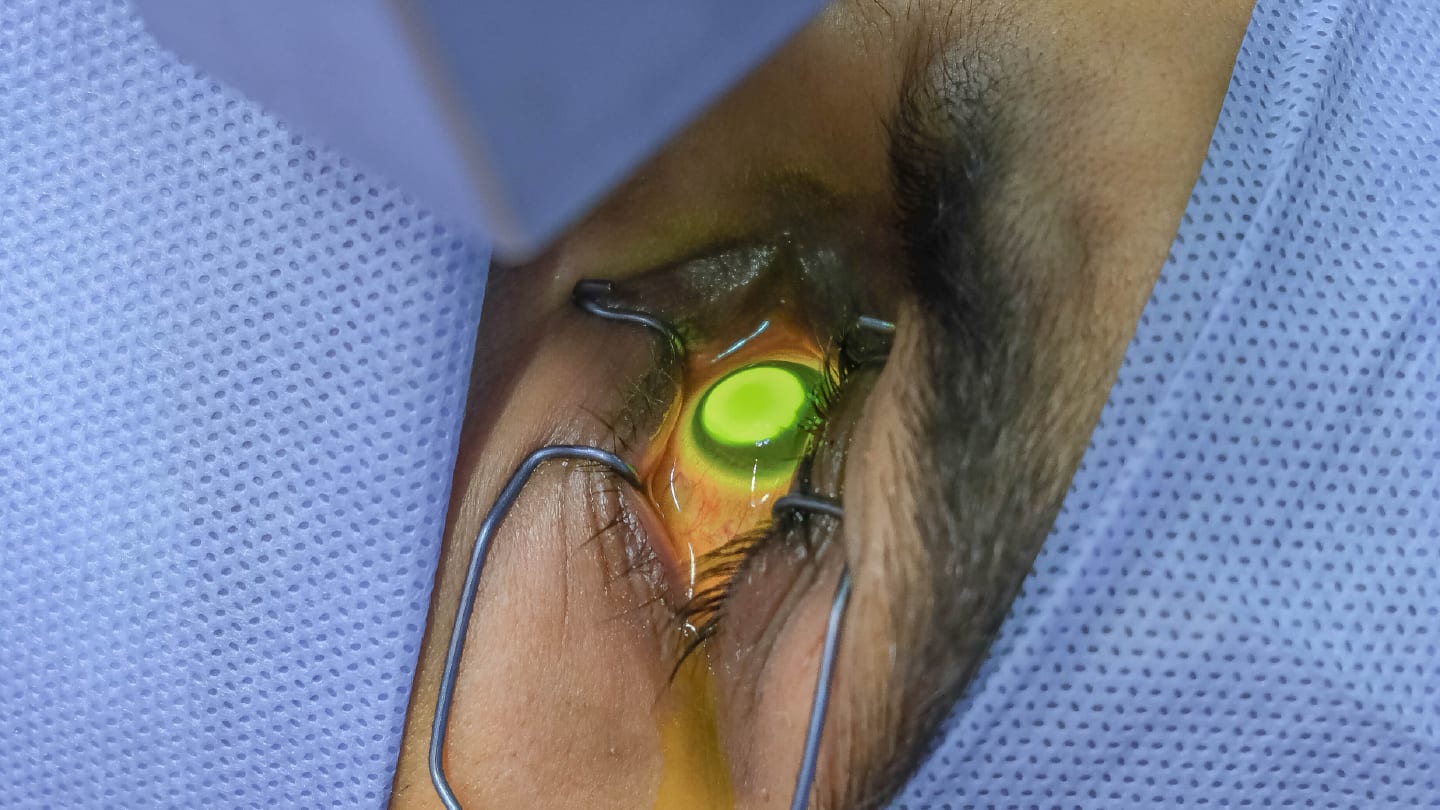
To examine how personalized corneal cross-linking (CXL) is transforming clinical practice for corneal ectatic diseases, emphasizing its significance in improving patient outcomes.
Approach:
Key Findings:
Epi-on CXL protocols have been developed to minimize risks while maintaining epithelial integrity, showing promise in clinical outcomes.
Corneal optimization before cataract surgery can enhance IOL calculation accuracy, leading to better refractive outcomes.
Customized CXL combined with excimer laser treatment can significantly improve visual outcomes in irregular corneas, demonstrating the effectiveness of personalized approaches.
Interpretation:
Personalized CXL approaches allow for tailored treatment strategies that enhance both corneal stability and visual quality across various patient scenarios, ultimately improving patient outcomes.
Limitations:
Epi-on CXL may still lag behind epi-off in certain biomechanical effects, and further research is needed to fully understand its long-term efficacy.
Clinical outcomes depend on careful patient selection and adherence to advanced protocols, which may pose challenges in real-world settings.
Conclusion:
Personalized CXL represents a significant advancement in treating corneal ectatic diseases, offering improved safety and visual outcomes, and highlighting its transformative potential in clinical practice.