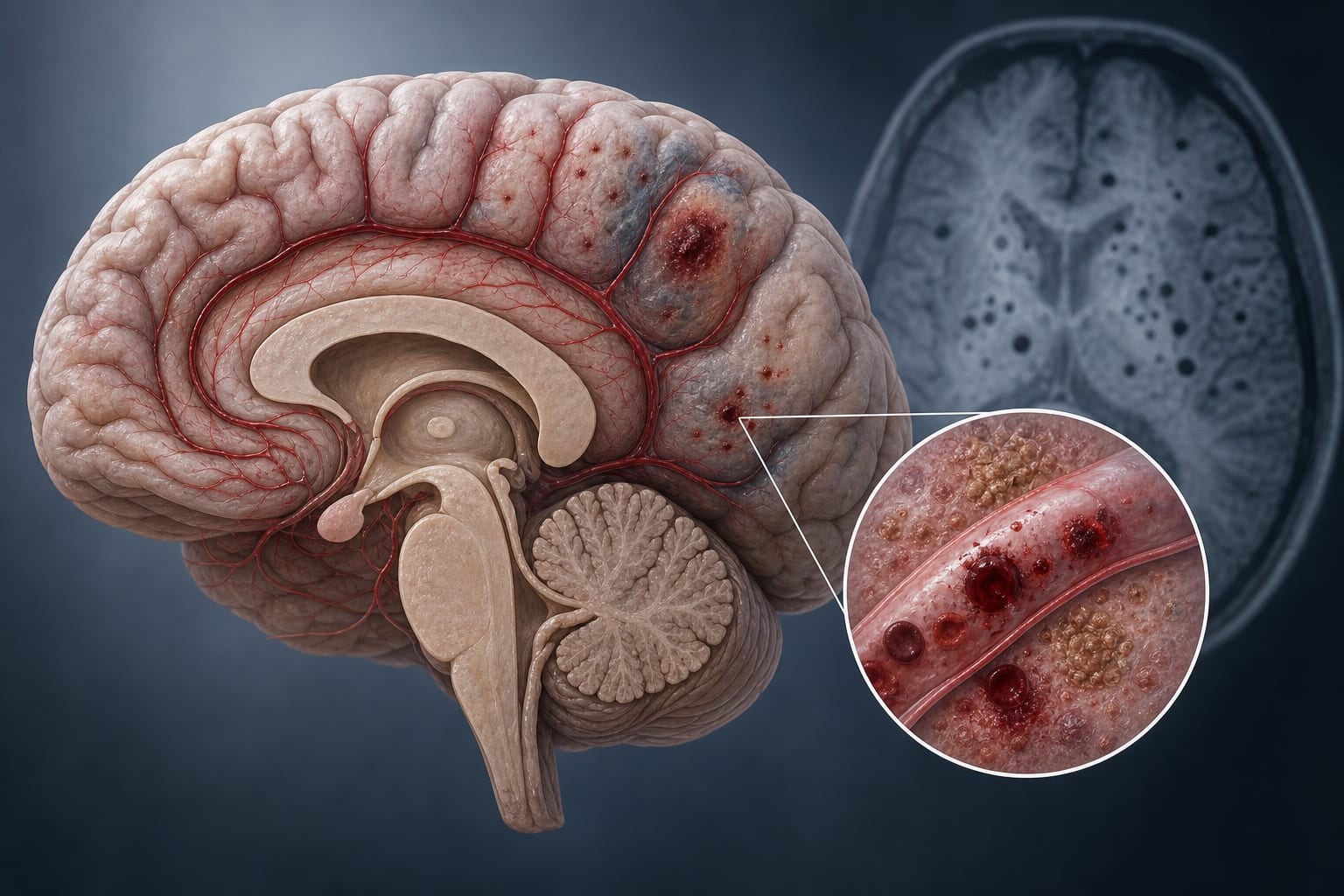
To discuss the safety concerns of concomitant antiplatelet treatment in patients with Alzheimer's disease receiving amyloid-targeting therapies (ATTs), particularly focusing on the potential risk of amyloid-related imaging abnormalities (ARIAs) and their clinical implications.
Key Findings:
Approximately 2.2 million in the US and ~5.9 million in the EU may be eligible for ATT, with a significant proportion at risk for ARIA.
APOE ε4 carriers have a higher risk of ARIA, which can be exacerbated by certain comorbidities and medications, necessitating careful patient assessment.
Concomitant use of antiplatelet agents, especially dual antiplatelet therapy (DAPT), may increase the risk of ARIA-H in patients on ATTs, highlighting the need for caution.
SSRIs and NSAIDs are commonly prescribed in older adults and may pose additional bleeding risks, warranting further investigation.
Interpretation:
The intersection of amyloid-targeting therapies and antiplatelet use presents a complex clinical dilemma, necessitating careful consideration of patient selection and medication interactions to mitigate risks.
Limitations:
Lack of real-world data on the safety of ATTs in patients with concurrent antiplatelet therapy limits the ability to generalize findings to broader populations.
Exclusion of certain patient populations from RCTs, such as those with comorbidities or concurrent medications, limits the generalizability of findings and raises concerns about safety in diverse clinical settings.
Conclusion:
Further research is needed to clarify the safety of antiplatelet use in patients receiving amyloid-targeting therapies, particularly regarding the risk of ARIA and intracranial hemorrhage, to inform clinical practice and improve patient outcomes.