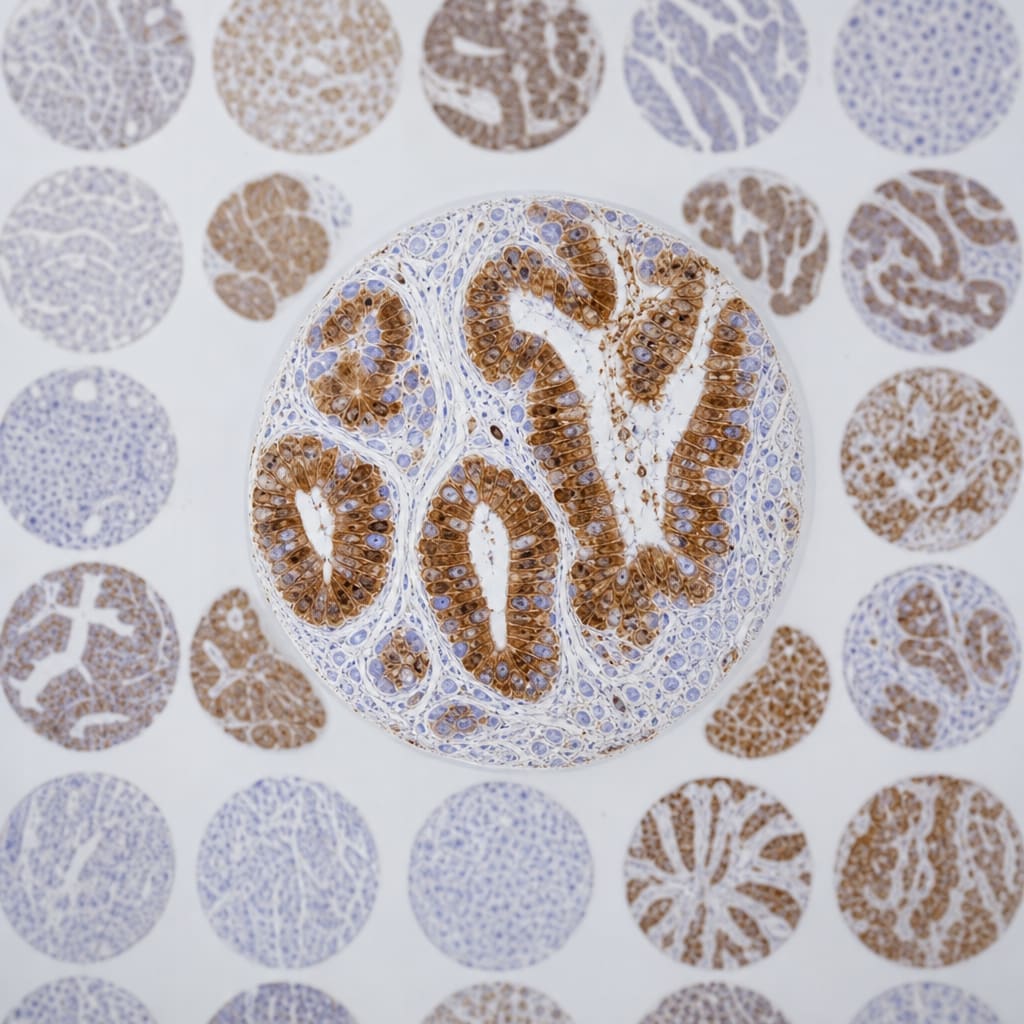
To investigate the spatial organization of glycolysis heterogeneity and identify molecular drivers of the malignant high-glycolytic state in colorectal cancer (CRC), emphasizing its significance for therapeutic strategies.
Key Findings:
Three distinct malignant subtypes were identified, with Glycolysis-C1 exhibiting a high-glycolytic state, suggesting a critical role in tumor progression.
Glycolysis-C1 cells act as a dominant signaling hub, influencing macrophages and B cells through MIF ligands, which may alter immune responses.
Pseudotime analysis showed a lineage trajectory from low-glycolytic C3 to high-glycolytic C1, indicating a dynamic metabolic evolution.
NEK6 was identified as a candidate gene associated with CRC risk, with high expression correlating to poor prognosis, underscoring its potential as a therapeutic target.
Interpretation:
The study elucidates the spatial and molecular landscape of glycolysis heterogeneity in CRC, highlighting NEK6 as a potential therapeutic target linked to the high-glycolytic phenotype, which could inform future treatment strategies.
Limitations:
Potential confounding factors in establishing causality, such as environmental influences and genetic variability.
Limited scope of in vitro validation for NEK6's role, necessitating further studies to confirm its function in vivo.
Conclusion:
The findings suggest NEK6 may represent a therapeutic vulnerability in CRC, warranting further investigation to explore its role in treatment strategies.