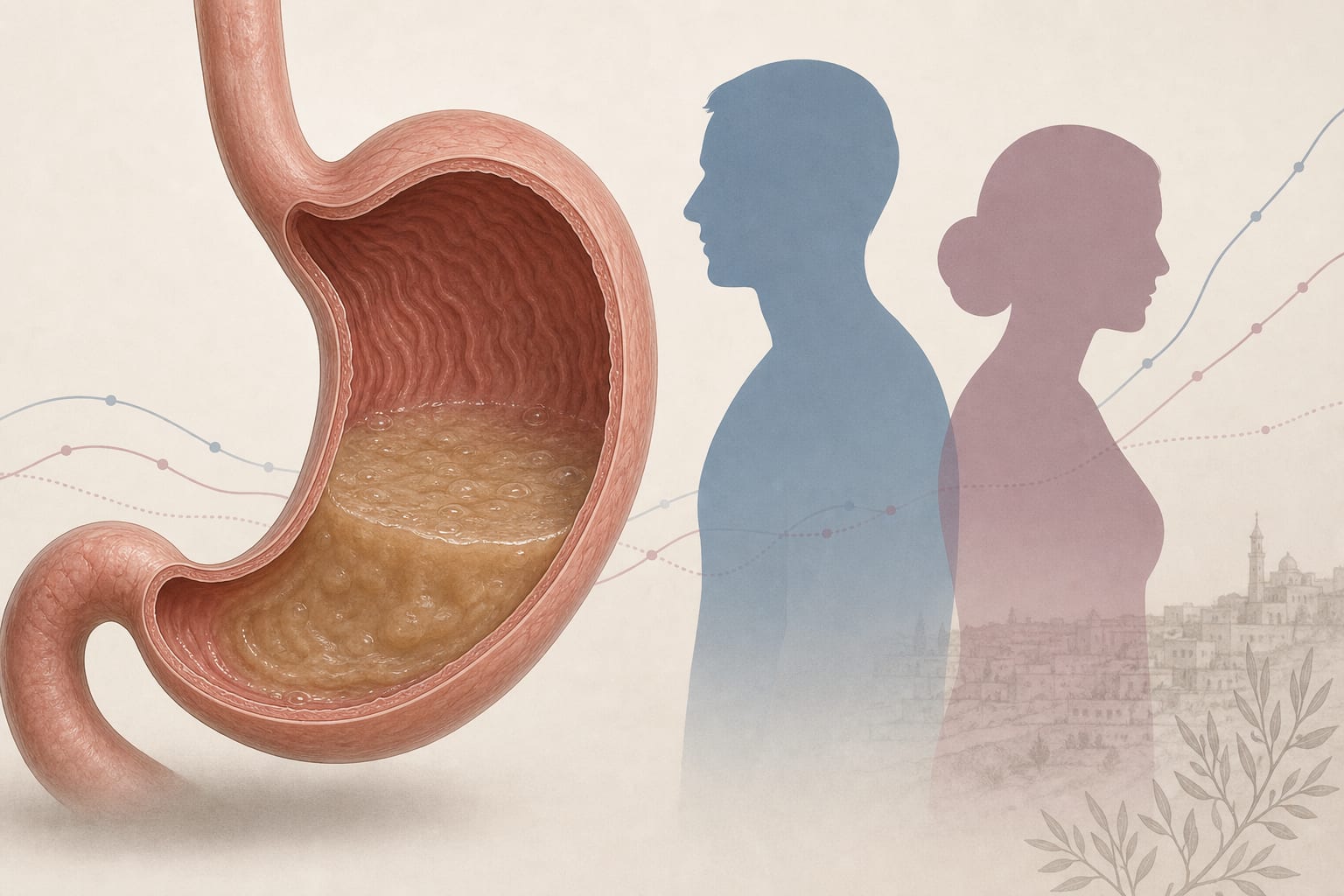
Gender differences in symptoms suggestive of diabetic gastroparesis in the West Bank: clinical insights from a cross-sectional study - Summary - MDSpire
To provide large-scale, region-specific data on gender differences in the prevalence and severity of diabetic gastroparesis (DGP) symptoms, highlighting the importance of understanding these differences for better management strategies among patients with type 2 diabetes mellitus (T2DM).
Key Findings:
Females had a higher prevalence of obesity and poorer glycemic control.
Female patients reported a significantly higher prevalence and severity of all gastroparesis symptoms compared to males, as confirmed by statistical analysis.
Logistic regression indicated that female gender is the only independent factor associated with severe DGP symptoms (OR: 2.38, p = 0.019).
Interpretation:
The study highlights that female gender is a significant factor in the prevalence and severity of DGP symptoms, suggesting implications for treatment, although the underlying mechanisms remain unclear.
Limitations:
The study is limited to a specific region (West Bank, Palestine) and may not be generalizable to other populations.
The reliance on symptom-based assessment tools like GCSI in resource-limited settings may affect diagnostic accuracy and introduce biases in self-reported data.
Conclusion:
Female gender is associated with a higher prevalence and severity of DGP symptoms, necessitating further research to understand the underlying mechanisms and inform gender-based management strategies.