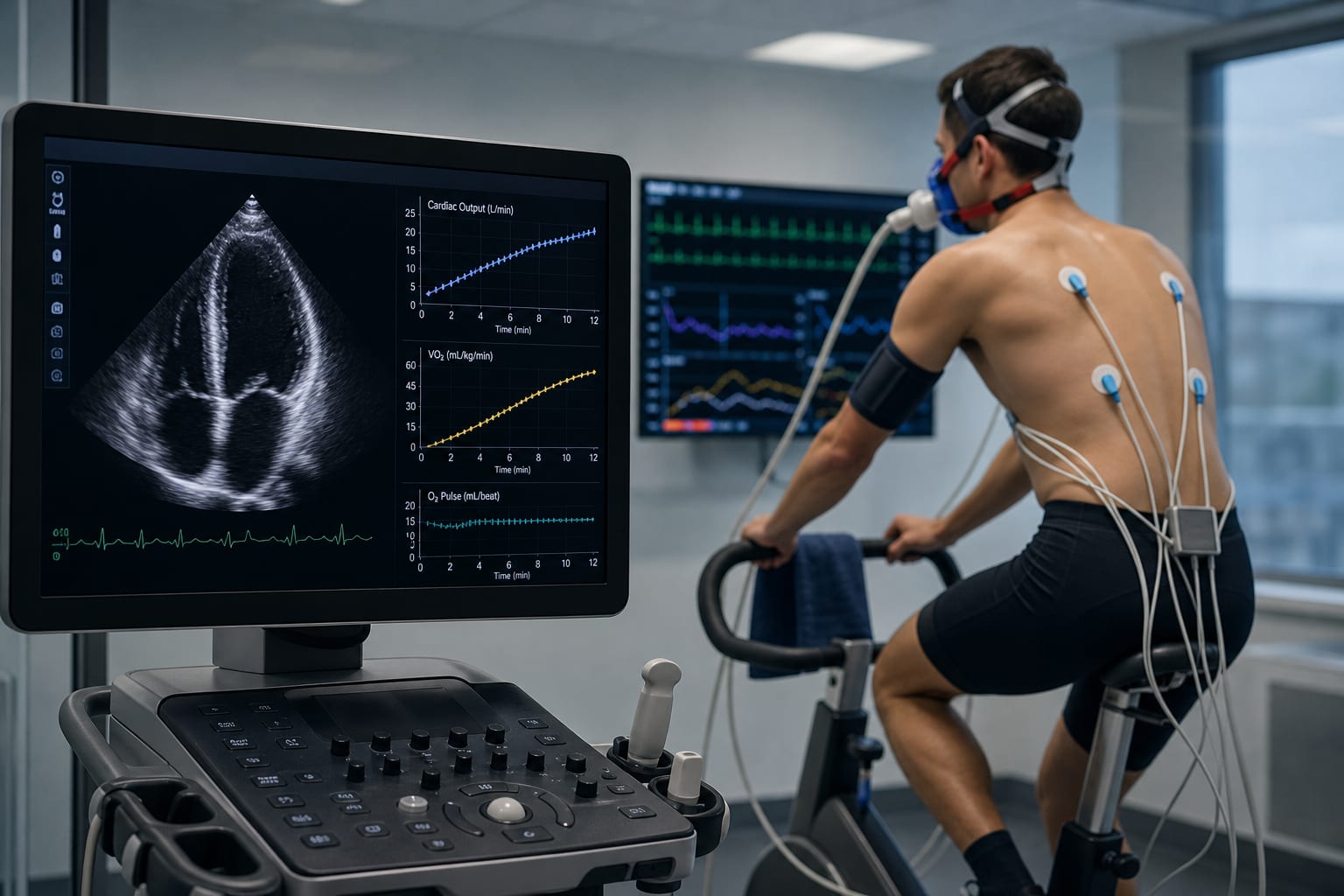
To explore the potential of combined stress echocardiography and cardiopulmonary exercise testing (CPET echocardiography) in differentiating physiological adaptations from cardiomyopathic changes in athletes suspected of arrhythmogenic cardiomyopathy (ACM).
Approach:
Method: label
Method: text
Key Findings:
Current diagnostic criteria for ACM may not adequately address the complexities in highly trained athletes.
Nearly one-third of elite athletes exhibit right ventricular dilatation, complicating the diagnosis of ACM.
Exercise testing can reveal regional wall motion abnormalities and inadequate increases in ejection fraction, indicating potential underlying pathology.
Interpretation:
A Qc/VO2 slope <5 may indicate central limitations potentially due to subclinical ACM in athletes.
Limitations:
The Qc/VO2 slope cut-off <5 as an indicator of cardiomyopathy is hypothesis-generating and requires further validation.
High endurance training may alter stroke volume dynamics, complicating the interpretation of exercise testing results.
Conclusion:
Integrating CPET echocardiography may enhance the diagnostic framework for ACM in athletes.