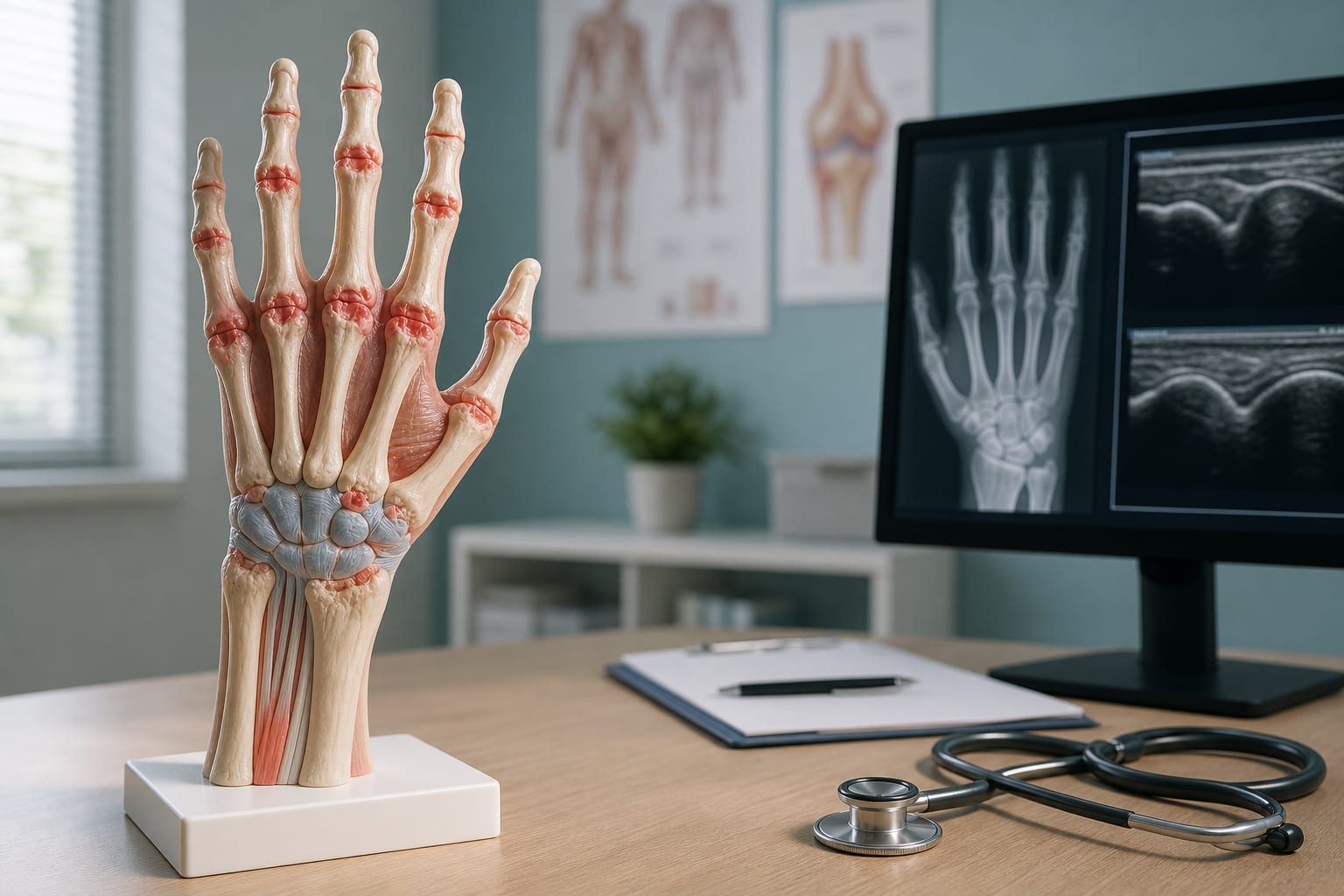
To summarize current knowledge on diagnostic trajectories in primary care for rheumatic musculoskeletal disorders (RMDs), identify knowledge gaps relevant to improving care, and highlight potential bottlenecks where tools may enhance diagnostic timeliness and referral efficiency.
Approach:
Review Methodology: Conducted a scoping review in accordance with PRISMA-ScR guidelines, focusing on quantitative studies investigating the diagnostic trajectory of patients with RMD-related complaints in primary care.
Eligibility Criteria: Included studies on inflammatory RMDs, osteoarthritis, gout, fibromyalgia, and undifferentiated MSK complaints. Excluded studies focused solely on non-rheumatic RMDs or qualitative studies.
Information Sources: Searched databases including PubMed/MEDLINE, Embase, and Web of Science, and screened references of clinical guidelines for relevant publications.
Selection Process: Screened articles in two stages: title/abstract screening followed by full-text review, with data extraction using predefined forms.
Key Findings:
RMDs are prevalent in primary care and contribute to significant disability.
Timely diagnosis and referral for conditions like rheumatoid arthritis (RA) and spondylarthritis (SpA) are often delayed.
Many referrals to rheumatology involve patients without an inflammatory rheumatic disease (IRD), increasing clinic burdens.
Interpretation:
The review highlights the need for a better understanding of the diagnostic process in primary care for RMDs to improve patient outcomes.
Limitations:
The review may not encompass all relevant studies due to the exclusion of qualitative research.
Focusing on English and Dutch publications may limit the breadth of included evidence.
Conclusion:
A comprehensive understanding of the diagnostic trajectory in primary care is essential for managing RMD-related complaints.
Machine-learning models distinguished healthy knees from those with osteoarthritis-related cartilage damage, but age and BMI performed as well as or better than the vibration-based models.