To delineate the landscape of sperm protein lactylation in patients with varicocele-associated asthenozoospermia and uncover its underlying pathophysiological mechanisms.
Approach:
Key Findings:
Disrupted lactate metabolism in asthenozoospermic sperm with decreased intracellular L-lactate and elevated seminal plasma L-lactate.
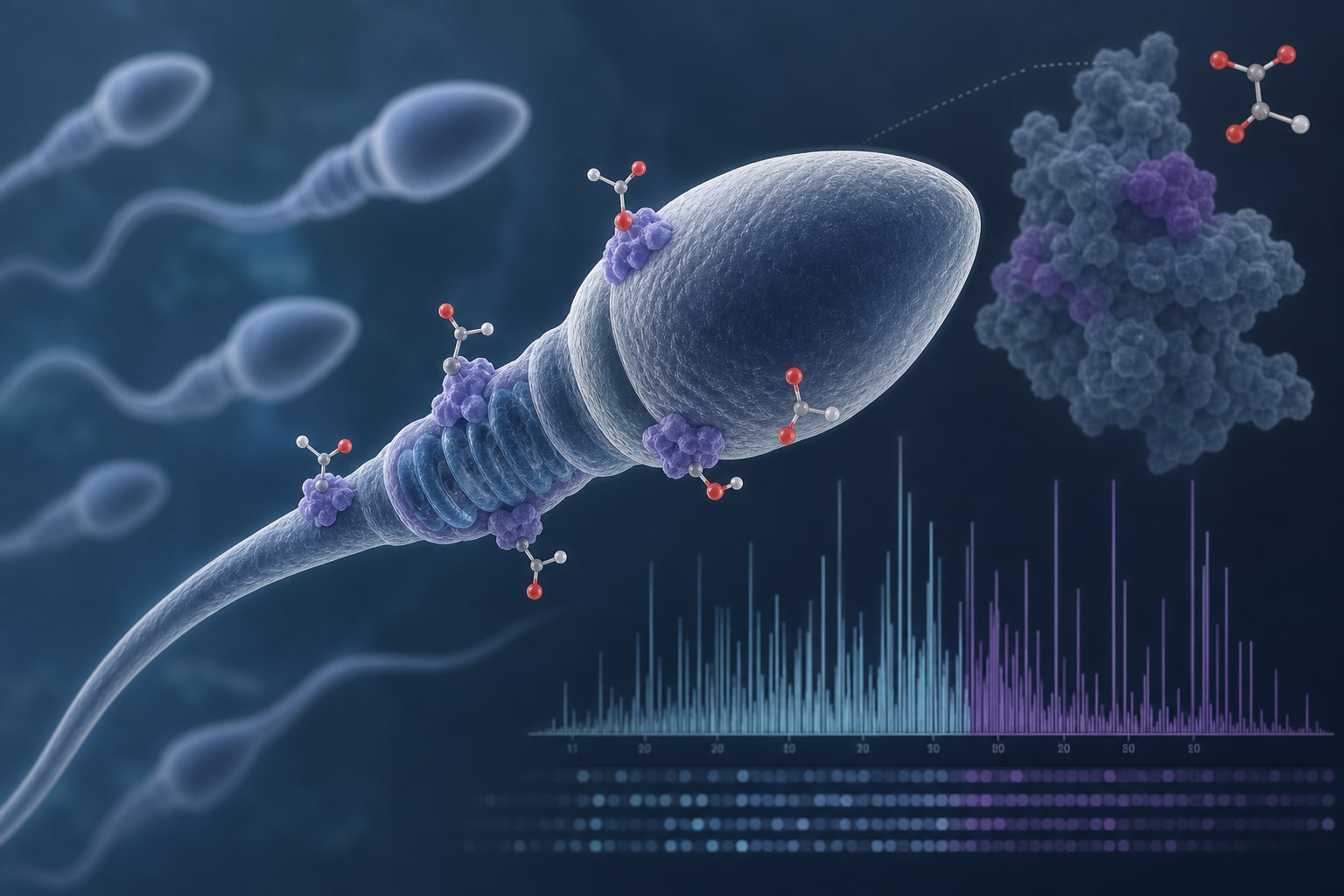
Global reduction in protein lactylation, particularly in the sperm midpiece and tail.
Identification of 2,699 lactylation sites on 1,216 proteins.
133 differentially lactylated proteins enriched in pathways critical for sperm motility, including glycolysis/gluconeogenesis, microtubule-based movement, and flagellar assembly.
Significant downregulation of lactylation abundance in key proteins related to sperm motility, such as TEKT3, AKAP4, TUBA1A, AKAP3, and TUBB4B.
Interpretation:
Dysregulation of the lactate-lactylation axis correlates with impaired sperm motility, potentially through alterations in energy metabolism and flagellar structure.
Limitations:
The study focuses only on patients who exhibited improvement post-treatment, which may limit generalizability.
Potential confounding factors in the complex pathophysiology of varicocele-induced infertility.
Conclusion:
The findings indicate specific lactylation events that require further mechanistic investigation to understand their role in sperm motility and fertility.