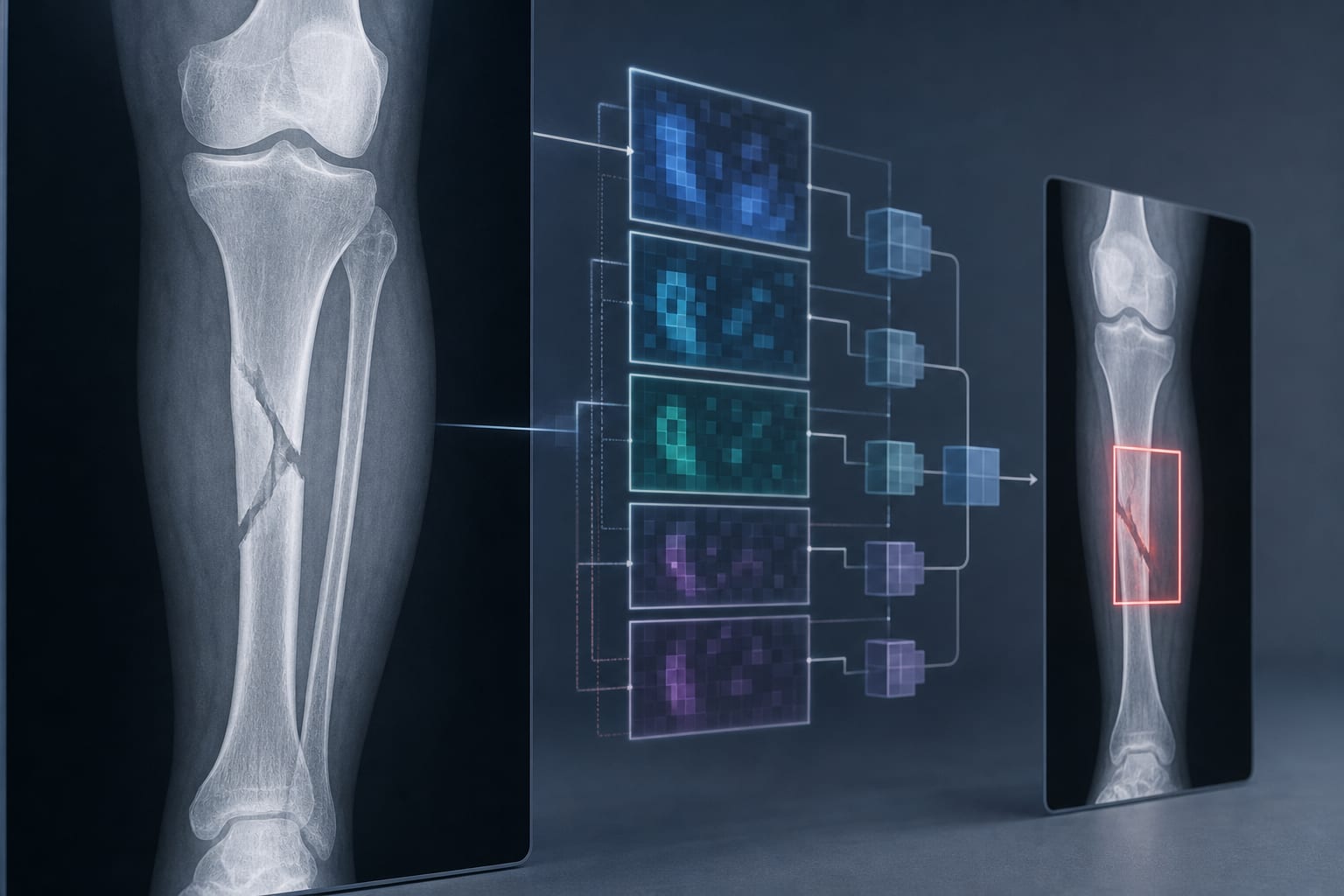
To describe the application of 3D virtual surgical planning and patient-specific 3D-printed cutting guides for the management of complex lower-limb deformities in young patients.
Approach:
Study Design: Retrospective, single-center study including 21 patients who underwent surgery using intramedullary nails for complex lower-limb deformities correction.
Preoperative Planning: Virtual 3D femoral and tibial models were created for planning and designing patient-specific cutting guides.
Evaluation Metrics: Patients were evaluated for preoperative and postoperative deformity angles, time to osteotomy union, and complications.
Key Findings:
Excellent correction (residual angulation ≤5°) achieved in 19 out of 23 extremities (83%).
Acceptable correction (6–10° residual angulation) in 4 out of 23 extremities (17%).
Mean time to radiographic union was 8.5 weeks (range, 4.5–18 weeks).
No major intraoperative or early postoperative complications occurred.
Interpretation:
Three-dimensional virtual planning and patient-specific cutting guides improve the accuracy of preoperative planning and assist in surgical execution for lower-limb deformities.
Limitations:
Single-center study may limit generalizability.
Small sample size of 21 patients.
Conclusion:
3D virtual planning and patient-specific cutting guides are effective adjuncts for correcting complex lower-limb deformities using intramedullary nails in pediatric patients.
A patient may present with a persistent ankle sprain, chronic heel pain, or an acute fracture, but the underlying story is often more complex. Gait abnormalities can contribute to knee, hip, and back pain. Sports injuries may require advanced imaging, physical therapy, and surgical evaluation. Fractures frequently demand coordinated care across multiple services before treatment can begin.