Impact of cerebral small vessel disease burden and systemic clinical phenotypes on short-term neurological outcomes after acute ischemic stroke - Summary - MDSpire
Advertisement
Impact of cerebral small vessel disease burden and systemic clinical phenotypes on short-term neurological outcomes after acute ischemic stroke
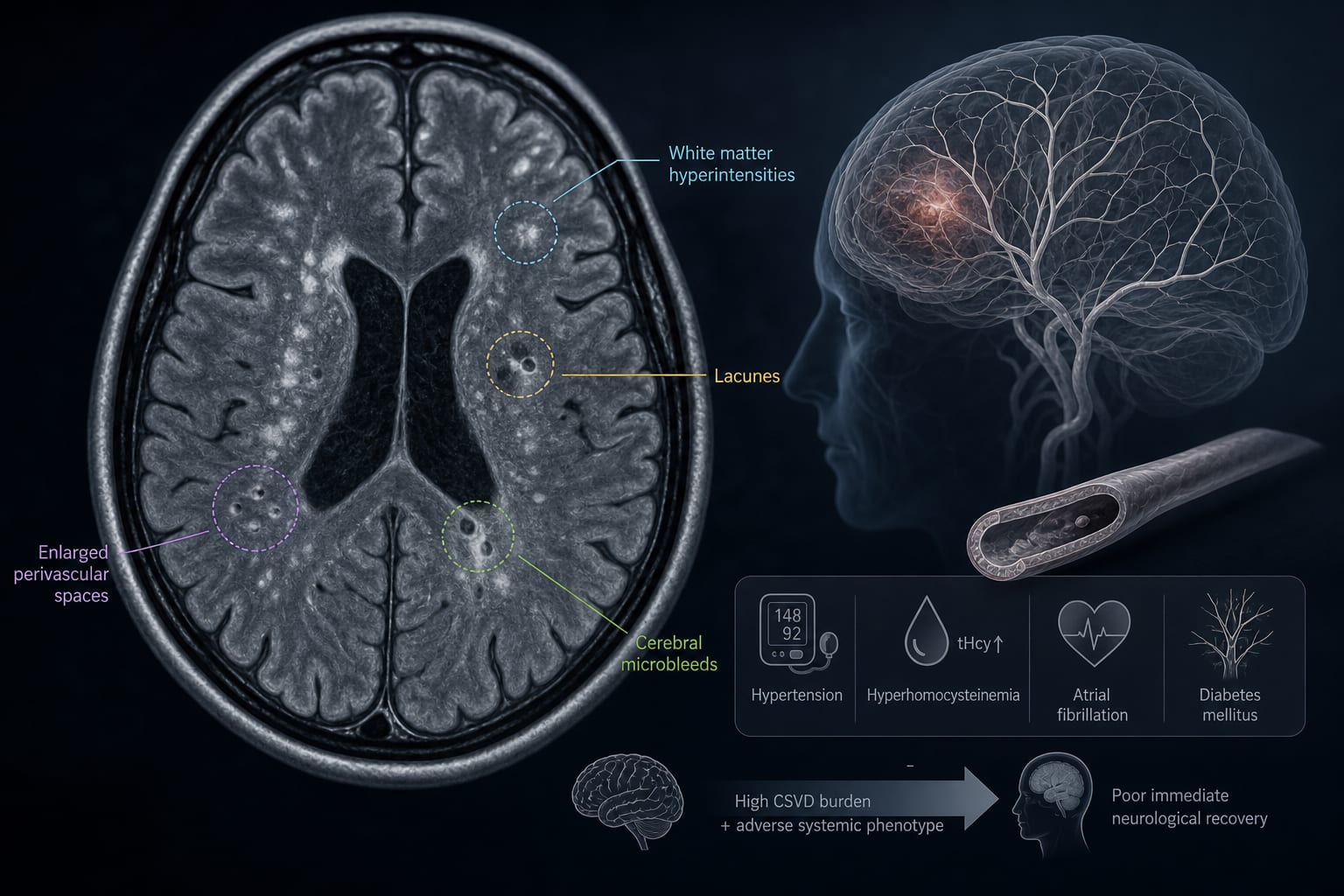
To investigate the association between total CSVD burden, individual CSVD imaging markers, and systemic clinical phenotypes with neurological status at discharge in patients with acute ischemic stroke (AIS), highlighting its significance in improving patient outcomes.
Key Findings:
Higher total CSVD burden was associated with unfavorable outcomes (adjusted OR 1.57, 95% CI 1.13–2.17).
Hyperhomocysteinemia was linked to unfavorable outcomes (adjusted OR 2.76, 95% CI 1.21–6.31).
A TCM-defined Phlegm-Heat Fu-Excess phenotype was associated with unfavorable outcomes (adjusted OR 5.28, 95% CI 1.85–15.04).
Lacunar infarction showed the strongest association among individual CSVD markers.
Interpretation:
Global CSVD burden and selected systemic clinical phenotypes are associated with poor short-term neurological outcomes after AIS, emphasizing the exploratory nature of these findings and the need for further validation.
Limitations:
Limited number of outcome events may affect the stability of the regression model, potentially impacting the reliability of the findings.
Exclusion of patients who underwent thrombolysis or endovascular therapy may introduce selection bias, limiting the generalizability of the results.
Conclusion:
The study highlights the potential role of CSVD burden and systemic clinical characteristics in predicting early neurological recovery after AIS, underscoring the necessity for further research to validate these findings.