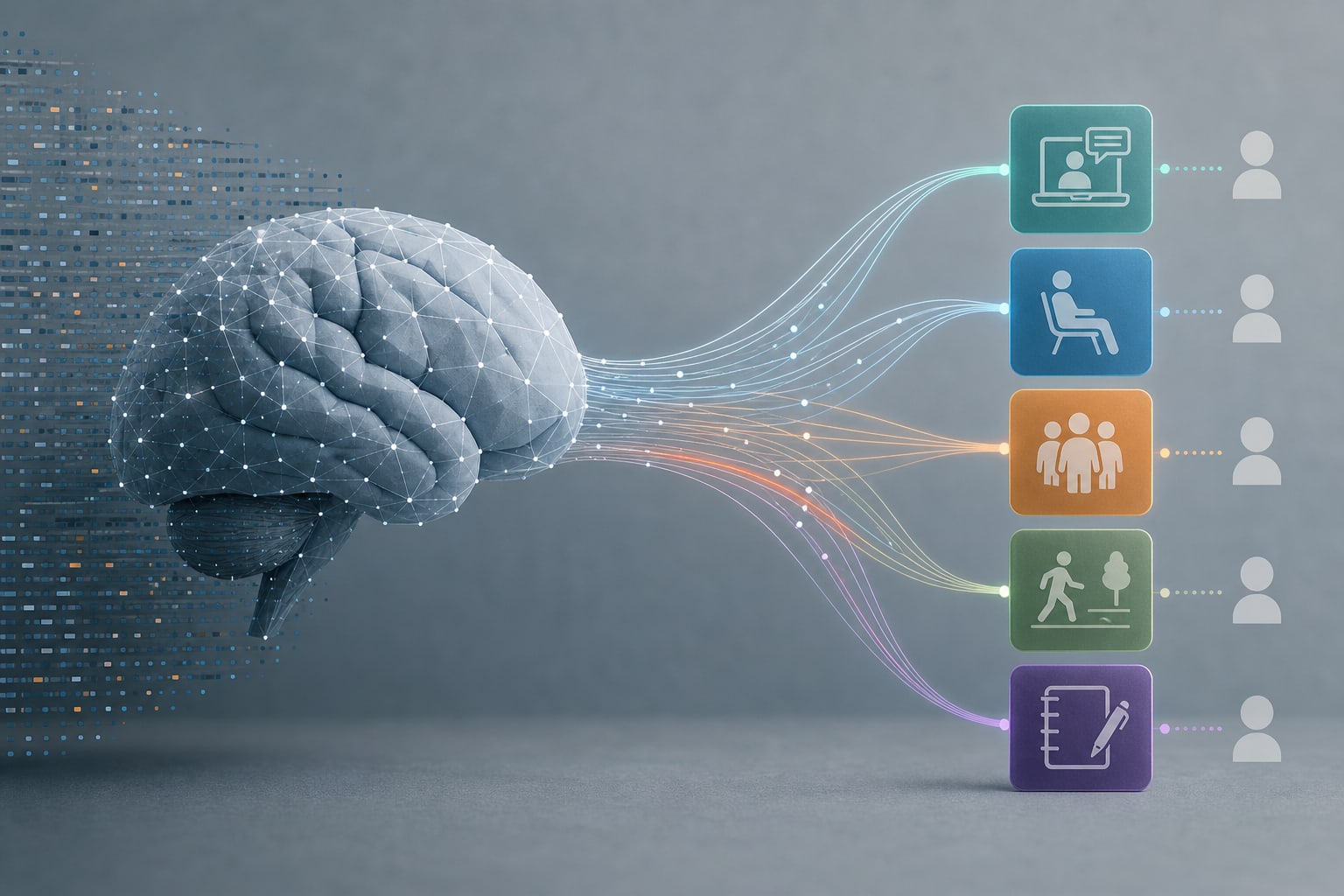
To evaluate the effectiveness of machine learning models in predicting optimal treatment assignments for patients with mental health conditions, specifically focusing on internet-based cognitive behavioral therapy (iCBT) for depression.
Approach:
Model Development: Schefft et al developed an automated prediction model to determine whether patients should receive iCBT or a control condition.
Exploratory Analysis: The model assessed the ability to distinguish between patients who would derive the least and greatest benefit from iCBT.
Data Sources: The study utilized data from 5 randomized clinical trials comparing iCBT with control conditions.
Key Findings:
The model could rank patients by anticipated benefit but could not adequately identify individuals needing iCBT.
Providing iCBT selectively to the predicted 75% of patients resulted in poorer outcomes than treating all patients.
Only one validation dataset showed promising predictive performance, highlighting the need for heterogeneous and representative training samples.
Interpretation:
Prediction models that are reliable and clinically useful depend on adequately heterogeneous and representative training samples, with baseline variability being crucial for effective treatment assignment.
Limitations:
The training sample had a restricted range of depression severity.
There is a lack of consensus on which predictors maximize prediction accuracy.
Conclusion:
Future research should expand the predictor set and validate treatment-matching algorithms in community settings.
A healthy lifestyle was associated with a smaller loss of disease-free life expectancy related to social isolation, but the same pattern did not hold for loneliness.