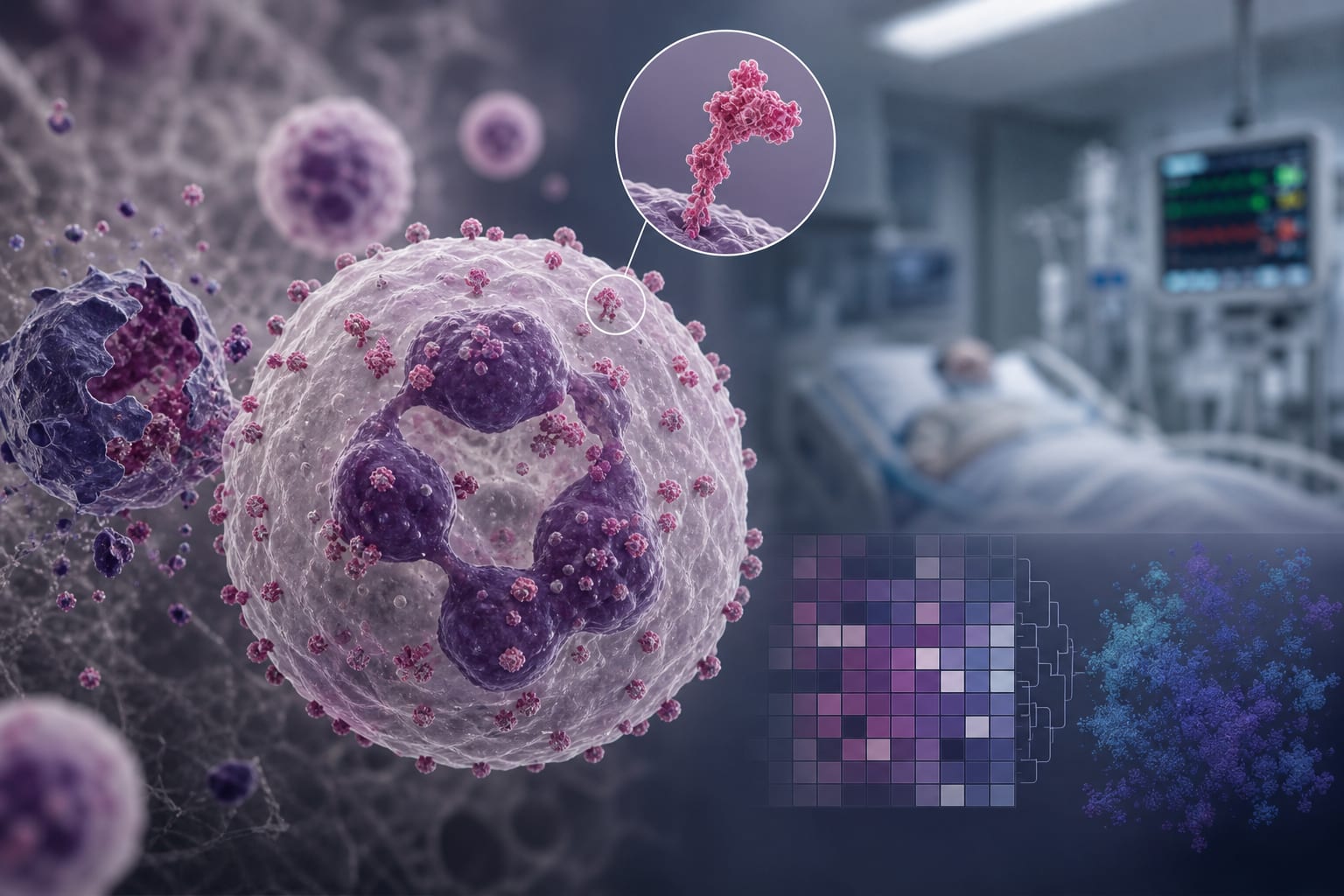
To investigate the role of necroptosis in sepsis pathogenesis and identify a gene signature associated with sepsis severity and outcomes.
Approach:
Cohort Data Integration: Utilized multi-center cohort data (n = 1,265) and weighted gene co-expression network analysis (WGCNA) to construct a six-gene necroptosis signature.
Gene Expression Analysis: Detected expression of the six genes in whole blood using qPCR.
Machine Learning Models: Evaluated machine learning models incorporating the necroptosis signature across independent cohorts.
Single-Cell and Flow Cytometric Analysis: Characterized CD177+ neutrophils in sepsis through single-cell data analysis and flow cytometry.
Key Findings:
All six Model-score genes were upregulated in sepsis patients, with significant differences in four of them.
Machine learning models showed robust diagnostic performance across independent cohorts.
Necroptosis activation correlated with IL-6/STAT3 and TNF-α/NF-κB inflammatory pathways.
CD177+ neutrophils were enriched in non-surviving sepsis patients and exhibited the highest necroptosis transcriptional score.
Flow cytometric analysis revealed a significant increase in CD177+ neutrophils in septic patients.
Interpretation:
CD177+ neutrophils may be involved in necroptosis-related inflammation in sepsis.
Conclusion:
The study provides insights into the involvement of CD177+ neutrophils in sepsis and identifies a gene signature associated with sepsis severity.