Ultrasound-guided stellate ganglion acupuncture for chronic insomnia disorder using fNIRS: study protocol for a randomized controlled trial - Summary - MDSpire
Advertisement
Ultrasound-guided stellate ganglion acupuncture for chronic insomnia disorder using fNIRS: study protocol for a randomized controlled trial
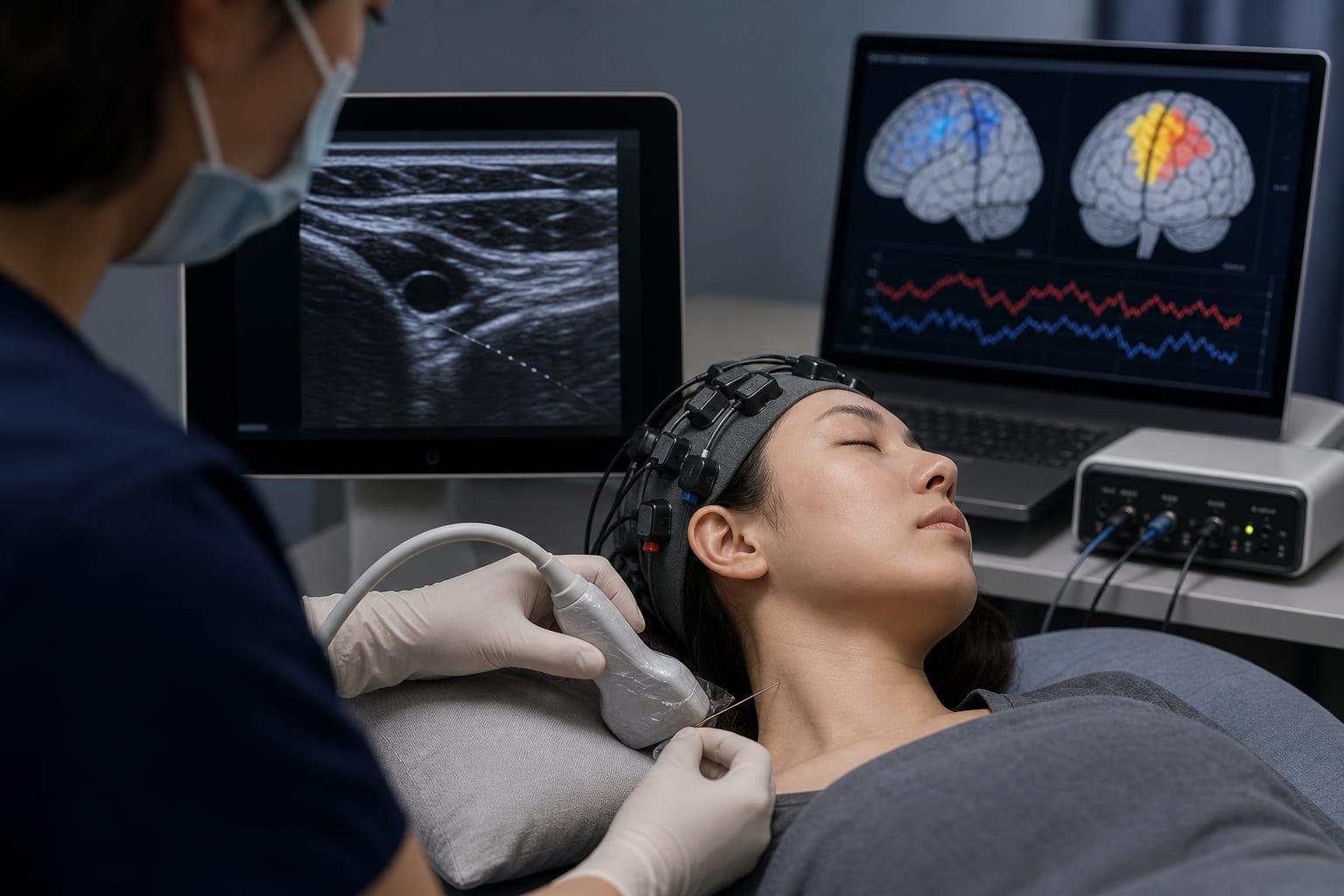
To evaluate the clinical efficacy and potential neurofunctional mechanisms of ultrasound-guided stellate ganglion acupuncture combined with conventional acupuncture in patients with chronic insomnia disorder (CID).
Approach:
Study Design: A single-center, parallel-group randomized controlled trial enrolling 80 patients with CID, allocated in a 1:1 ratio to treatment or control groups.
Intervention: The treatment group will receive ultrasound-guided stellate ganglion acupuncture plus conventional acupuncture, while the control group will receive only conventional acupuncture.
Outcome Assessment: Outcomes will be assessed at baseline, week 4, and week 8, using the Insomnia Severity Index (ISI), fNIRS data, Pittsburgh Sleep Quality Index (PSQI), and Hamilton Anxiety Rating Scale (HAMA).
Key Findings:
Chronic insomnia disorder affects 10-15% of adults and is associated with cognitive impairment and reduced quality of life.
Current insomnia treatments have limitations regarding accessibility, cost, and long-term effects.
Interpretation:
This trial aims to evaluate the clinical efficacy and potential neurofunctional mechanisms of ultrasound-guided stellate ganglion acupuncture combined with conventional acupuncture in patients with chronic insomnia disorder.
Limitations:
The study is limited to a single-center design.
The control group only receives conventional acupuncture, which may not account for other potential interventions.
Conclusion:
The findings may provide objective evidence for acupuncture-based treatment of CID and clarify its neurofunctional basis.