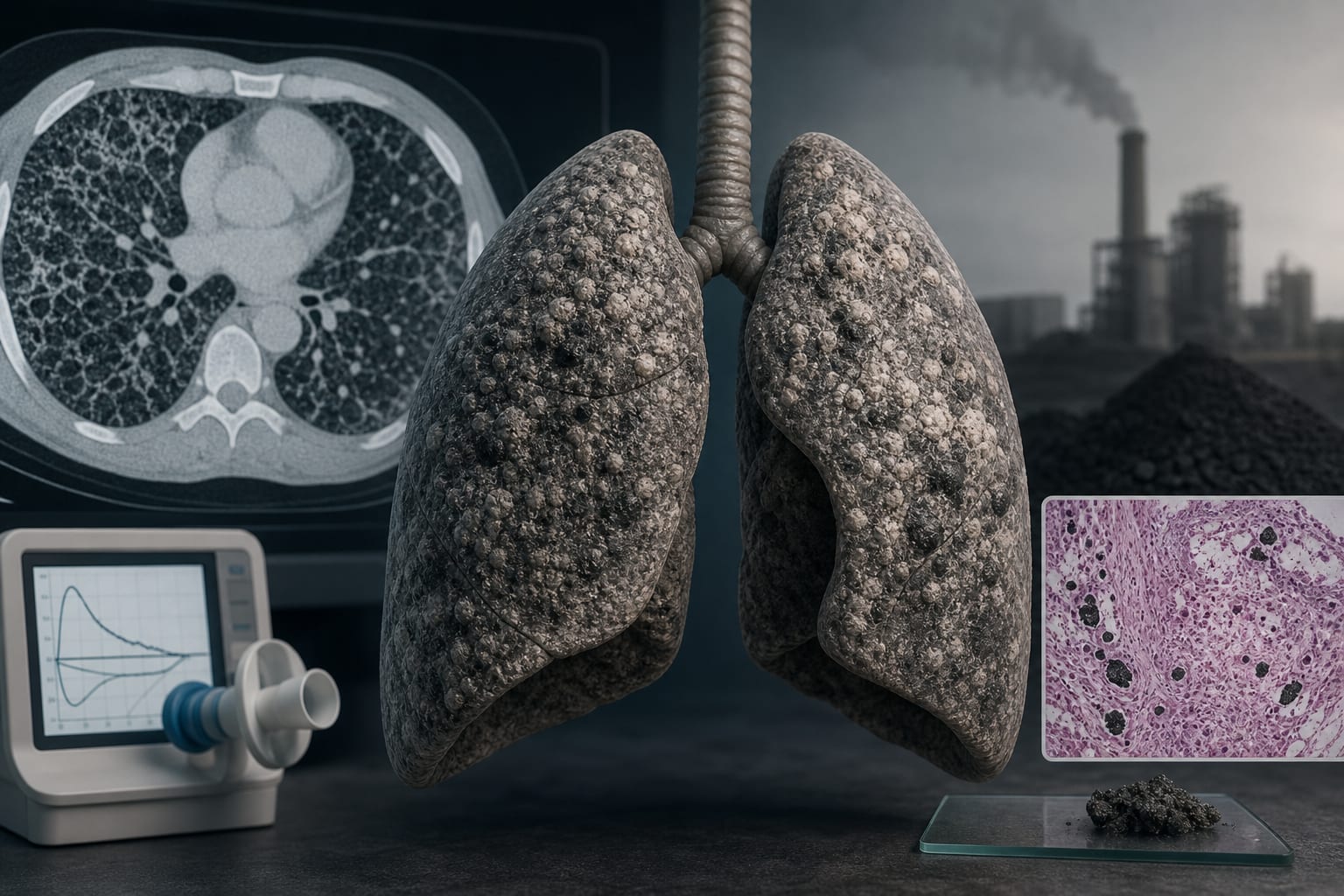
To evaluate how occupational exposure and imaging findings influence diagnostic pathways in patients with pneumoconiosis undergoing invasive procedures.
Approach:
Study Design: Retrospective single-center study evaluating 121 patients with pneumoconiosis who underwent invasive diagnostic procedures before pneumoconiosis was considered.
Data Evaluation: Examined occupational exposure, radiological phenotypes, diagnostic decision-making, and procedure-related outcomes.
Key Findings:
Radiological patterns associated with malignancy or infection were linked to invasive diagnostic procedures.
Higher radiological burden correlated with reduced pulmonary function (p < 0.001).
Substantial diagnostic discordance was observed between initial clinical working diagnosis and invasive findings, indicating challenges in lesion-based diagnostic approaches.
Overall complication rate was 10.7%, with pneumothorax as the most frequent adverse event, particularly following percutaneous procedures.
Interpretation:
Radiological misinterpretation may lead to unnecessary invasive procedures in patients with occupational dust exposure.
Limitations:
Study conducted at a single center, which may limit generalizability.
Retrospective design may introduce biases in data collection and interpretation.
Conclusion:
Integrating occupational history into early diagnostic evaluation may reduce procedural burden and improve patient safety.