Clinical application of diffusion tensor tractography in classification of pediatric optic chiasmatic gliomas: a retrospective cohort study - Summary - MDSpire
Advertisement
Clinical application of diffusion tensor tractography in classification of pediatric optic chiasmatic gliomas: a retrospective cohort study
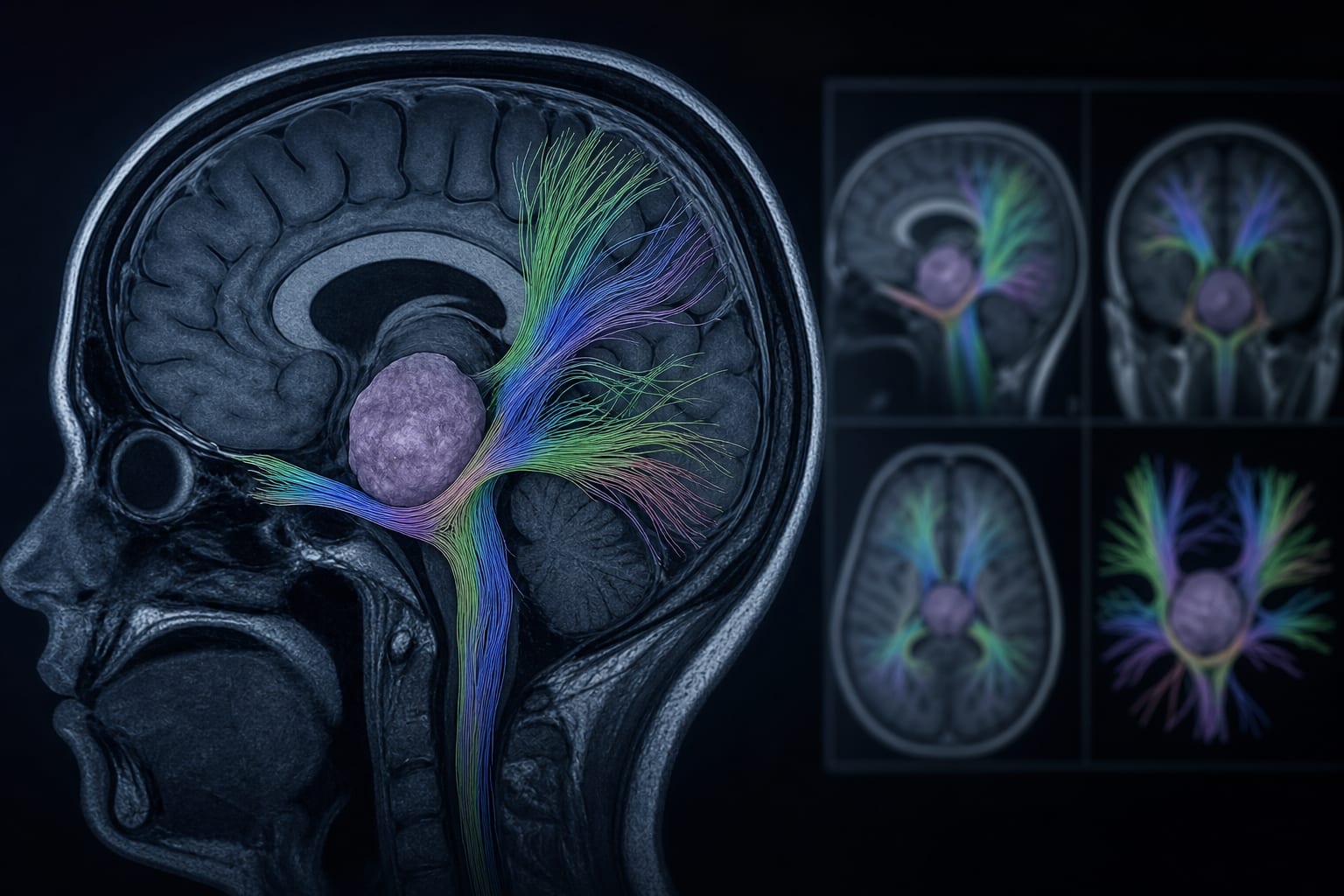
To evaluate the predictive value of diffusion tensor tractography (DTT) classification for clinical phenotypes and to investigate prognostic factors in children with optic chiasmatic gliomas (OCGs), amidst ongoing debate regarding its clinical application.
Key Findings:
The inflating exogenous type had a significantly lower proportion of males (10%) compared to the other types, suggesting potential gender-related biological differences.
Inflating endophytic type patients had lower body weight at surgery and higher prevalence of diencephalic syndrome, indicating a need for tailored clinical approaches.
Postoperative chemotherapy showed a statistically significant protective effect on overall survival (OS) and event-free survival (EFS) with p-values of 0.032 and 0.017, respectively, highlighting its importance in treatment protocols.
Interpretation:
The DTT-based classification effectively identifies the inflating endophytic subtype associated with a high incidence of diencephalic syndrome, serving as a valuable tool for preoperative surgical guidance and indicating areas for further research.
Limitations:
The study is retrospective and may have inherent biases; future prospective studies are needed to validate findings.
The sample size of 53 patients may limit the generalizability of the findings; larger multicenter studies could enhance the robustness of the conclusions.
Conclusion:
Combined adjuvant chemotherapy significantly prolongs long-term prognosis in pediatric OCG patients, emphasizing the need for integrated treatment strategies.
Datroway and Hepcludex secure notable FDA approvals, while Outlook wins its bevacizumab appeal, BioMarin reports phase 3 VOXZOGO data, and BMS partners with Anthropic