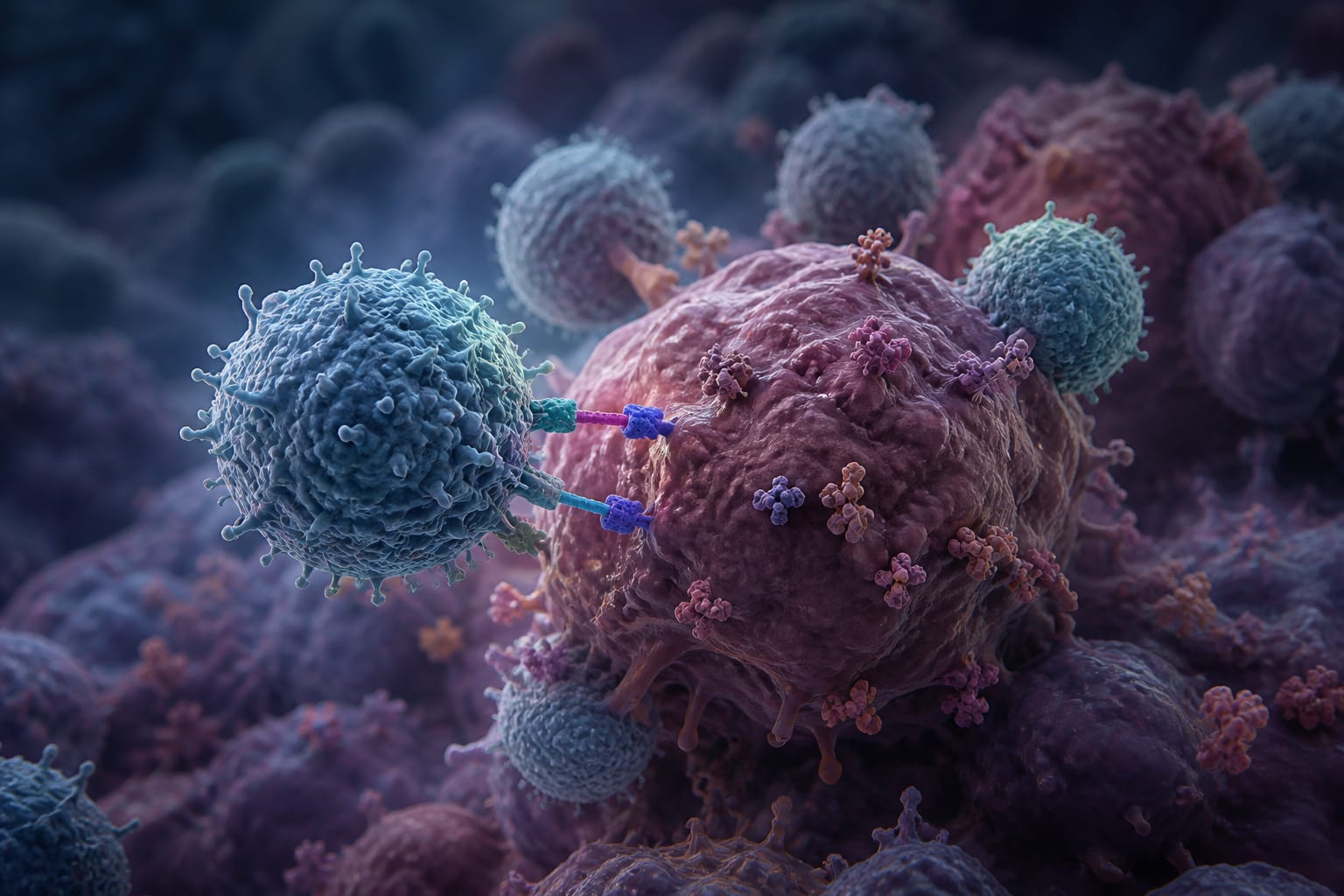
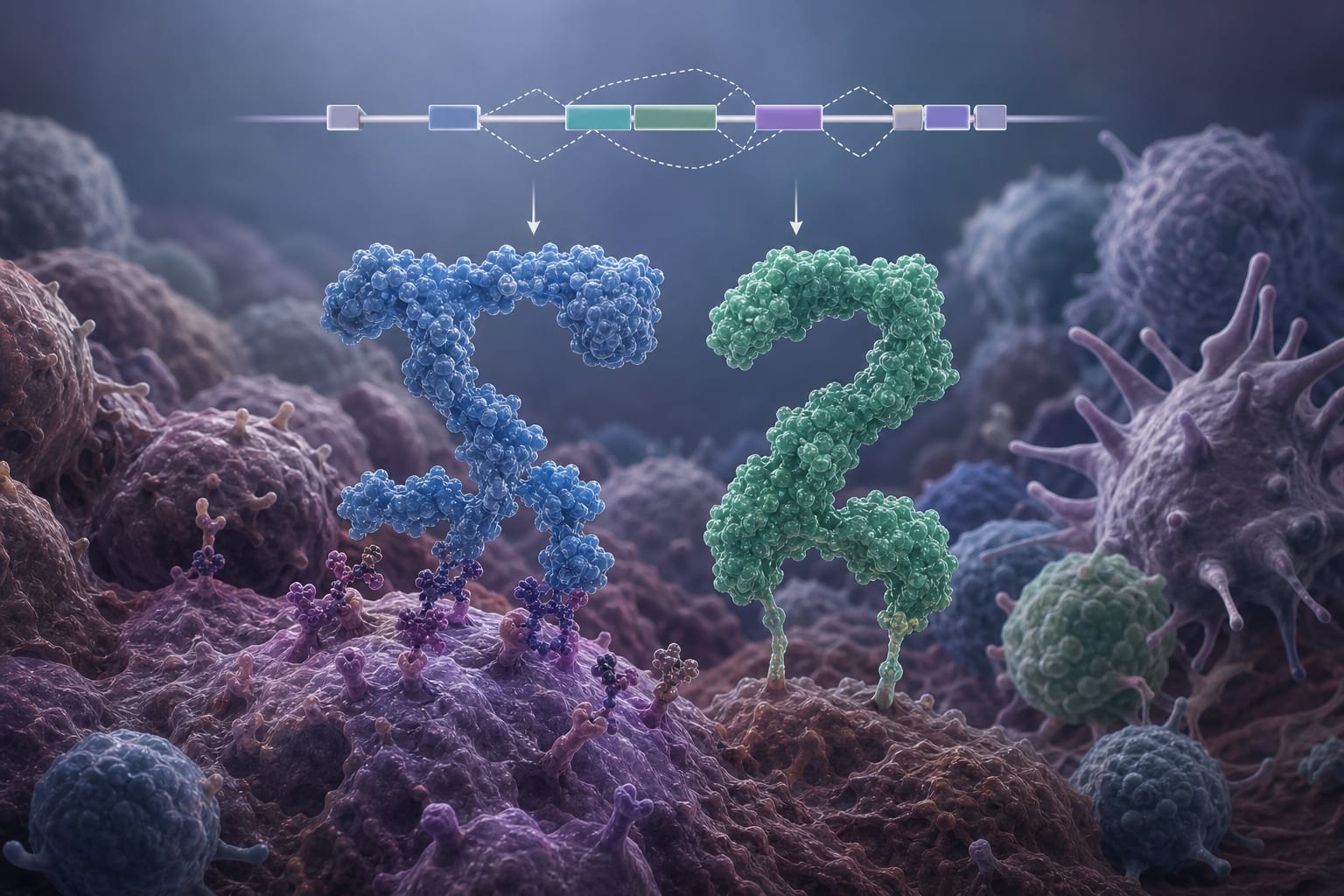
Precision T-cell treatment slows resistant cancers in early clinical trial results
-
October 23, 2026
Objective:
Assess the safety, optimal dose, and preliminary antitumor activity of invikafusp alfa (invika) in patients with advanced cancers, many resistant to immune checkpoint blockade.
Approach:
- Study design: First-in-human phase 1 and early phase 2 testing enrolled patients with diverse cancers. Phase 1 evaluated different doses; phase 2 used the dose selected as optimal.
- Treatment and assessment: Invika was given every two weeks. Investigators assessed safety, tumor measurements, disease progression, and changes in targeted tumor-infiltrating T-cell populations.
Key Findings:
- At the optimal dose, 27 participants were treated across both phases; 16 (59.3%) had no disease progression, and four (14.8%) had tumor reductions greater than 30%.
- Two participants with metastatic colorectal cancer and one with stage 4 non-small cell lung cancer were among those whose tumors shrank; these cancers had resisted multiple prior treatments.
- Several participants experienced anticipated flu-like side effects, generally manageable with medication and supportive care.
- Invika expanded the targeted T-cell populations while leaving other T cells unaffected. The four cases of tumor shrinkage were associated with the greatest changes in these populations.
- Participants who received non-optimal doses did not appear to have significant benefit.
Interpretation:
The investigators described the results as preliminary and said immune activation did not always produce a measurable clinical response. They said further investigation, including studies combining invika with other cancer treatments, is warranted.
Limitations:
- The findings come from early phase 1 and phase 2 testing and are preliminary.
- The reported optimal-dose results involve 27 participants; the context does not provide a comparison group or longer-term outcomes.
Conclusion:
The trial reported manageable safety at the selected dose and preliminary signs of disease control and tumor shrinkage in some patients with treatment-resistant cancers. The trial remains open to enrollment.
Sources:
Based on findings from:
A precision T-cell therapy stalls treatment-resistant cancers in clinical trial
National Institutes Of Health, 2026.
https://www.nih.gov/news-events/news-releases/precision-t-cell-therapy-stalls-treatment-resistant-cancers-clinical-trial
This content is an AI-generated, fully rewritten summary based on a published scholarly article. It does not reproduce the original text and is not a substitute for the original publication. Readers are encouraged to consult the source for full context, data, and methodology.