Indocyanine green fluorescence angiography in laparoscopic sigmoid and rectal cancer surgery: no reduction in anastomotic leakage but a lower incidence of anastomotic strictures. A prospective single-center study - Summary - MDSpire
Advertisement
Indocyanine green fluorescence angiography in laparoscopic sigmoid and rectal cancer surgery: no reduction in anastomotic leakage but a lower incidence of anastomotic strictures. A prospective single-center study
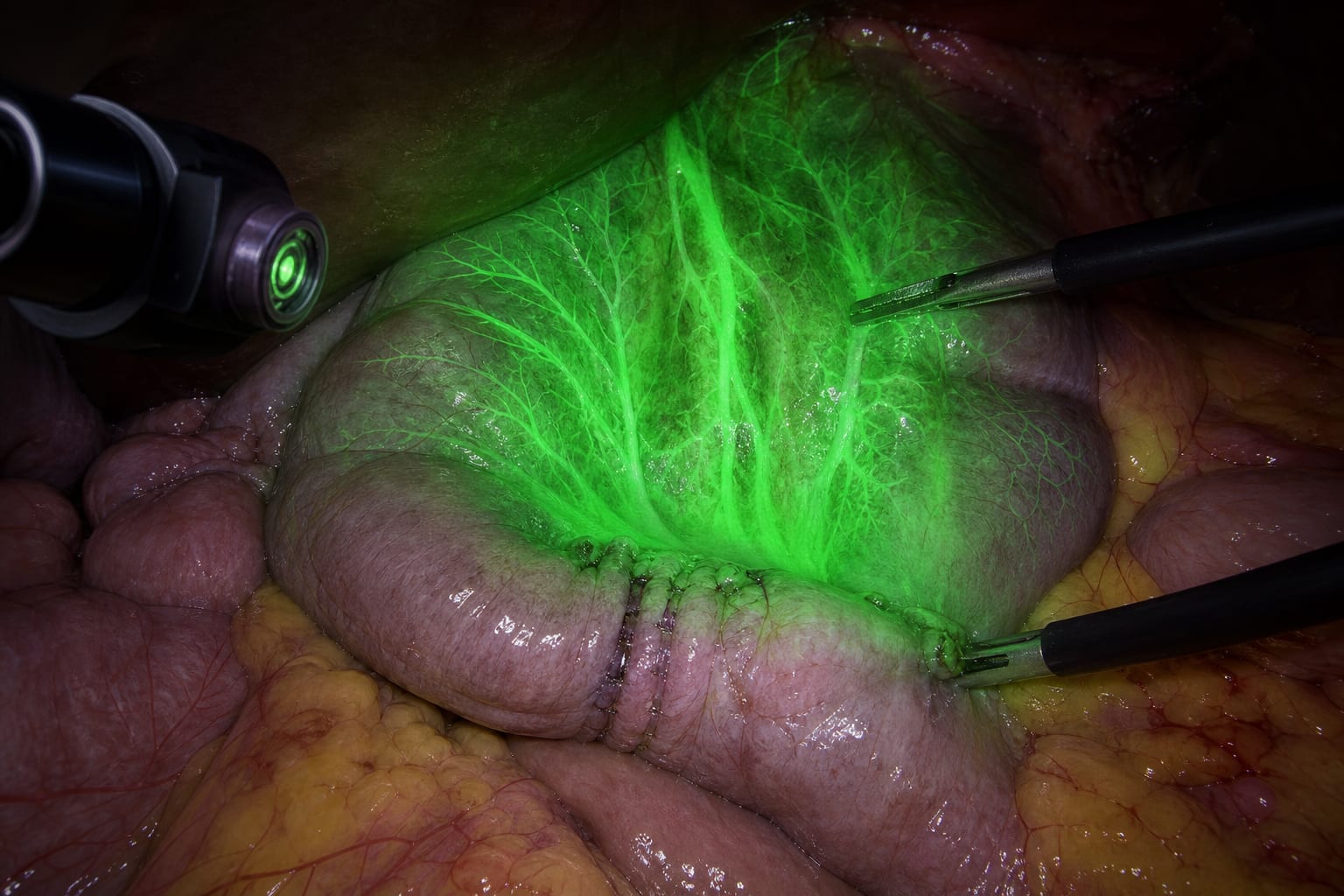
To evaluate whether intraoperative indocyanine green fluorescence angiography (ICG-FA) reduces the rate of anastomotic leakage (AL) in patients undergoing laparoscopic sigmoid or rectal cancer resection.
Approach:
Study Design: A prospective single-center study with a retrospective historical control group, analyzing patients undergoing laparoscopic sigmoid or rectal cancer resection.
Participants: 113 patients were analyzed, with 34 in the ICG-FA group and 79 in the control group.
Endpoints: Primary endpoint was AL within 30 days; secondary outcomes included anastomotic stricture, postoperative complications, reoperation rates, length of hospital stay, readmission, and mortality.
Key Findings:
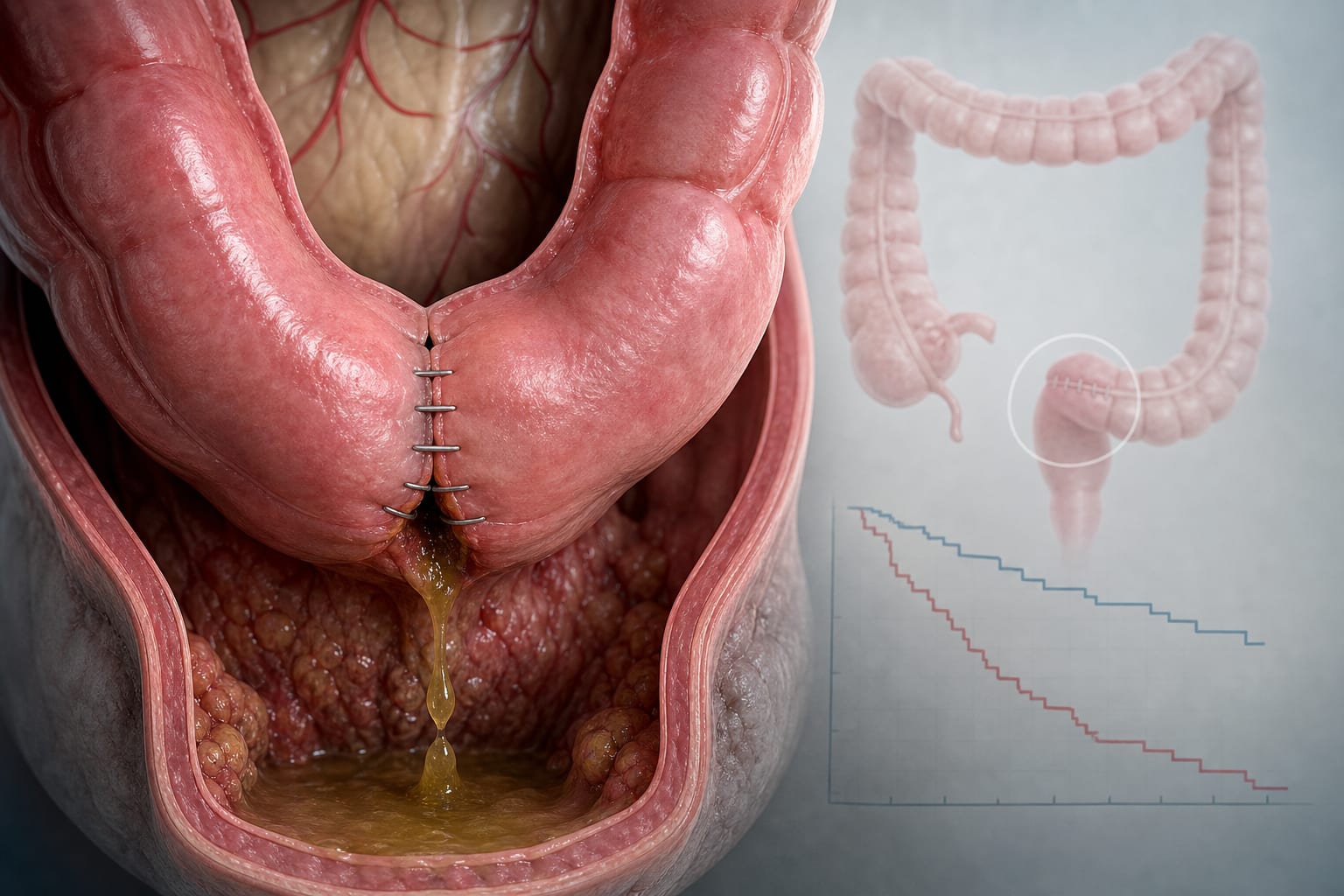
The AL rate was 14.7% in the ICG-FA group and 12.7% in the control group (p = 0.768), showing no significant difference.
No anastomotic strictures were observed in the ICG-FA group, while strictures occurred in 11.4% of the control group (p = 0.050).
Other postoperative outcomes were similar between groups.
Interpretation:
Intraoperative ICG-FA did not significantly reduce the rate of AL but was associated with a lower incidence of anastomotic strictures.
Limitations:
The study was conducted at a single center, which may limit generalizability.
The sample size may not be sufficient to detect smaller differences in outcomes.
Conclusion:
Intraoperative ICG-FA did not significantly reduce the rate of AL but was associated with a lower incidence of anastomotic strictures.