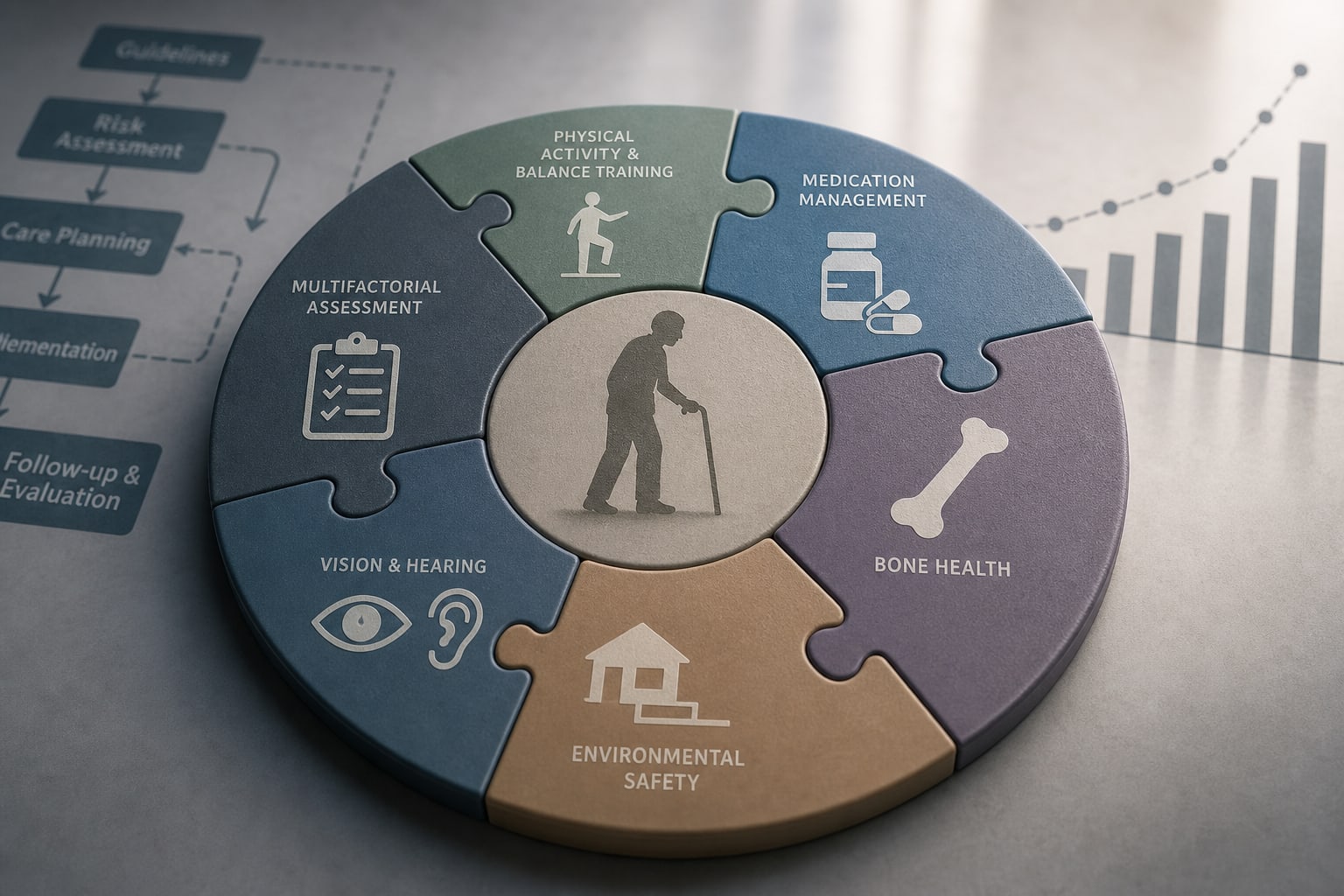
To evaluate the implementation of fall prevention recommendations in an interdisciplinary geriatric fall prevention consultation clinic.
Approach:
Study Design: Pragmatic evaluation of a fall prevention consultation clinic integrating nursing, physical therapy, and geriatric medicine expertise.
Population: 94 older adults evaluated for fall risk.
Intervention: Comprehensive fall risk assessments and individualized, evidence-based recommendations targeting multiple modifiable risk factors.
Key Findings:
Patients received an average of just over two recommendations, primarily related to physical therapy, bone health, vision care, and medication management.
Only 40% of recommendations were implemented within 1 year.
Directly actionable interventions like physical therapy and bisphosphonate therapy had higher implementation rates (46-58% and 50%, respectively).
Referral-based recommendations had lower implementation rates, often less than 25%.
Fall- and fracture-related emergency department visits and hospitalizations were numerically lower after clinic participation but did not differ significantly.
Interpretation:
The study highlights gaps in the implementation of fall prevention recommendations.
Limitations:
Small sample size limits statistical power.
Reliance on electronic health records may underestimate events outside the health system.