Neurofilament light and glial fibrillary acidic protein do not reflect neuronal or glial damage during different intracranial radiotherapy regimes: a pilot study - Summary - MDSpire

Neurofilament light and glial fibrillary acidic protein do not reflect neuronal or glial damage during different intracranial radiotherapy regimes: a pilot study

  • By

  • Yvonne Dzierma

  • Holger Sebb

  • Michael Utzig

  • Nurlan Abdullayev

  • Christian Berdel

  • Christian Ruebe

  • Jochen Fleckenstein

  • Markus Hecht

  • Guido Hildebrandt

  • Mathias Jucker

  • Kristina Heyne

  • June 8, 2026

  • 0 min

Share

Objective:

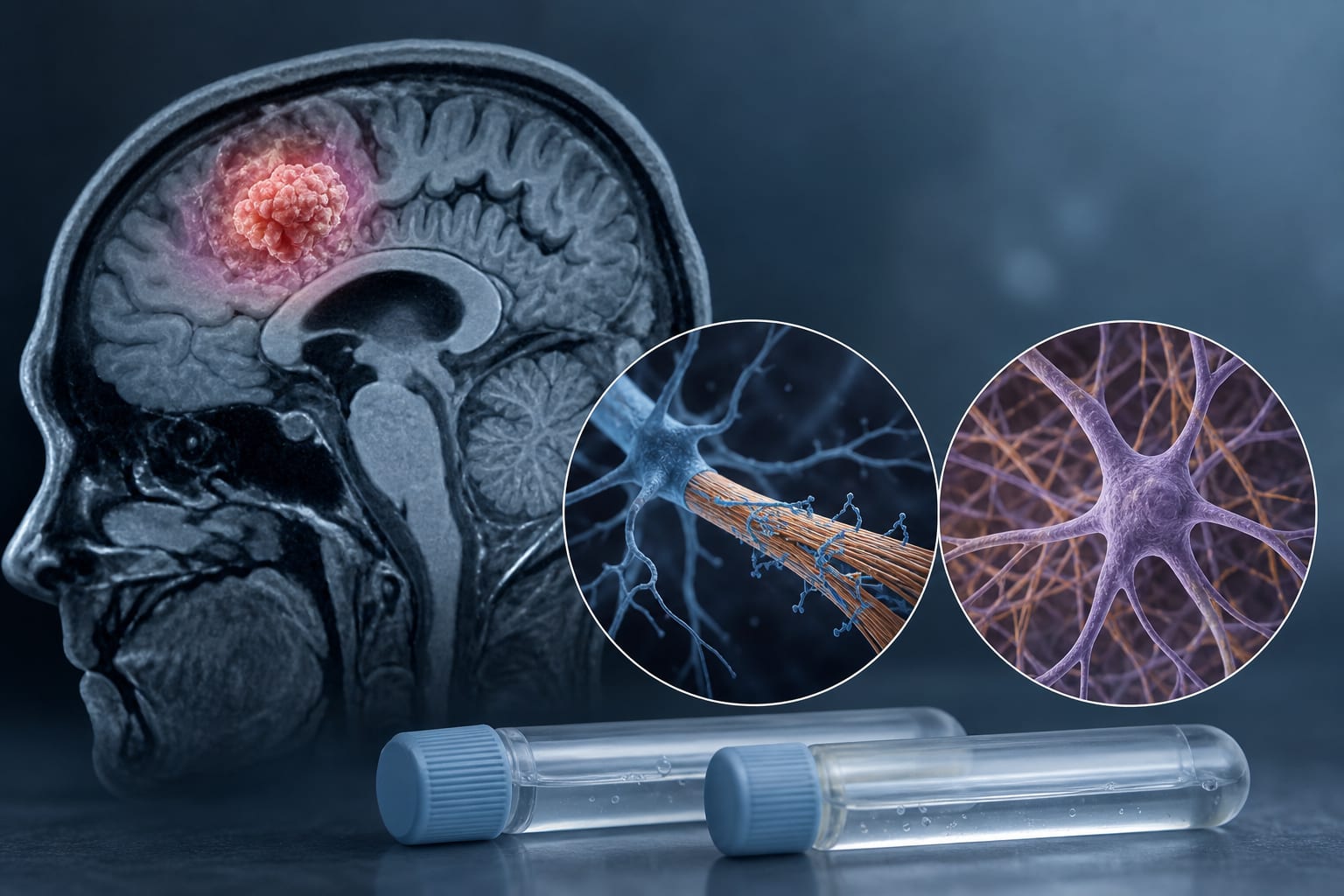
To investigate the response of neurofilament light chain (NfL) and glial fibrillary acidic protein (GFAP) levels to cerebral radiotherapy in a pilot study.

Key Findings:
  • Elevated NfL and GFAP levels were observed in all patients before radiotherapy.
  • No significant increase in NfL and GFAP levels was observed after the onset of radiotherapy.
  • Decreasing NfL and GFAP values during follow-up correlated with treatment response.
  • Pronounced increases in serum NfL levels were associated with the detection of new cerebral lesions.
Interpretation:

Limitations:
  • The study is a pilot investigation with a limited sample size, which may affect the generalizability of the findings.
  • Long-term follow-up data may be needed to fully understand the relationship between NfL/GFAP levels and treatment outcomes.
Conclusion:

Original Source(s)

Related Content