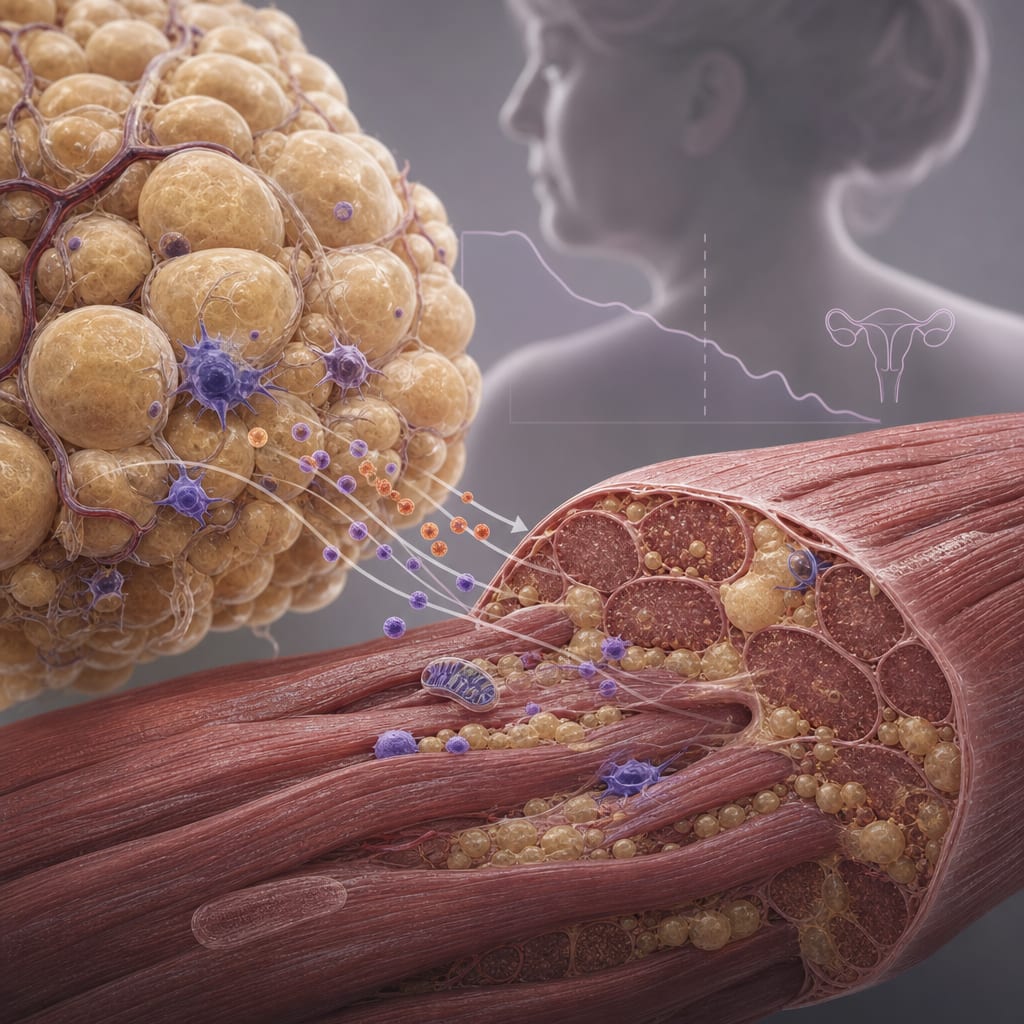
To explore the mechanisms linking menopausal biology to the increased risk of sarcopenic obesity in midlife women, highlighting the importance of these mechanisms for improving health outcomes.
Key Findings:
Sarcopenic obesity is characterized by excess body fat and reduced muscle mass/function, particularly in midlife women, with significant implications for clinical practice.
The menopausal transition accelerates fat accumulation and lean mass decline, often unnoticed by standard BMI measurements, necessitating better assessment methods.
Myosteatosis, or fat accumulation within muscle, negatively impacts muscle strength and is linked to metabolic disorders, highlighting the need for targeted interventions.
Interpretation:
The menopausal transition significantly influences body composition changes, necessitating a focus on muscle quality and fat distribution rather than solely body weight or BMI.
Limitations:
Limited longitudinal data on menopause stages and their effects on muscle and fat dynamics, suggesting a need for more comprehensive studies.
Current definitions of sarcopenic obesity may not adequately capture the complexities of midlife women's health, indicating a need for standardized criteria.
Conclusion:
A comprehensive approach to prevention and intervention for sarcopenic obesity in midlife women should include progressive resistance training and tailored nutritional strategies, emphasizing muscle quality and fat distribution to improve health outcomes.
In a target-trial emulation of more than 600,000 veterans, GLP-1 RA initiators saw fewer new substance use disorders—and patients with existing SUDs had fewer overdoses, hospitalizations, and deaths.