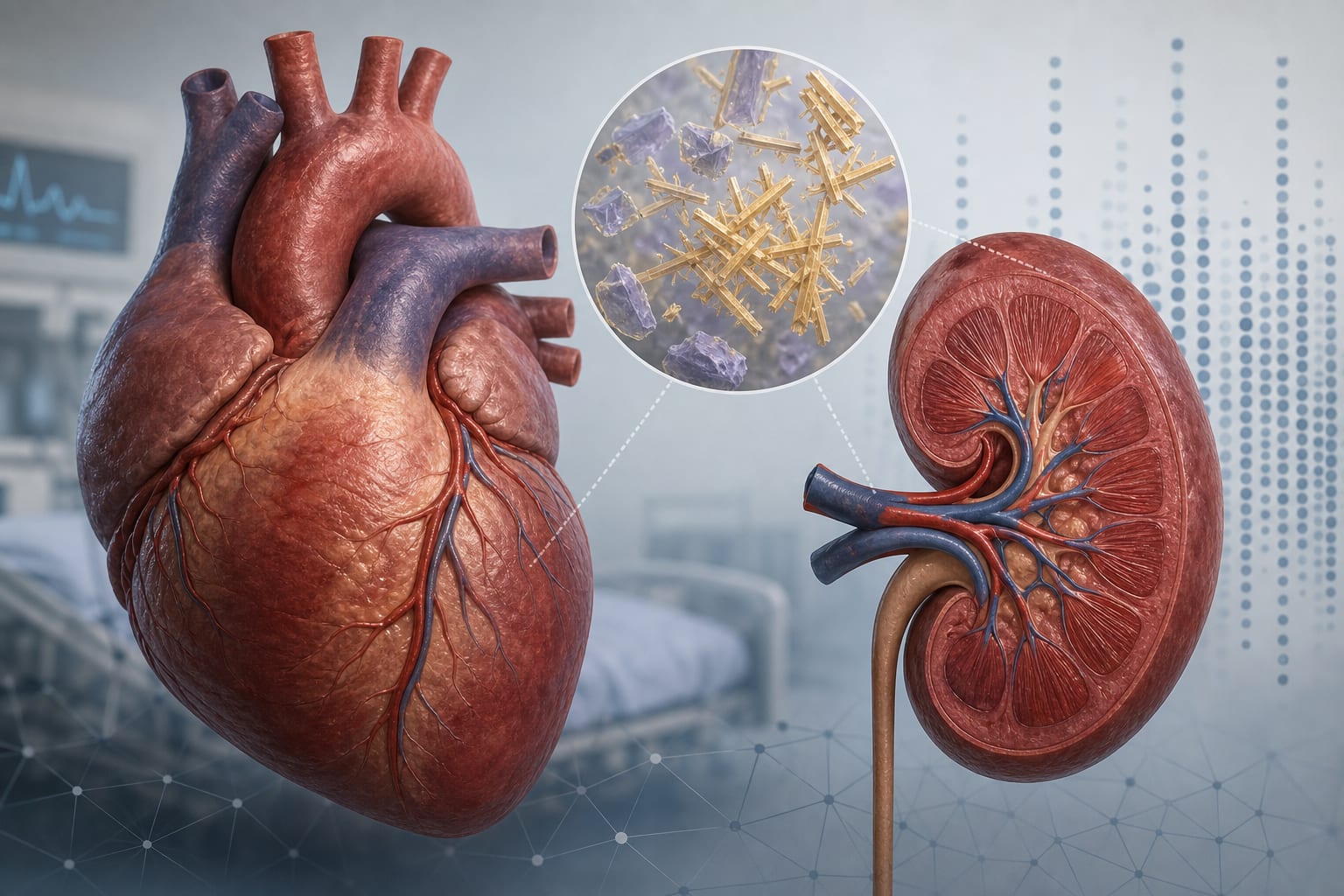
To evaluate the burden of hyperuricemia in hospitalized patients with heart failure (HF) and explore its associated clinical correlates.
Approach:
Study Design: Retrospective cross-sectional analysis of 1,985 patients admitted with HF.
Hyperuricemia Definition: Defined as serum uric acid ≥ 7.0 mg/dL in males and ≥ 6.0 mg/dL in females.
Statistical Analysis: Used univariable and multivariable logistic regression models, restricted cubic spline analyses, and subgroup analyses.
Key Findings:
Overall prevalence of hyperuricemia was 69.42%.
Prevalence was consistent across sex, age, and BMI groups but varied by NYHA class.
In the multivariable model, hyperuricemia was independently associated with renal dysfunction, hemodynamic impairment, electrolyte imbalance, and metabolic disturbance.
Interpretation:
Hyperuricemia in hospitalized HF patients may reflect a broader cardiorenal and metabolic profile.
Limitations:
Study based on a single-center dataset.
Retrospective design may limit causality conclusions.
Conclusion:
Hyperuricemia is highly prevalent among hospitalized HF patients and is associated with multiple clinical markers.
National survey findings suggest many US adults report making health decisions based on social media despite widespread concerns about the accuracy of health information shared to the platforms.