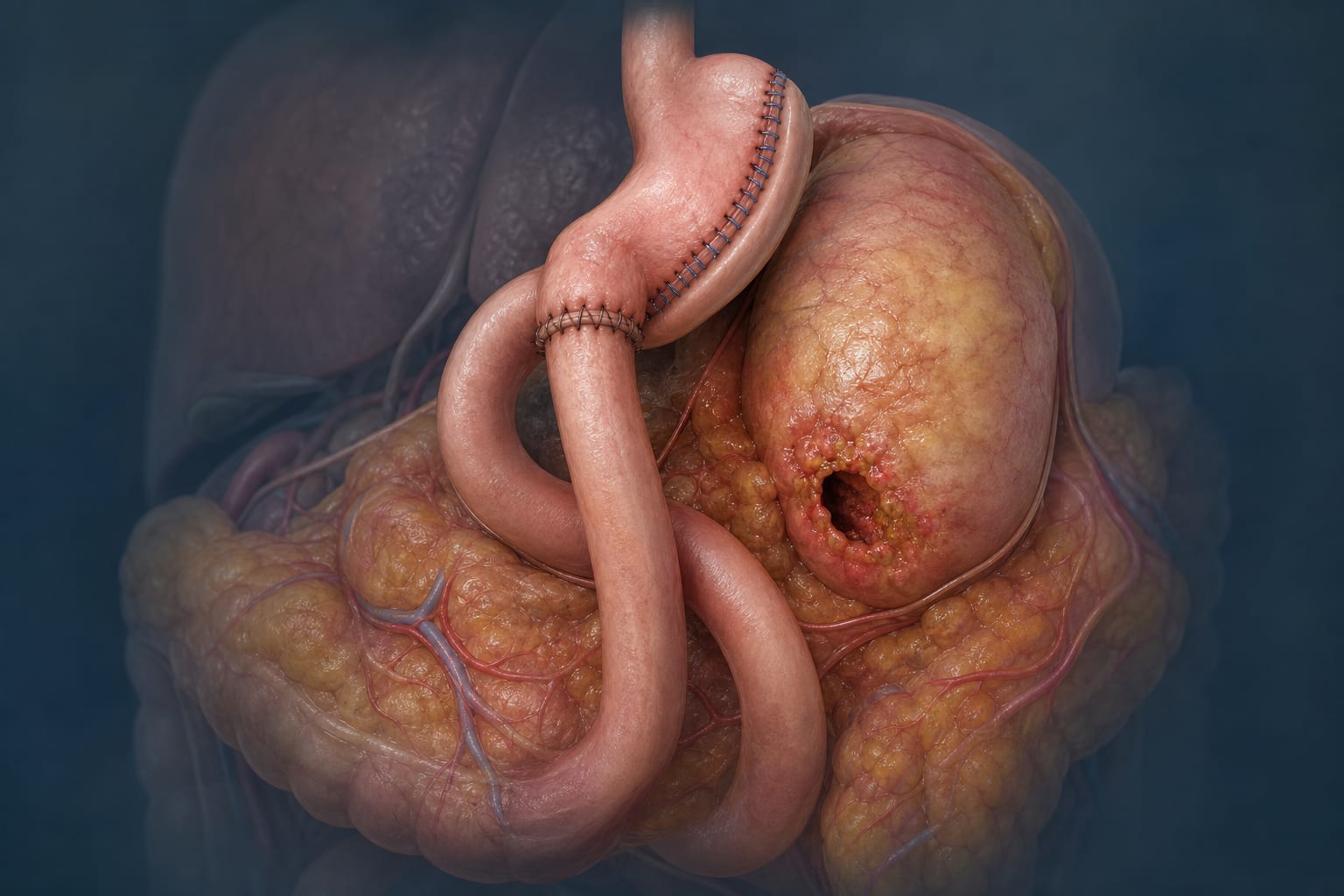
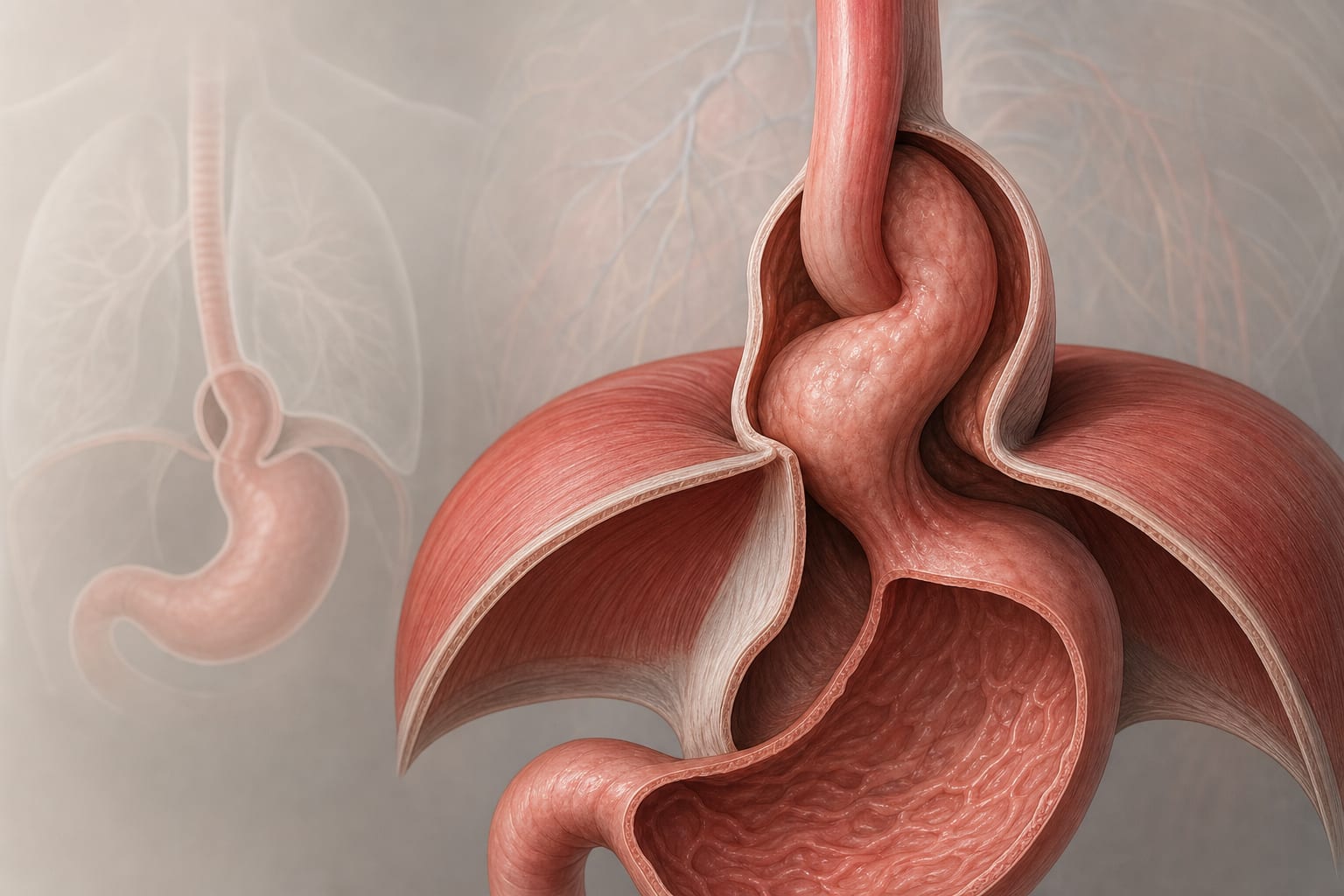
To evaluate the long-term outcomes of Ring-Augmented Sleeve Gastrectomy (RASG) compared to Non-Ring-Augmented Sleeve Gastrectomy (NRASG) in patients with morbid obesity, focusing on weight loss durability and metabolic health.
Key Findings:
RASG may enhance long-term excess weight loss and reduce recurrent weight gain compared to NRASG, with statistical significance.
Potential improvements in metabolic outcomes and reduction in gastroesophageal reflux disease symptoms were observed.
Ring-related complications such as slippage and erosion were noted, necessitating careful postoperative monitoring.
Interpretation:
The study suggests that RASG could offer advantages in weight loss durability and metabolic health, but careful consideration of potential complications is necessary, highlighting the need for clinical guidelines.
Limitations:
Retrospective design may introduce selection bias.
Limited generalizability due to single-center study.
Potential for incomplete follow-up data affecting outcomes, and biases in data collection.
Conclusion:
Ring augmentation in sleeve gastrectomy may improve long-term outcomes for patients with morbid obesity, but further studies are needed to confirm these findings and assess long-term safety, emphasizing the importance of ongoing research.