Comparison of lattice and pipeline flow diverters for the treatment of distal intracranial aneurysms: an inverse probability of treatment weighting analysis - Summary - MDSpire
Advertisement
Comparison of lattice and pipeline flow diverters for the treatment of distal intracranial aneurysms: an inverse probability of treatment weighting analysis
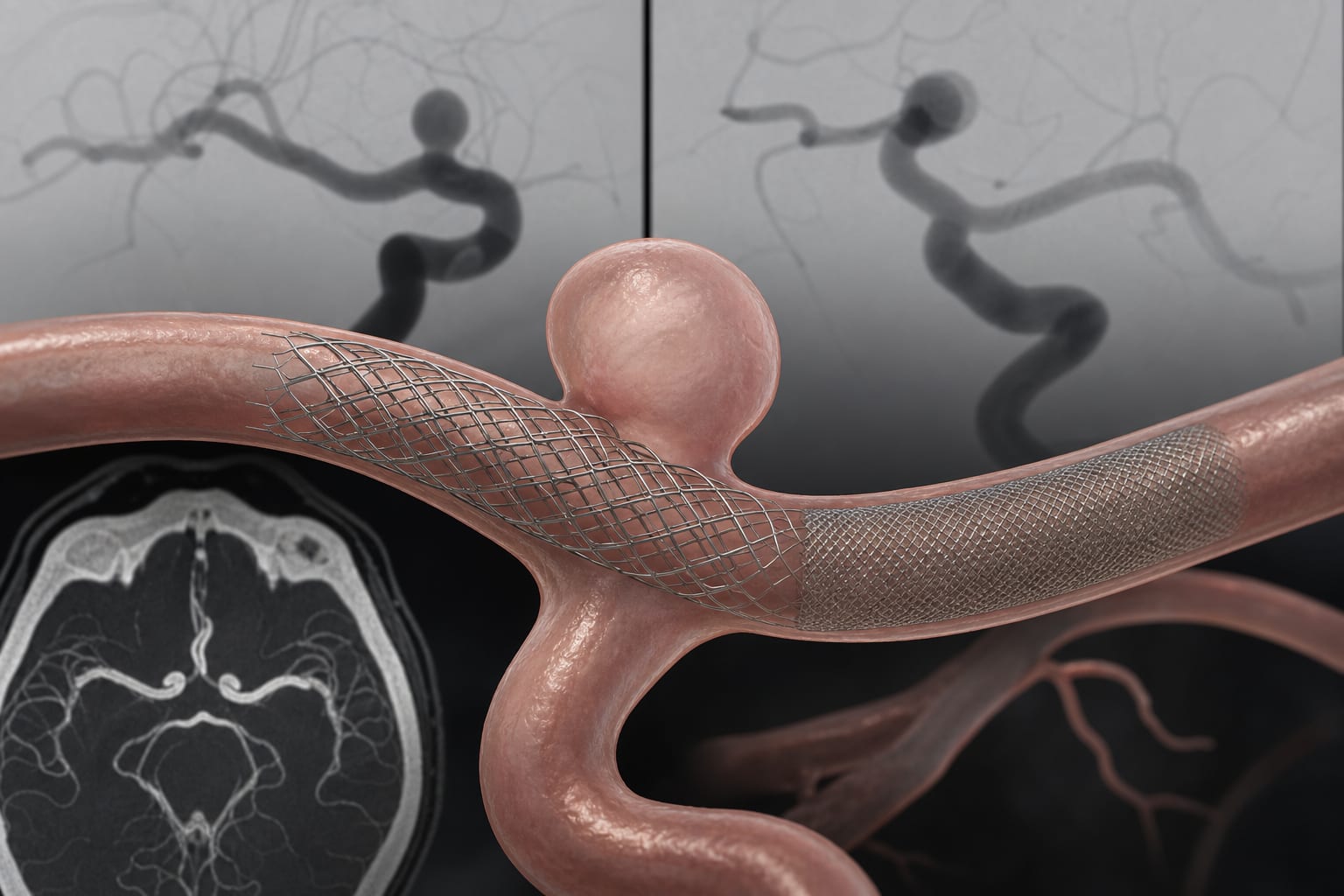
To compare the efficacy and safety of the Lattice and Pipeline flow diverters in the treatment of unruptured distal intracranial aneurysms.
Approach:
Method: Study Design
Method: Statistical Analysis
Key Findings:
No statistically significant differences in aneurysm occlusion rates between Lattice (77.8%) and Pipeline (75.9%) groups (p = 0.586), assessed using logistic regression.
Branch vessel occlusion rates were 16.7% in the Lattice group and 6.9% in the Pipeline group, with no significant difference (p = 0.317), analyzed through logistic regression.
The inflow angle (IFAA) was identified as a factor associated with delayed or incomplete aneurysm healing, with a decrease in odds of occlusion for each 1-degree increase.
Interpretation:
Both Lattice and Pipeline devices showed comparable efficacy and safety in treating distal cerebral aneurysms, with specific geometric and anatomical factors influencing outcomes.
Limitations:
The study is retrospective and may have inherent biases.
The sample size is relatively small, which may limit the generalizability of the findings.
Conclusion:
Lattice and Pipeline devices demonstrated similar outcomes in treating distal cerebral aneurysms, with certain anatomical factors affecting aneurysm occlusion.