Neurological manifestations in people with HIV in HAART era: a cross-sectional multicenter study - Summary - MDSpire

Neurological manifestations in people with HIV in HAART era: a cross-sectional multicenter study

  • By

  • Lu Lu

  • Jian Hu

  • Peiyu Wang

  • Longting Du

  • Jing Xiao

  • Guoxiang Lu

  • Kui Zhou

  • Peng Chao

  • PoWuJu Wu

  • Zhiyong Zong

  • Liyu Chen

  • Lei Chen

  • Lin Chen

  • Dong Zhou

  • Weixi Xiong

  • May 1, 2026

  • 0 min

Share

Objective:

To define the range of neurological conditions in individuals living with HIV during the HAART era.

Key Findings:
  • 69% of participants were newly diagnosed with HIV.
  • Common neurological symptoms included headache (30%), dizziness (13%), and neurobehavioral symptoms (8%).
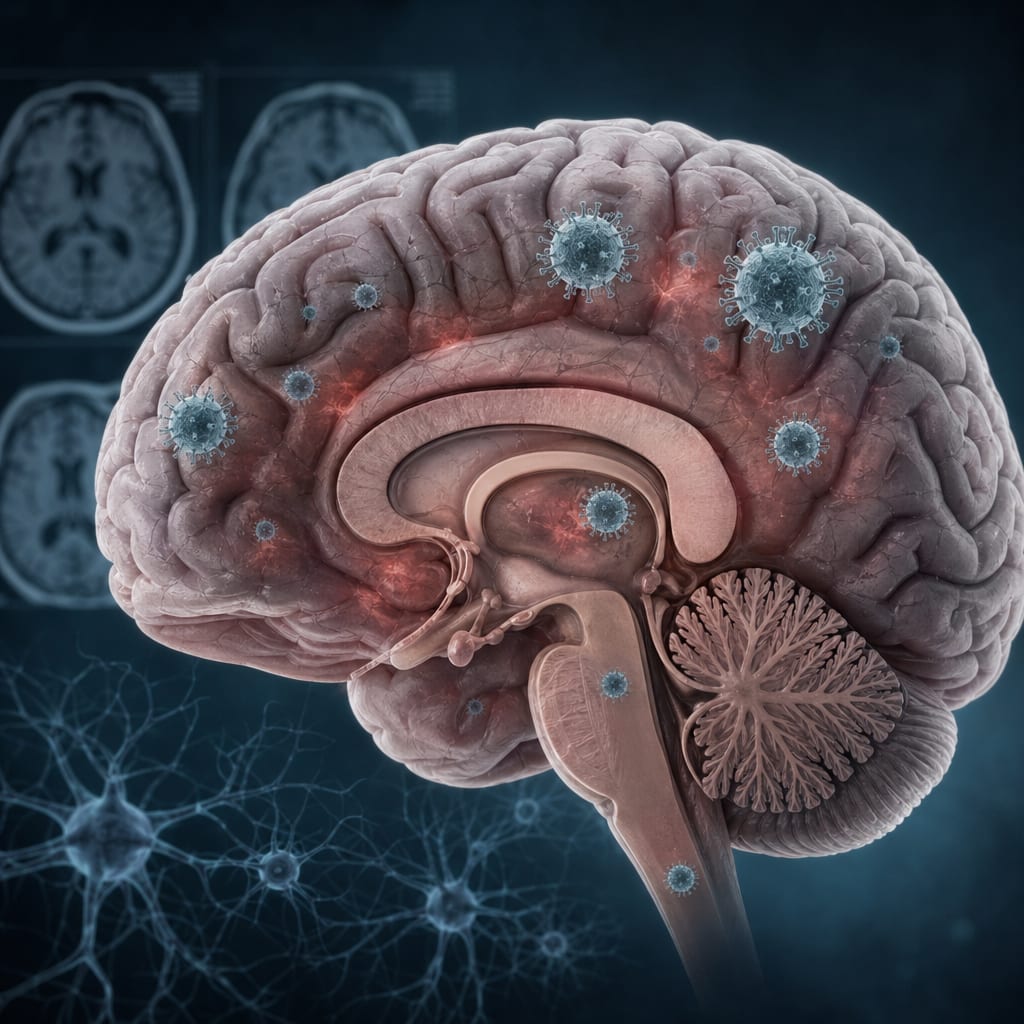
  • Intracranial infections (21%) were the most frequent discharge diagnoses, followed by cerebrovascular disorders (16%) and primary headaches (11%).
  • The three most frequently identified types of infections were viral (25%), tuberculosis (20%), and Treponema pallidum (10%).
  • Cognitive impairment was noted in 15% of participants, with 2% diagnosed with dementia.
Interpretation:

Neurological symptoms may serve as initial presentations of HIV in the HAART era, with intracranial infections being a significant concern.

Limitations:
  • Study conducted in a limited geographic area, which may affect generalizability.
  • Cross-sectional design limits causal inferences.
  • Potential biases in participant selection and reporting.
Conclusion:

The study underscores the importance of HIV screening in neurological contexts, highlighting the prevalence of neurological disorders in HIV patients.

Original Source(s)

Related Content