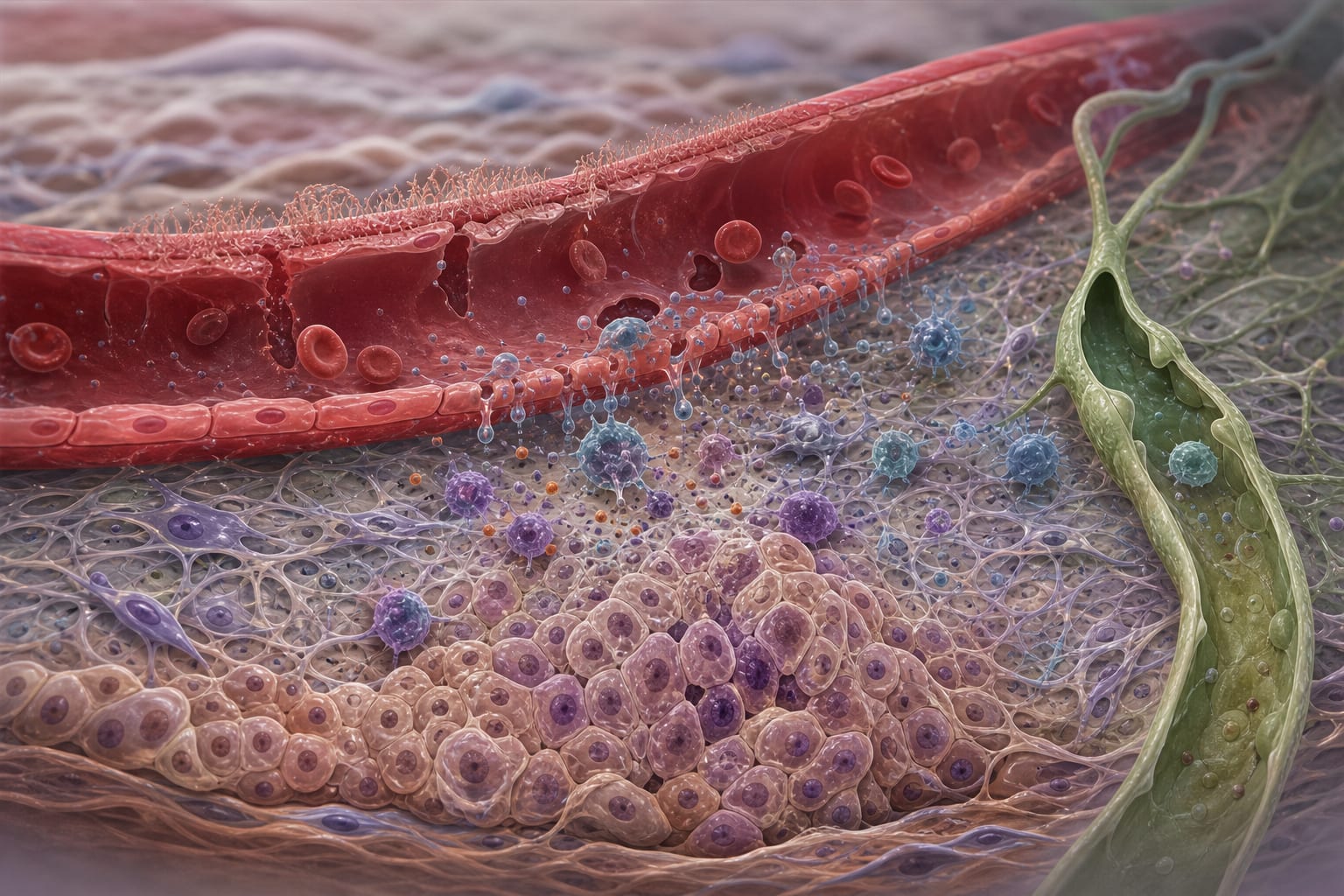
To evaluate the role of Substance P (SP) and neurokinin-1 receptor (NK1R) signaling in the perioperative setting, particularly regarding postoperative nausea and vomiting (PONV) and its potential implications for cancer biology.
Approach:
Clinical Pharmacology of PONV: The review discusses the established role of NK1R antagonists as antiemetic agents for high-risk patients experiencing PONV.
Cancer Neuro-Immune Hypothesis: It explores the hypothesis that perioperative SP/NK1R signaling may influence tumor microenvironment interactions and immune responses.
Biological Mechanisms: The review integrates evidence from cancer neuroscience, including the role of sensory neurons and neuropeptides in tumor growth and immune modulation.
Key Findings:
NK1R antagonists are clinically validated for PONV but their anticancer efficacy remains unproven.
Recent studies suggest that SP can activate tumor-associated TACR1 and influence metastatic processes.
Cancer-induced nerve injury may affect immune checkpoint responses, indicating a complex interplay between neural and immune systems.
Interpretation:
SP/NK1R signaling is proposed as a candidate for perioperative research, but current evidence does not support its use as a validated oncologic intervention.
Limitations:
Available evidence is primarily based on a single breast cancer model and lacks comprehensive prospective trials.
The mechanistic understanding of SP/NK1R's role in cancer biology remains narrow and requires further investigation across diverse cancer types.
Conclusion:
SP/NK1R signaling should be viewed as a candidate for translational research, emphasizing the need for further investigation rather than as a definitive oncologic treatment.