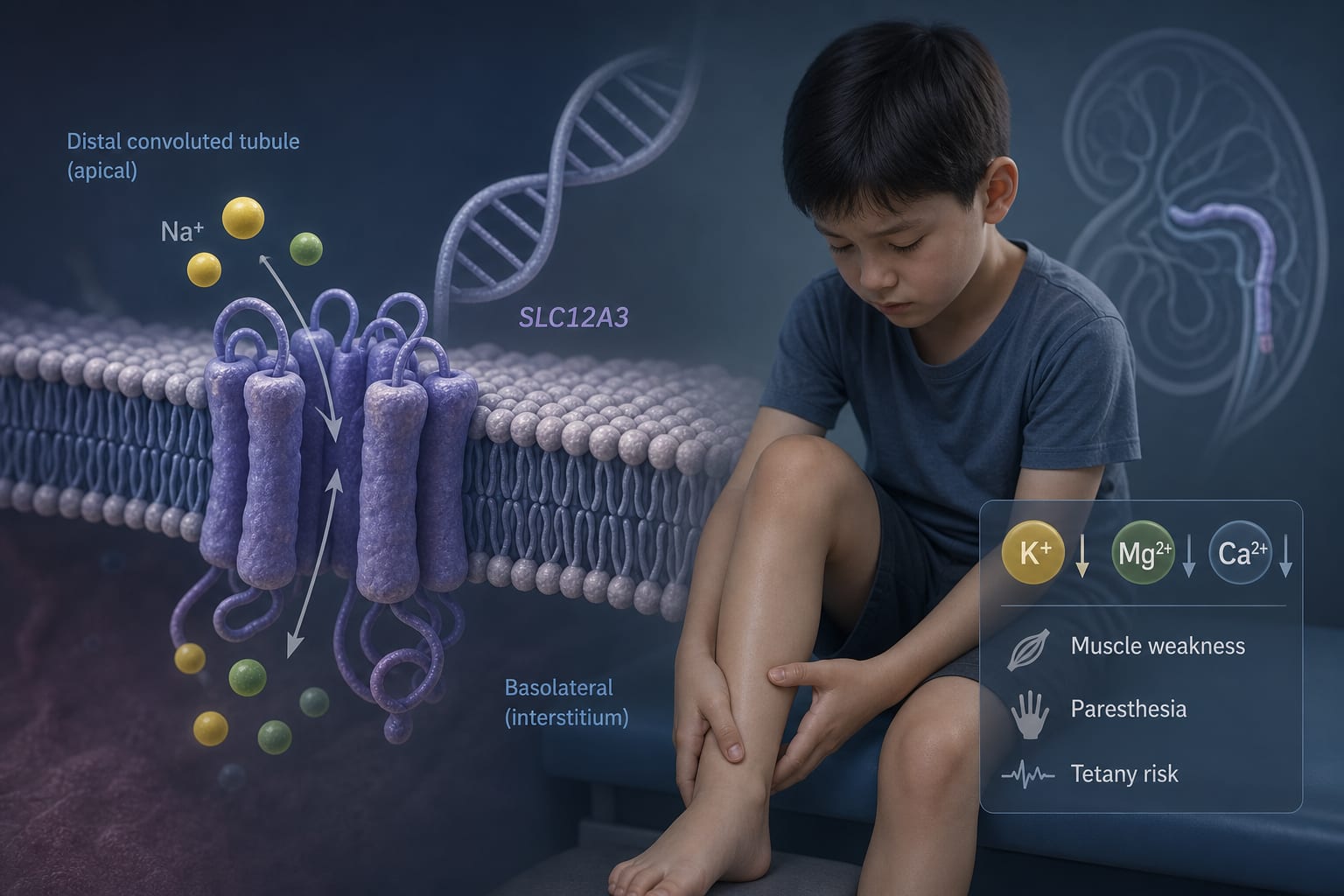
To investigate the clinical phenotype, SLC12A3 gene spectrum, and genotype–phenotype correlation in Chinese children with Gitelman syndrome (GS).
Approach:
Key Findings:
Mean onset age was 7.9 ± 3.4 years.
Common manifestations included muscle weakness (50%) and limb numbness (40%).
All patients had hypokalemia; 90% had hypomagnesemia.
Severe hypokalemia (<2.5 mmol/L) was associated with tetany, dyslipidemia, and increased urinary potassium excretion.
Genetic testing identified 55 SLC12A3 variants, including 6 novel variants, with high-frequency mutations c.1456G > A (p.D486N) and c.179C > T (p.T60M).
Interpretation:
Pediatric GS shows significant clinical heterogeneity. SLC12A3 variants are diverse, and functional domain classification does not predict phenotype.