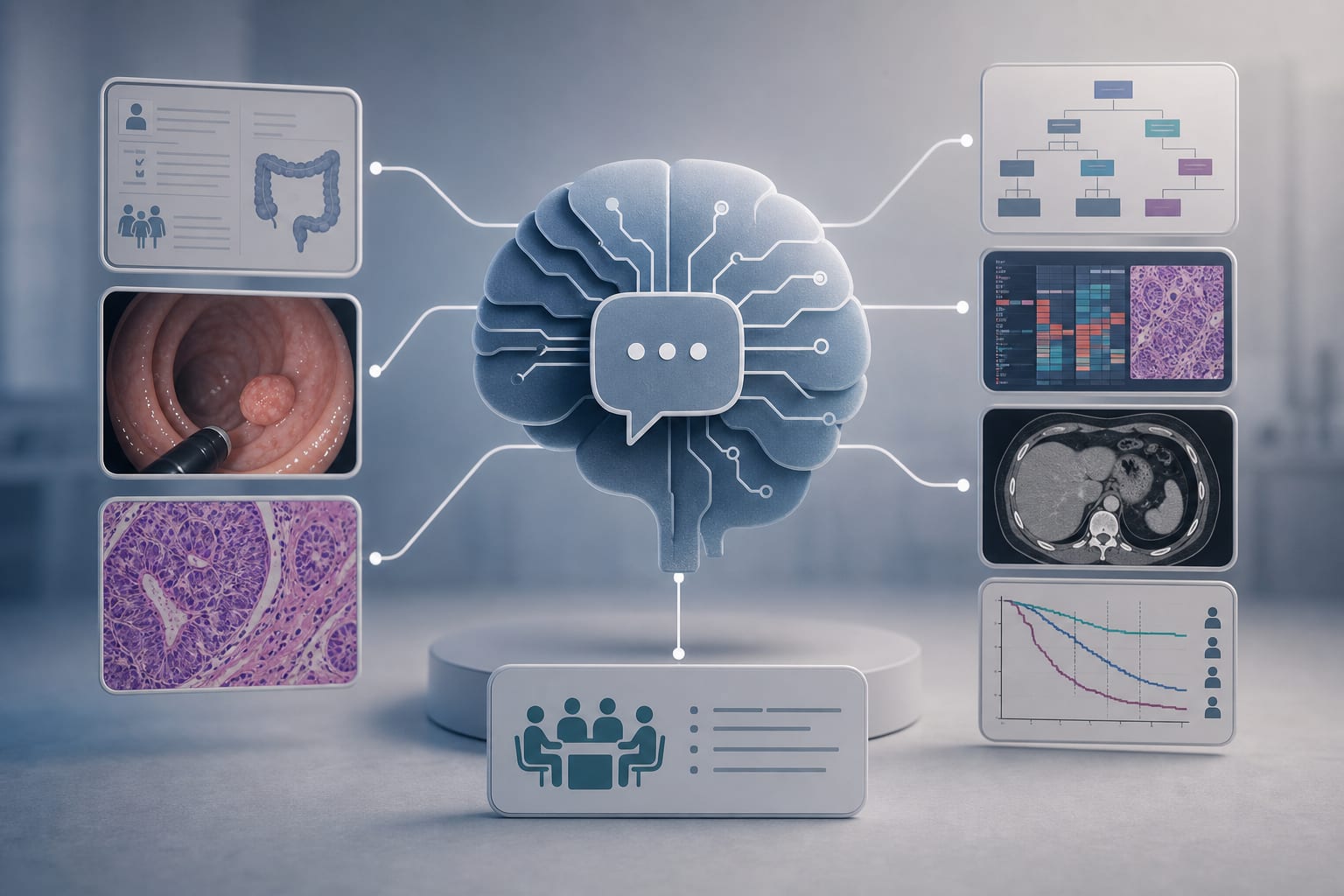
To investigate the cellular factors influencing treatment responses to immune checkpoint inhibition (ICI) in colorectal cancer (CRC) patients at single-cell resolution, emphasizing the significance of understanding these responses.
Key Findings:
Significant remodeling of tumor-infiltrating lymphocytes was observed post-ICI treatment, with responders defined as those achieving complete or partial response (CR/PR) and non-responders as stable disease (SD).
Responders exhibited strong cytotoxic T-cell activation with increased expression of GNLY, GZMB, and CXCL13, indicating effective immune response.
Non-responders showed persistent overexpression of HSPA1B, linked to immune suppression and treatment resistance.
B cells from responders had notable induction of TXNIP, indicating a pro-inflammatory phenotype associated with effective treatment.
Enhanced CXCL, IL16, and CD22 signaling pathways were identified in responders, indicating a coordinated immune communication axis that was absent in non-responders.
Interpretation:
Successful ICB responses in CRC correlate with synchronized activation of cytotoxic T lymphocytes and B lymphocytes, while elevated HSPA1B profiles are associated with treatment resistance, suggesting avenues for future research.
Limitations:
Focus primarily on tumor-intrinsic immune characteristics, lacking a broader view of systemic immune interactions that could influence treatment outcomes.
Insufficient exploration of intercellular communication networks influencing therapeutic variability, which may limit the understanding of treatment responses.
Conclusion:
The study provides insights into the mechanisms of response variability in CRC to ICB, highlighting potential targets like HSPA1B and CXCR4 for improving immunotherapy effectiveness, with implications for future clinical strategies.