Unravelling paediatric abdominal tuberculosis in a tuberculosis endemic country: diagnostic pathways and outcomes from a prospective cohort study - Summary - MDSpire
To describe clinical features, diagnostic approaches and treatment outcomes of childhood abdominal tuberculosis in a TB-endemic setting.
Approach:
Design and setting: Prospective cohort study at a tertiary paediatric referral centre in Dhaka, Bangladesh, from July 2023 to June 2025.
Participants and follow-up: Of 80 children assessed with suspected abdominal TB, 60 met diagnostic criteria and were included. All received six months of anti-tubercular therapy and were followed for one year.
Assessment: Clinical, laboratory, imaging, microbiological and histopathological findings were documented. Cases were classified as intestinal, extraintestinal or mixed TB.
Key Findings:
Of 60 children, 35 (58.3%) had intestinal TB, 17 (28.3%) extraintestinal TB and 8 (13.3%) mixed TB; 9 (15%) had concomitant pulmonary TB.
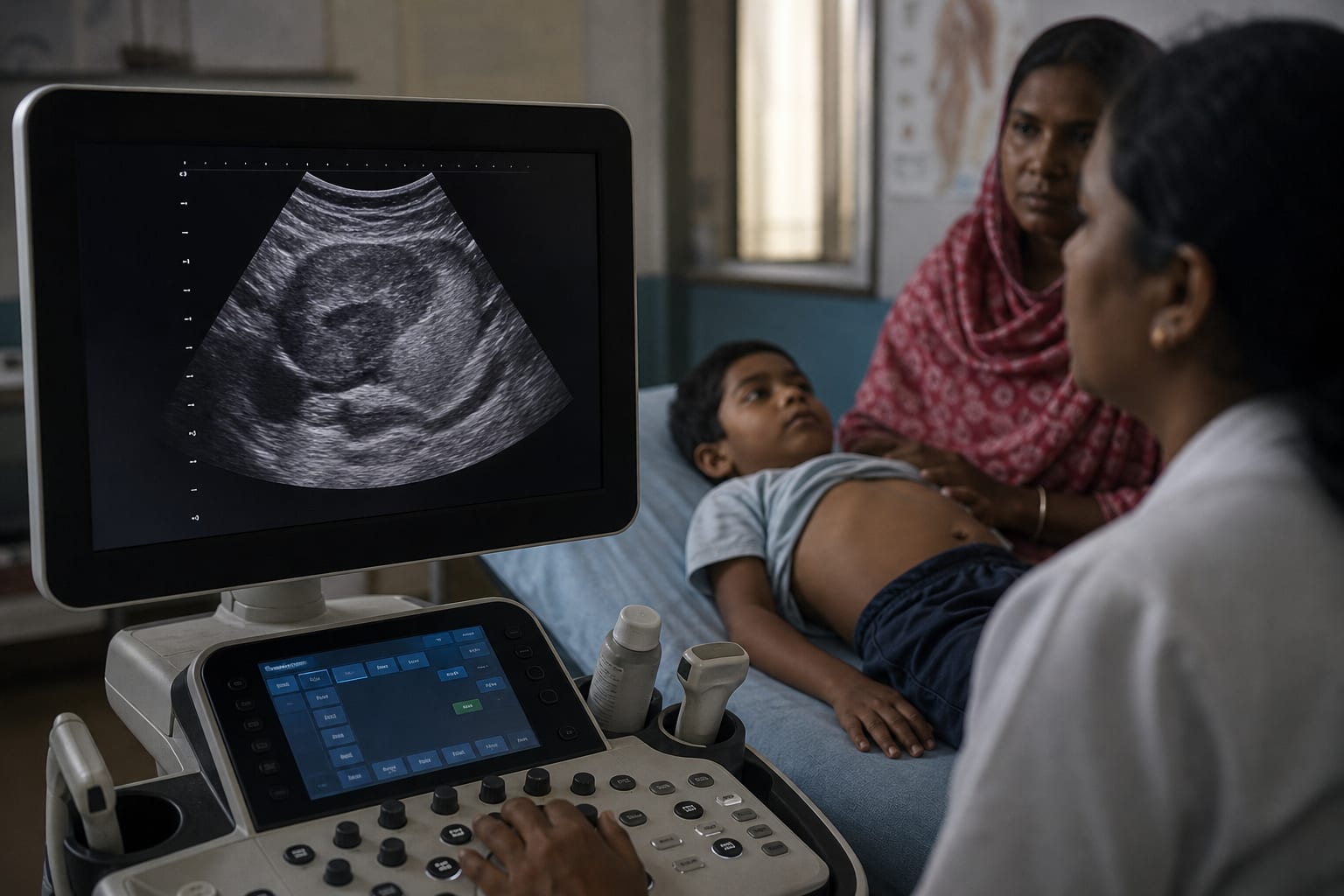
Ultrasonography showed intra-abdominal lymphadenopathy in 23 children (38.3%) and ascites in 16 (26.7%).
Among 43 children who underwent colonoscopy, 38 (88.4%) had suggestive macroscopic findings and 20 (46.5%) had granuloma.
All children completed follow-up. Complete treatment response occurred in 59 (98.3%); five (8.3%) developed drug-induced hepatitis, and one (1.7%) died after surgically managed intestinal perforation.
Interpretation:
Diagnostic approaches differed by abdominal TB subtype. The authors report that biochemical confirmation was confined to peritoneal TB, mixed TB commonly involved combined microbiological and histological confirmation, and all cases diagnosed through response to anti-tubercular therapy were in the intestinal TB group.
Limitations:
The single-centre design may limit generalisability.
Conclusion:
The authors state that early recognition in TB-endemic settings requires a high index of suspicion, complementary diagnostic assessments and consideration of therapeutic response.