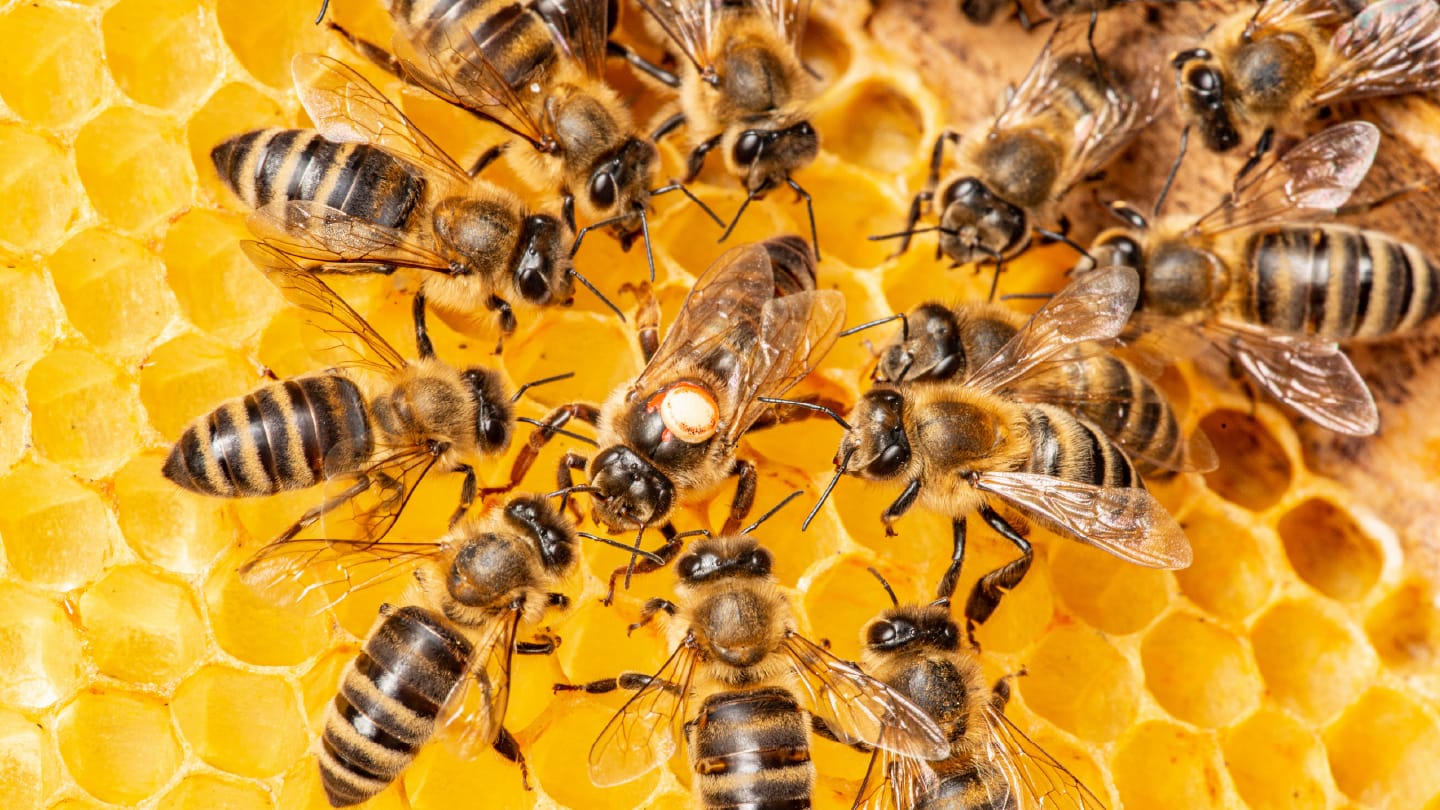
To investigate how honeybee queens transfer pesticide residues into their eggs when colony-level defenses are overwhelmed.
Approach:
Study Design: The study followed radiolabeled methyl parathion through laboratory honeybee 'nanocolonies' containing one queen and 60 worker bees.
Methodology: Researchers used biological accelerator mass spectrometry (BioAMS) to trace pesticide flux across various biological samples over 10 days.
Key Findings:
Worker bees initially reduced pesticide load before it reached the queen.
Methyl parathion levels were lower in diet stored in comb cells than in source feeders, indicating worker filtration.
Stored diet became more contaminated over time, suggesting weakened worker filtration capacity.
Queens exhibited maternal offloading, transferring pesticide burdens to their eggs.
Pesticide concentrations were higher in eggs than in queen bodies or ovaries by day 10.
Interpretation:
Limitations:
The long-term effects of pesticide offloading on egg development remain uncertain.
The study does not address how effects may vary across different pesticide classes.
Researchers linked several pregnancy urinary biomarkers—especially plasticizer and combustion-related chemical metabolites—to small shifts in gestational age and fetal growth measures in the ECHO Cohort.