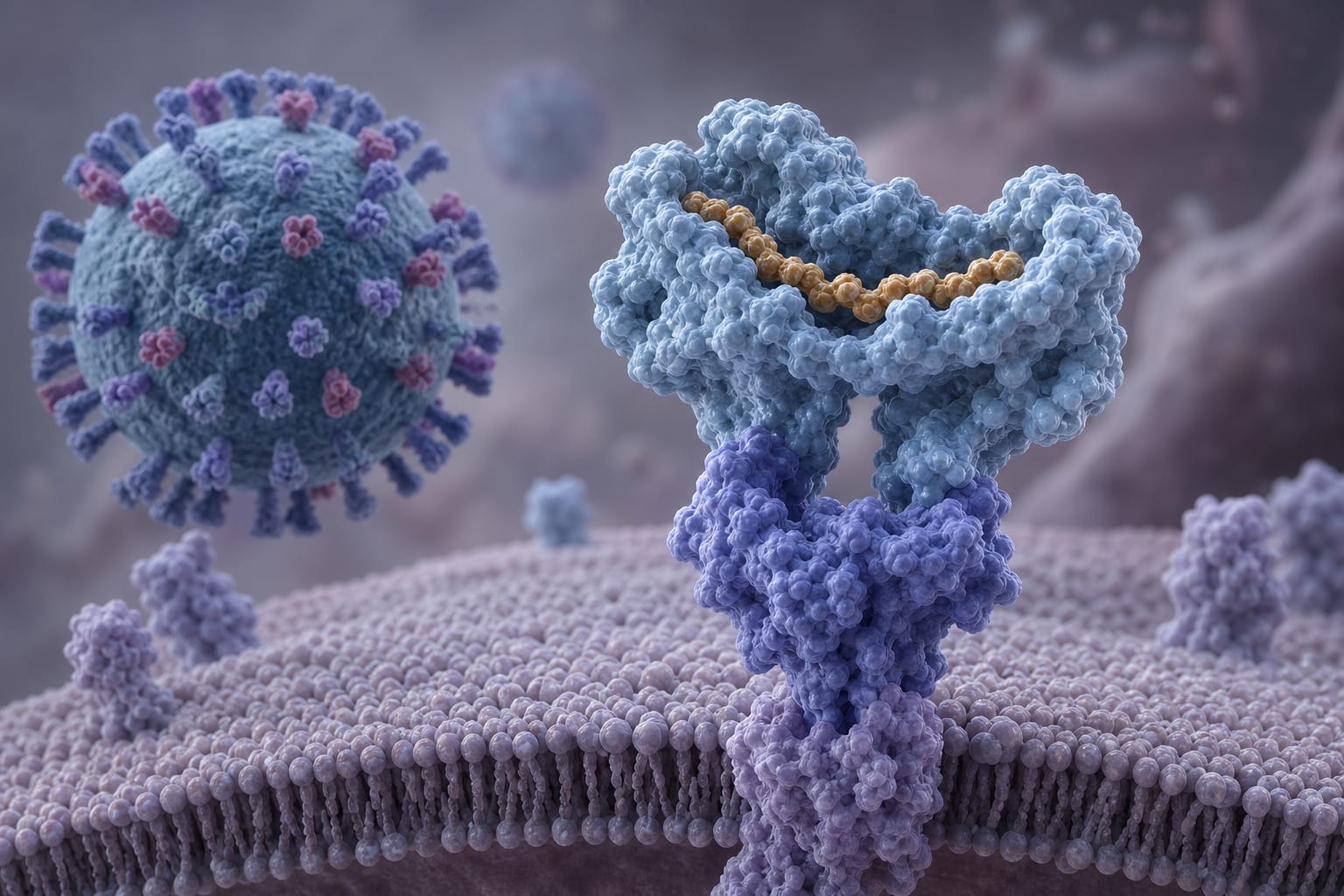
To investigate the impact of zapnometinib on the HLA-I ligandome in human lung adenocarcinoma cells infected with Influenza A virus, specifically focusing on the interaction between the drug and the virus.
Key Findings:
Zapnometinib treatment and IAV infection did not significantly alter HLA-I surface expression.
Immunopeptidomics revealed allotype-specific changes in HLA-I-presented peptides, with approximately 3–12% change per allotype.
Statistically significant modulation of defined ligand subsets was observed, with about 3–14% of ligands per condition showing log2 fold change ≥ 2.
Functional annotation analysis indicated condition-specific enrichment in distinct cellular pathways, including interferon-induced pathways, suggesting implications for antiviral responses.
Interpretation:
Zapnometinib and IAV H3N2/Fukui induce significant effects on the HLA-I ligandome without substantially affecting overall HLA-I expression, indicating a dual role in modulating viral replication and immune recognition.
Limitations:
The study focused on a specific cell line (Calu-3) and may not generalize to other cell types.
The effects observed may vary with different strains of Influenza A virus, and results may differ under varying experimental conditions.
Conclusion:
The findings support further investigation of zapnometinib as a host-directed antiviral strategy with potential for targeted immunomodulation.