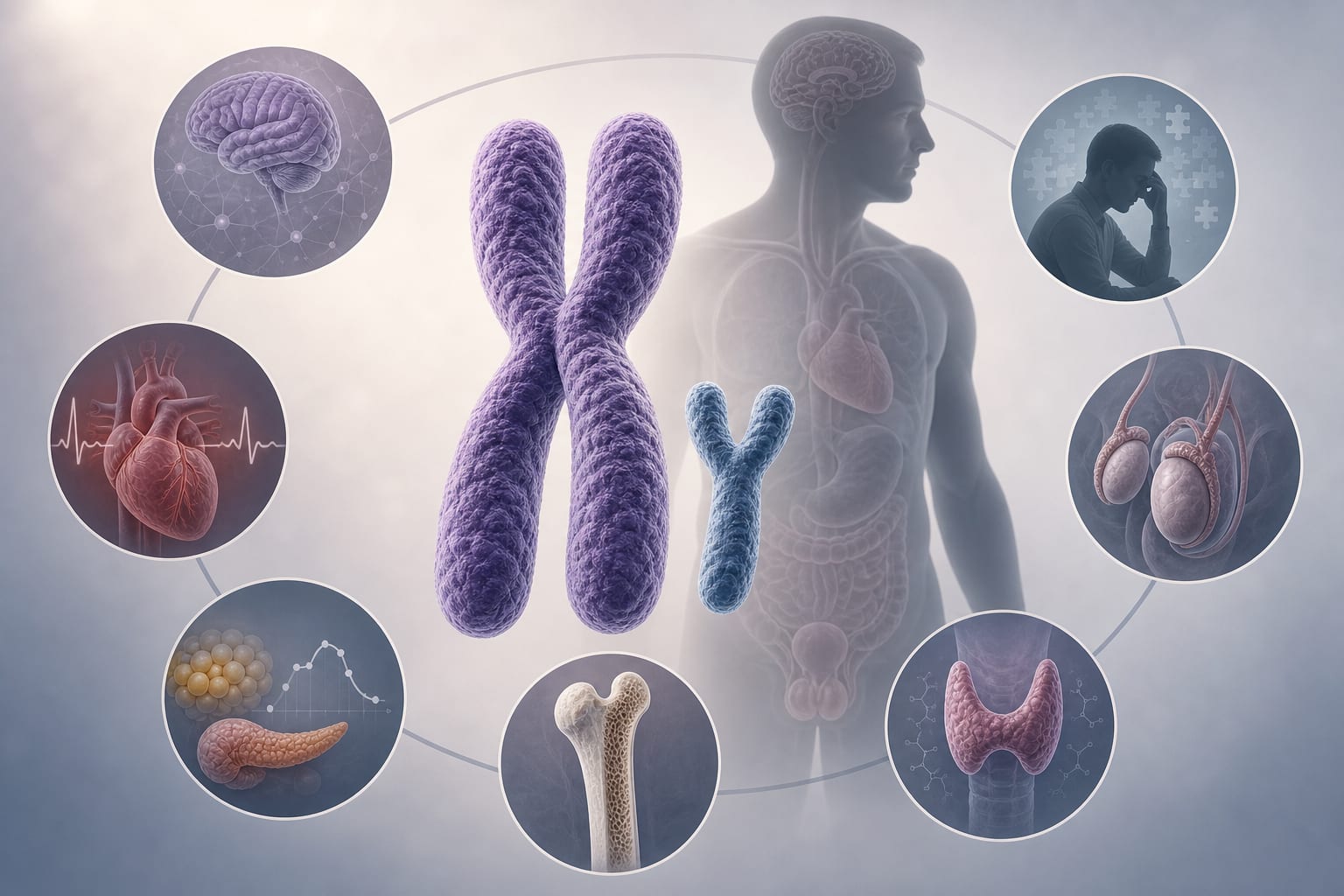
To provide an updated overview of the multisystem involvement in Klinefelter syndrome (KS) and discuss evidence-based surveillance and treatment strategies.
Approach:
Literature Search: A systematic search of PubMed/MEDLINE was conducted using terms related to Klinefelter syndrome and its various manifestations, focusing on clinical relevance and methodological quality.
Key Findings:
Klinefelter syndrome (KS) affects approximately 1 in 450–600 male births, primarily characterized by a 47,XXY karyotype.
The syndrome is associated with hypergonadotropic hypogonadism, infertility, and various systemic effects beyond reproductive health.
Men with KS have a significantly elevated risk of metabolic syndrome (34-44%) compared to healthy males (10%).
Metabolic abnormalities can be present in prepubertal boys with KS, indicating that the chromosomal aneuploidy contributes to metabolic dysregulation independent of hypogonadism.
Testosterone replacement therapy (TRT) has shown some benefits in metabolic parameters but does not significantly improve body composition in the short term.
A significant proportion of individuals with KS remain undiagnosed, leading to underreporting of associated comorbidities.
Interpretation:
The additional X chromosome in KS disrupts genetic and cellular homeostasis, leading to various systemic health issues, including metabolic syndrome, cardiovascular risks, and neurocognitive impairments.
Limitations:
A significant proportion of individuals with KS remain undiagnosed, leading to underreporting of associated comorbidities.
The review relies on existing literature, which may have variability in study design and population characteristics.
Conclusion:
Early recognition and a structured, multidisciplinary surveillance strategy are essential to improve long-term outcomes in individuals with KS.
Investigators examined Life’s Essential 8 scores and carotid ultrasonography measures across cardiovascular-kidney-metabolic stages in 1,283 young adults.