To investigate the role of ISG15 in liver fibrosis and its specific mechanisms of action in hepatic stellate cells (HSCs), including its effects on signaling pathways.
Key Findings:
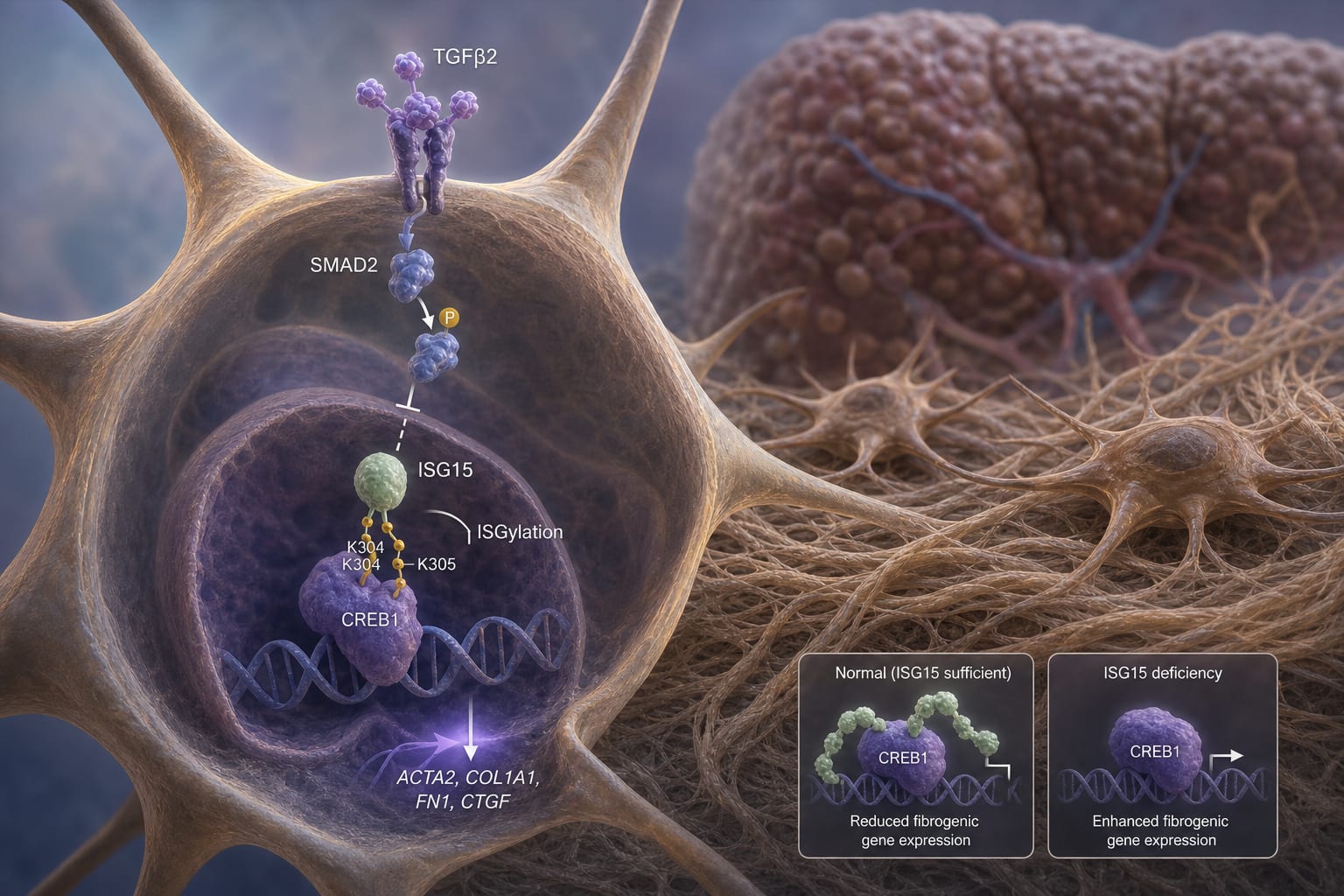
ISG15 is underexpressed in activated HSCs from fibrotic livers, indicating its potential role in fibrogenesis.
ISG15 deficiency exacerbates liver fibrosis and induces spontaneous fibrosis, highlighting its protective role.
ISG15 inhibits TGFβ2/SMAD2 signaling by ISGylating CREB1, which affects its transcriptional activity and HSC activation.
Interpretation:
The study highlights ISG15 as a critical regulator of HSC activation and liver fibrosis, suggesting its potential as a therapeutic target for liver fibrosis management.
Limitations:
The study primarily focuses on murine models, which may not fully replicate human liver fibrosis, necessitating caution in extrapolating results.
Further clinical studies are needed to validate the therapeutic implications of targeting ISG15 in human liver fibrosis.
Conclusion:
Targeting ISG15-CREB1 signaling may offer a novel therapeutic approach for liver fibrosis management.