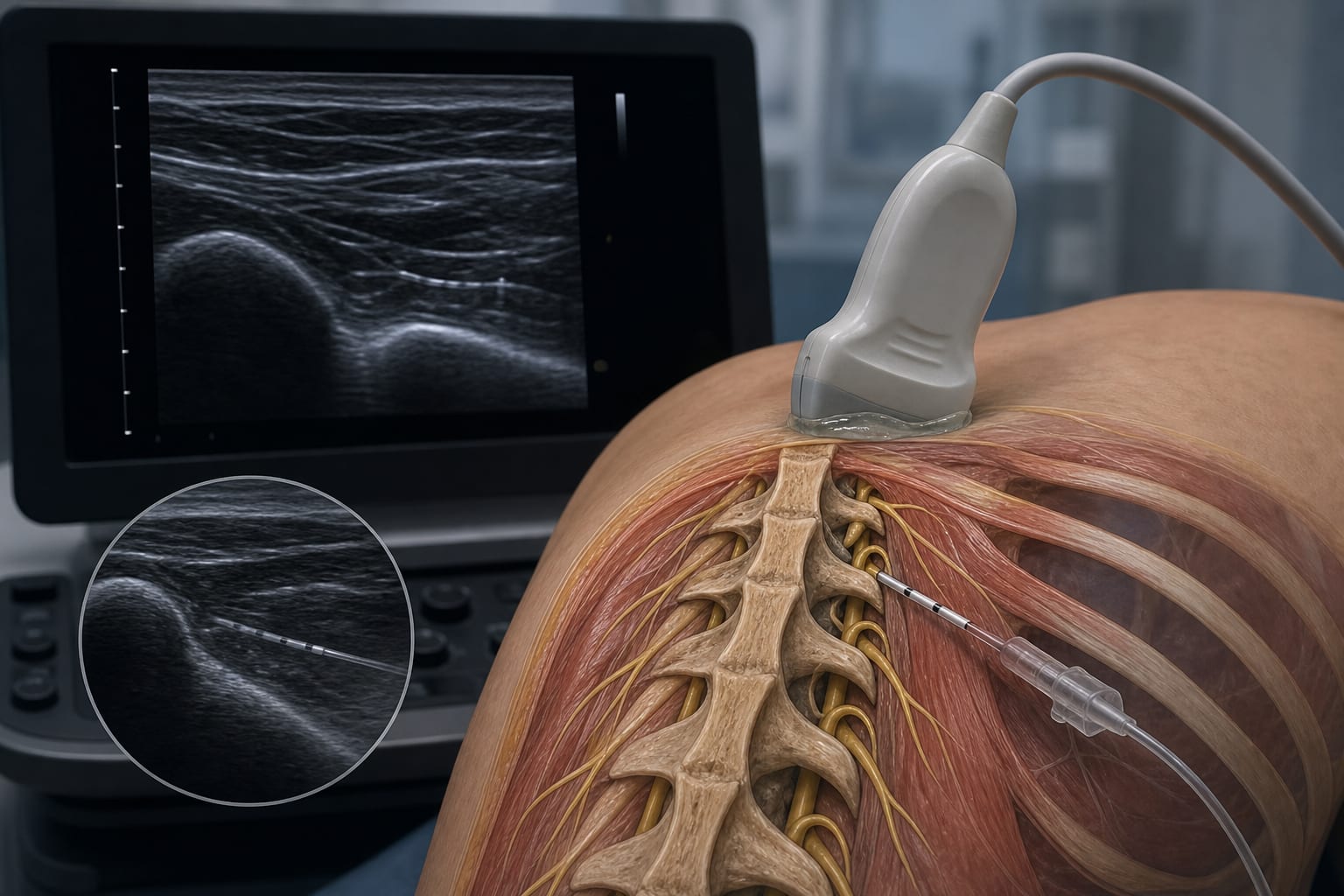
To describe the use of an ultrasound-guided thoracic paravertebral catheter for continuous analgesia in a left VATS pneumonectomy, highlighting its significance in postoperative pain management.
Key Findings:
The ultrasound-guided thoracic paravertebral catheter provided effective postoperative pain relief, suggesting its reliability in similar cases.
The patient was discharged on the 8th postoperative day without complications, indicating a successful recovery.
Interpretation:
Ultrasound-guided thoracic paravertebral catheter placement is a reliable alternative to epidural analgesia for thoracic surgeries.
Limitations:
Challenges in catheter placement and maintenance for continuous PVTB may limit its use in certain patient populations.
Potential for catheter malpositioning, particularly in obese patients, necessitates careful monitoring and technique.
Conclusion:
Ultrasound-guided thoracic paravertebral catheter placement offers excellent postoperative pain control with minimal complications, warranting further research into its broader applications.