Efficacy of wearable devices for upper and lower limb rehabilitation in stroke patients: A systematic review and meta-analysis of randomized controlled trials - Summary - MDSpire
Advertisement
Efficacy of wearable devices for upper and lower limb rehabilitation in stroke patients: A systematic review and meta-analysis of randomized controlled trials
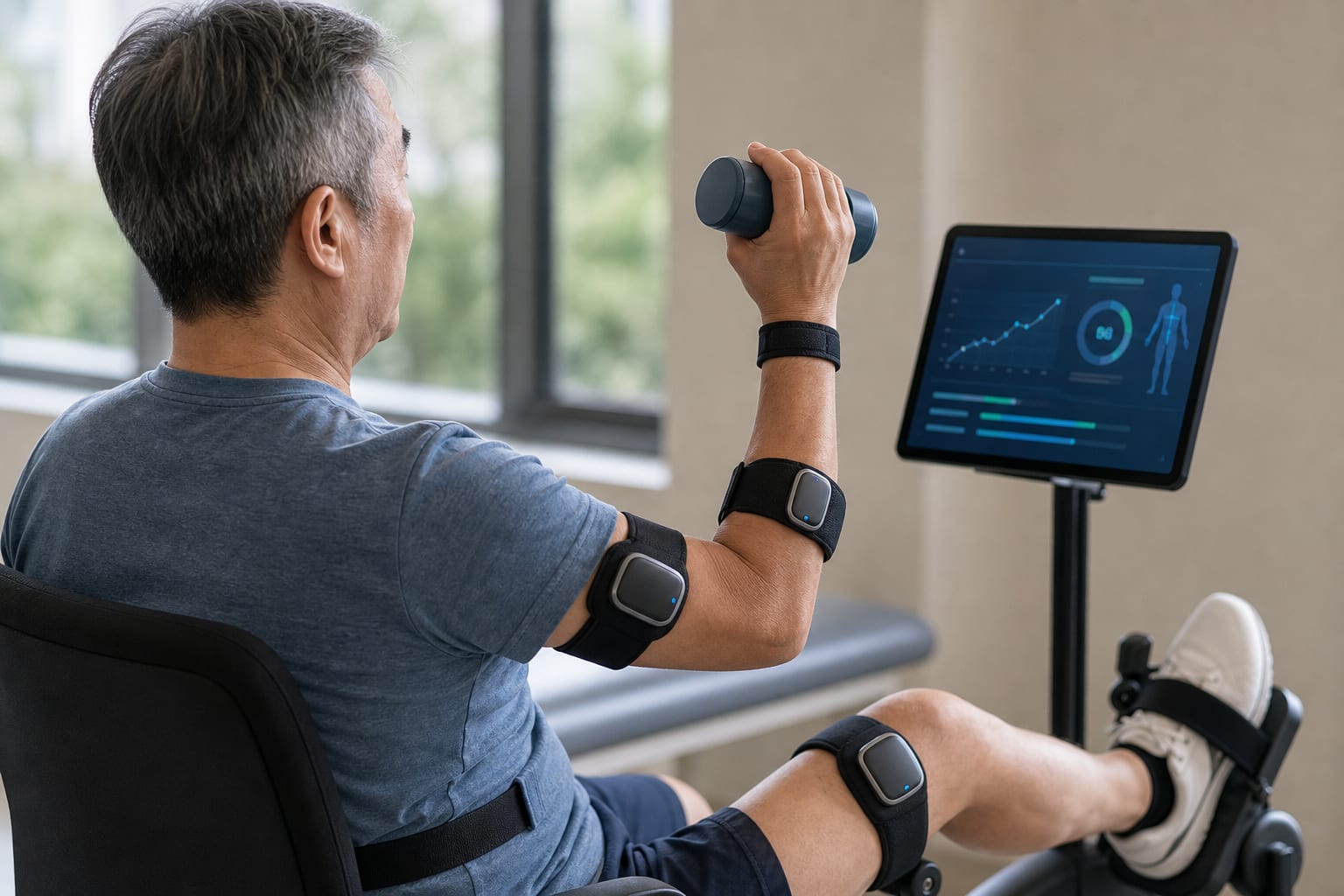
To determine the efficacy of various wearable devices, including activity trackers and smart devices, in promoting rehabilitation for stroke patients through a systematic review and meta-analysis of randomized controlled trials.
Key Findings:
Wearable devices can improve upper limb function and daily living activities in stroke patients, with studies showing an average improvement of X% in functional scores.
Rehabilitation programs utilizing wearable technology show significant benefits in functional restoration, with a reported effect size of Y.
Wearable devices enhance patients' perceptual abilities and promote physical activity, leading to an increase in daily activity levels by Z%.
Interpretation:
The findings suggest that wearable technology is a viable option for enhancing rehabilitation outcomes in stroke survivors, addressing both functional recovery and self-management.
Limitations:
Limited to studies published in English or Chinese, which may introduce language bias.
Potential variability in wearable device types and rehabilitation protocols across studies, affecting comparability.
Exclusion of qualitative research may overlook patient experiences and perspectives, limiting understanding of user satisfaction.
Conclusion:
Wearable technology presents a promising approach to support rehabilitation in stroke survivors, warranting further research to optimize its application in clinical settings.