The impact of early nutritional and immune status assessment on all-cause mortality in patients with intracerebral hemorrhage in the intensive care unit: a retrospective study - Summary - MDSpire
Advertisement
The impact of early nutritional and immune status assessment on all-cause mortality in patients with intracerebral hemorrhage in the intensive care unit: a retrospective study
To assess the association between the hemoglobin–albumin–lymphocyte platelet (HALP) score and all-cause mortality among patients with intracerebral hemorrhage (ICH).
Approach:
Data Collection: Retrospective data was collected from two distinct cohorts of patients with ICH.
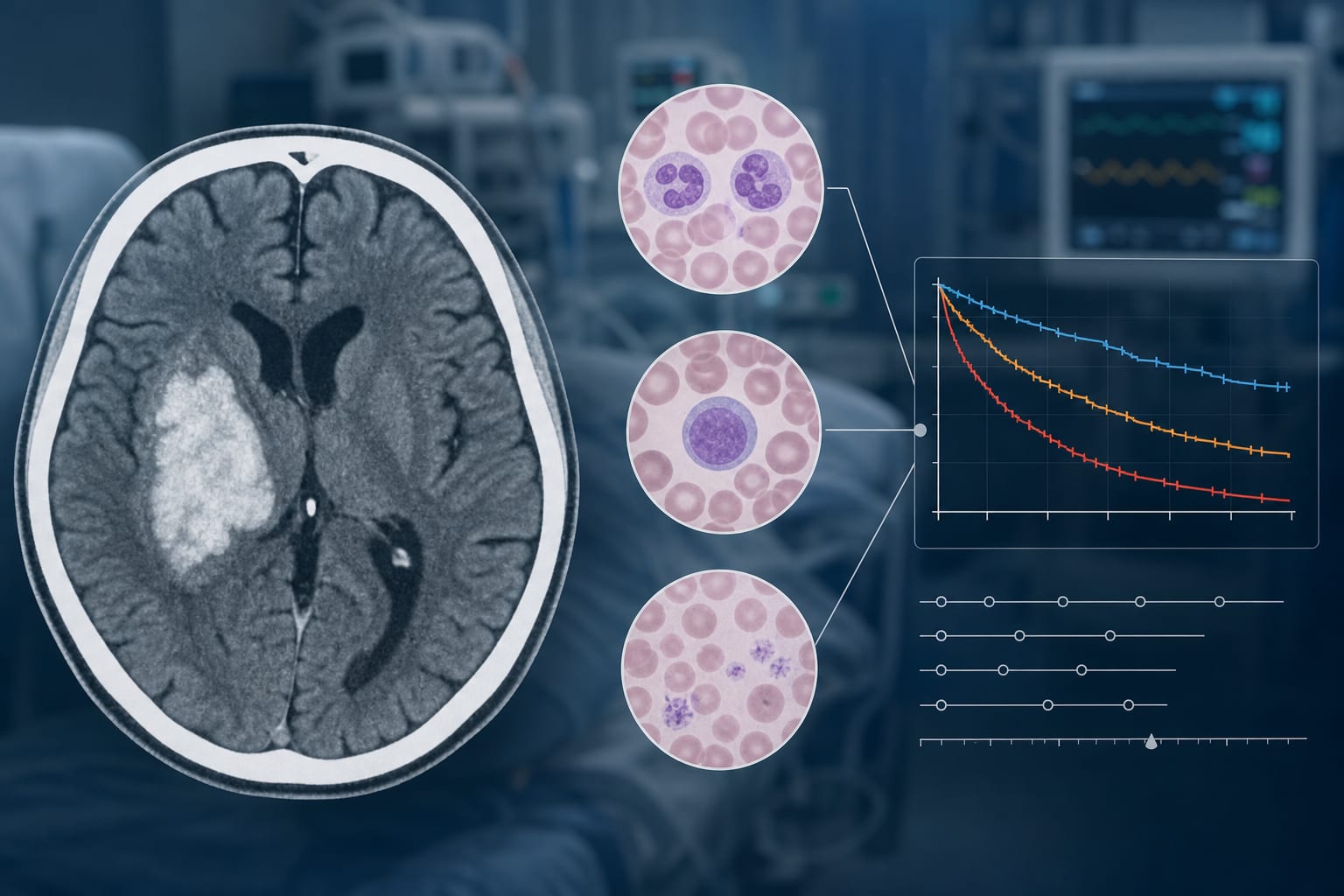
Statistical Analysis: Kaplan–Meier survival curves and restricted cubic spline (RCS) regression analysis were used to analyze the association between the HALP score and mortality outcomes.
Risk Prediction Model: A risk prediction nomogram was developed and validated in an external cohort.
Key Findings:
30-day, 90-day, and 365-day mortality rates were 29.08%, 34.49%, and 41.84%, respectively, among 925 ICH patients.
The Q1 group (HALP < 16.87) had significantly higher mortality rates than other groups (all p < 0.001).
A non-linear correlation was found between the HALP score and mortality risk.
The nomogram achieved an area under the receiver operating characteristic (AUROC) curve of 0.825, indicating strong sensitivity and specificity.
Interpretation:
A lower HALP score is associated with increased mortality in ICH patients, and the developed risk stratification tool can help identify high-risk individuals.
Limitations:
The study is retrospective and may be subject to biases inherent in such designs.
External validation was performed, but further studies are needed to confirm findings across diverse populations.
Conclusion:
The HALP score serves as a useful prognostic tool for assessing mortality risk in ICH patients.