Isoflurane for difficult sedation in critically ill children: a retrospective analysis in a mixed pediatric intensive care population - Summary - MDSpire
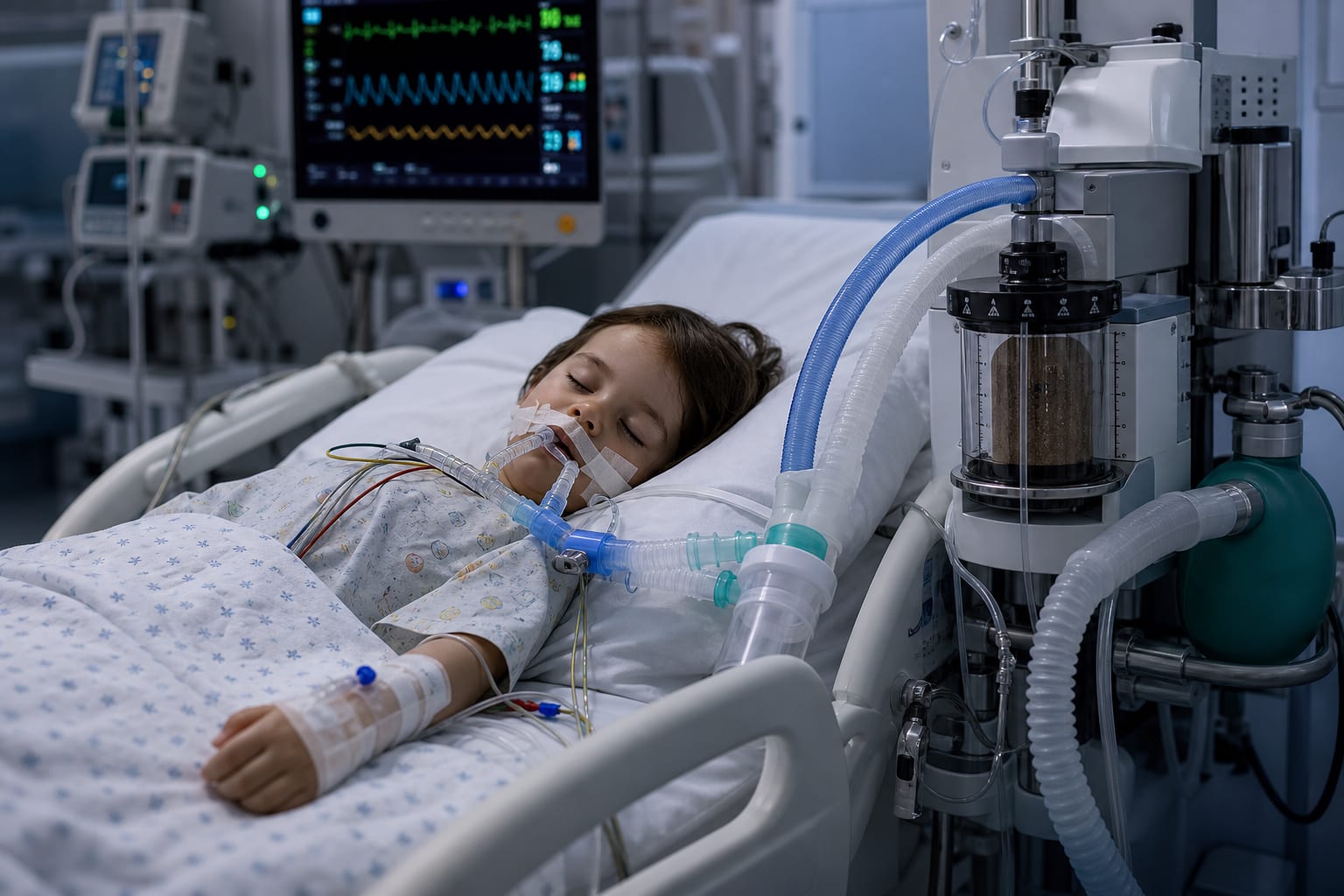
To evaluate inhaled isoflurane as a rescue sedation strategy in mechanically ventilated children with failure of a conventional sedation regimen.
Key Findings:
Twenty-one children were analyzed with a median age of 3.0 years.
Isoflurane was initiated after a median of 3 days of prior sedation and continued for a median of 8 days.
The median number of sedative agents decreased from 4 to 3 (p < 0.001).
Doses of clonidine, sufentanil, and propofol were significantly reduced.
Rescue medication use for breakthrough agitation declined from 100% to 42.9% (p < 0.001).
Vasoactive-inotropic score increased from 6.22 to 9.70 (p = 0.008).
Frequent occurrences of delirium (87.5%) and withdrawal (44%) were noted among survivors.
Interpretation:
Isoflurane can reduce sedative burden and agitation-related rescue interventions, but increased vasoactive support and frequent delirium/withdrawal were noted.
Limitations:
Retrospective design limits the ability to establish causality.
No formal primary endpoint was pre-specified, making results exploratory.
Conclusion:
Isoflurane was used as a rescue sedation method in pediatric patients, with noted occurrences of hemodynamic changes and delirium.