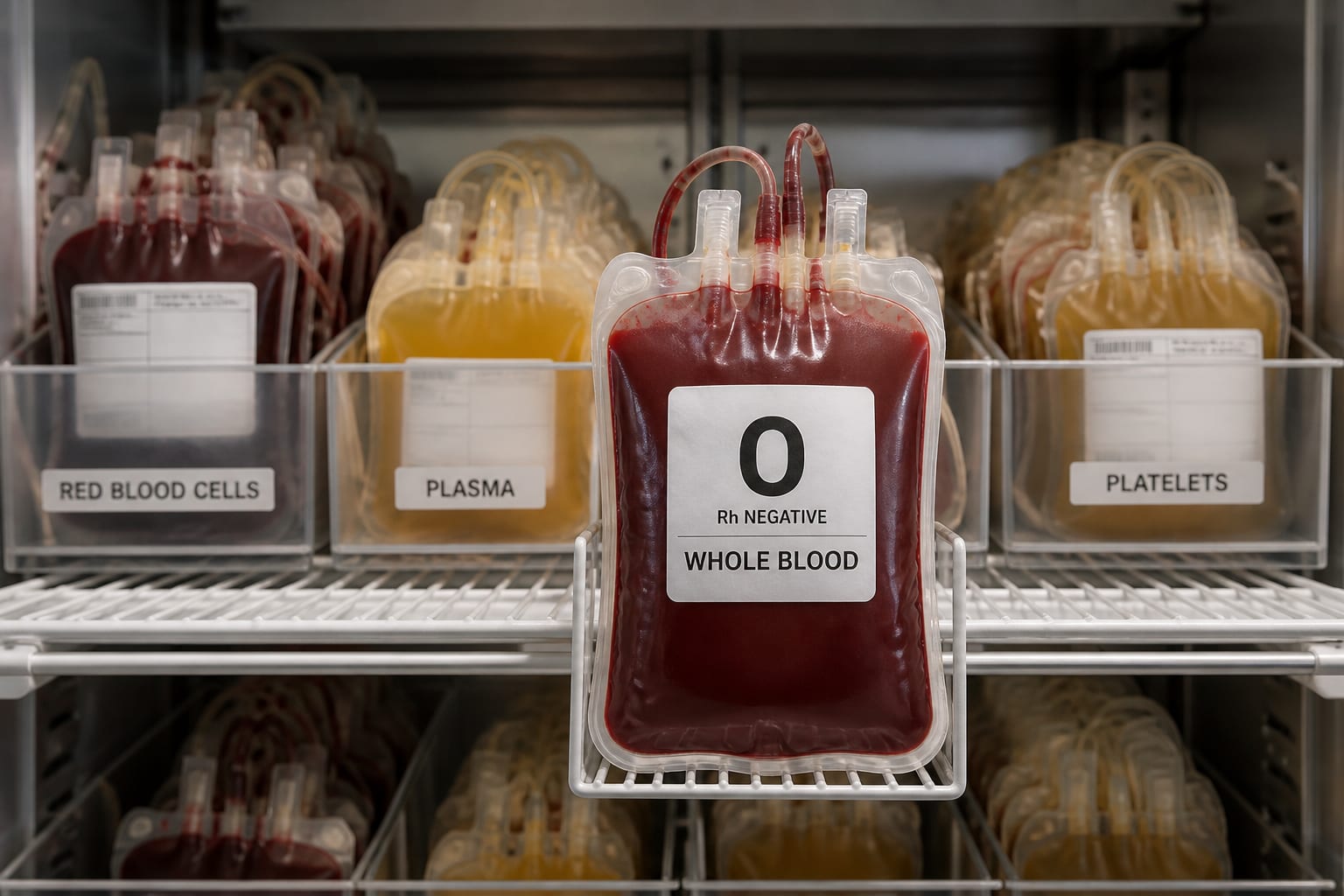
To evaluate temporal patterns in balanced component and whole blood transfusion, examine factors associated with their use, and quantify variation in adoption between hospitals.
Approach:
Study Design: Retrospective cohort analysis using the 2018–2024 American College of Surgeons Trauma Quality Improvement Program datasets.
Patient Eligibility: Trauma patients aged 16 years or older with evidence of hemorrhagic shock and receiving at least 1000 mL of blood products within the first 4 hours after arrival.
Data Analysis: Multilevel mixed-effects logistic regression to assess patient- and hospital-level factors associated with balanced component and WB utilization.
Key Findings:
Balanced component transfusion is associated with better outcomes compared to strategies with less plasma and platelet exposure.
Cold-stored, low-titer group O whole blood offers logistical advantages in trauma resuscitation.
National implementation of balanced transfusion and WB programs among US trauma centers shows considerable hospital-level variation.
Interpretation:
Adoption of balanced transfusion and whole blood strategies is increasing, but significant differences exist between hospitals in their implementation.
Limitations:
The study does not evaluate the impact of hospital-level differences in transfusion practices on patient outcomes.
Data is based on a national trauma registry, which may not capture all relevant variables influencing transfusion practices.
Conclusion:
The study highlights the need for understanding the variation in transfusion practices across hospitals to improve trauma care.
Investigators compared intra-articular microbial profiles and predicted metabolic pathways in patients with hip osteoarthritis and nonarthritic controls.