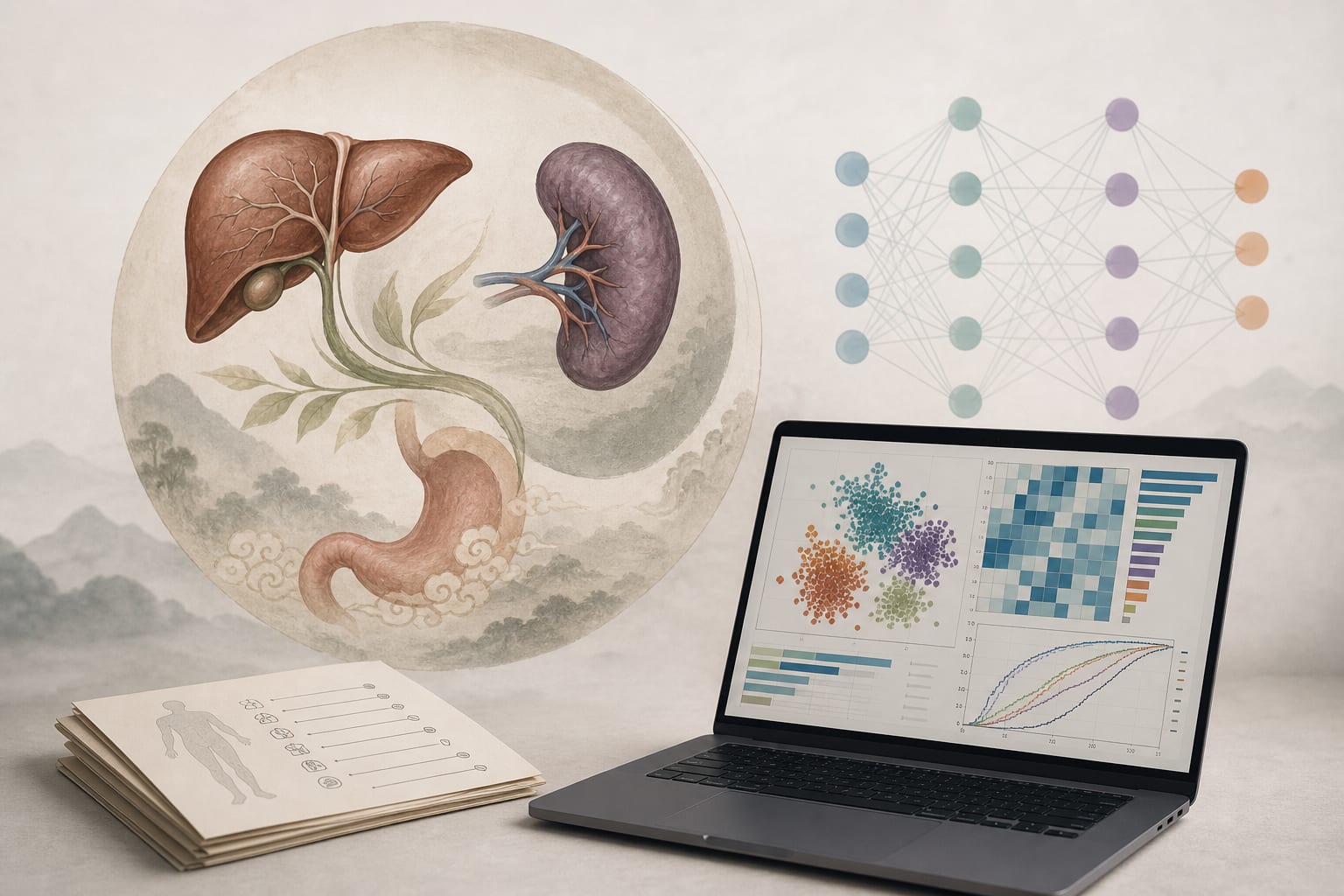
To develop a machine learning-based diagnostic model for Liver-Spleen Disharmony Syndrome (LSDS) in patients with insomnia and/or gastralgia, considering the context of Traditional Chinese Medicine (TCM).
Key Findings:
The CHAID model achieved the highest performance with an AUC of 0.889, accuracy of 0.960, sensitivity of 0.972, and specificity of 0.977, with depression or irritability identified as the most important symptom variable for LSDS.
The C5.0 model ranked second with an AUC of 0.797 and accuracy of 0.958, while other models showed progressively lower performance.
Interpretation:
The CHAID model demonstrates promise as a diagnostic tool for LSDS, but requires independent external validation before clinical application, emphasizing the need for further research.
Limitations:
The study's findings need independent external validation.
Variability in diagnostic criteria for LSDS may affect generalizability, and the sample size may influence the robustness of the findings.
Conclusion:
A machine learning-based diagnostic model for LSDS was successfully developed, with the CHAID model showing superior performance, highlighting the potential of integrating TCM insights.