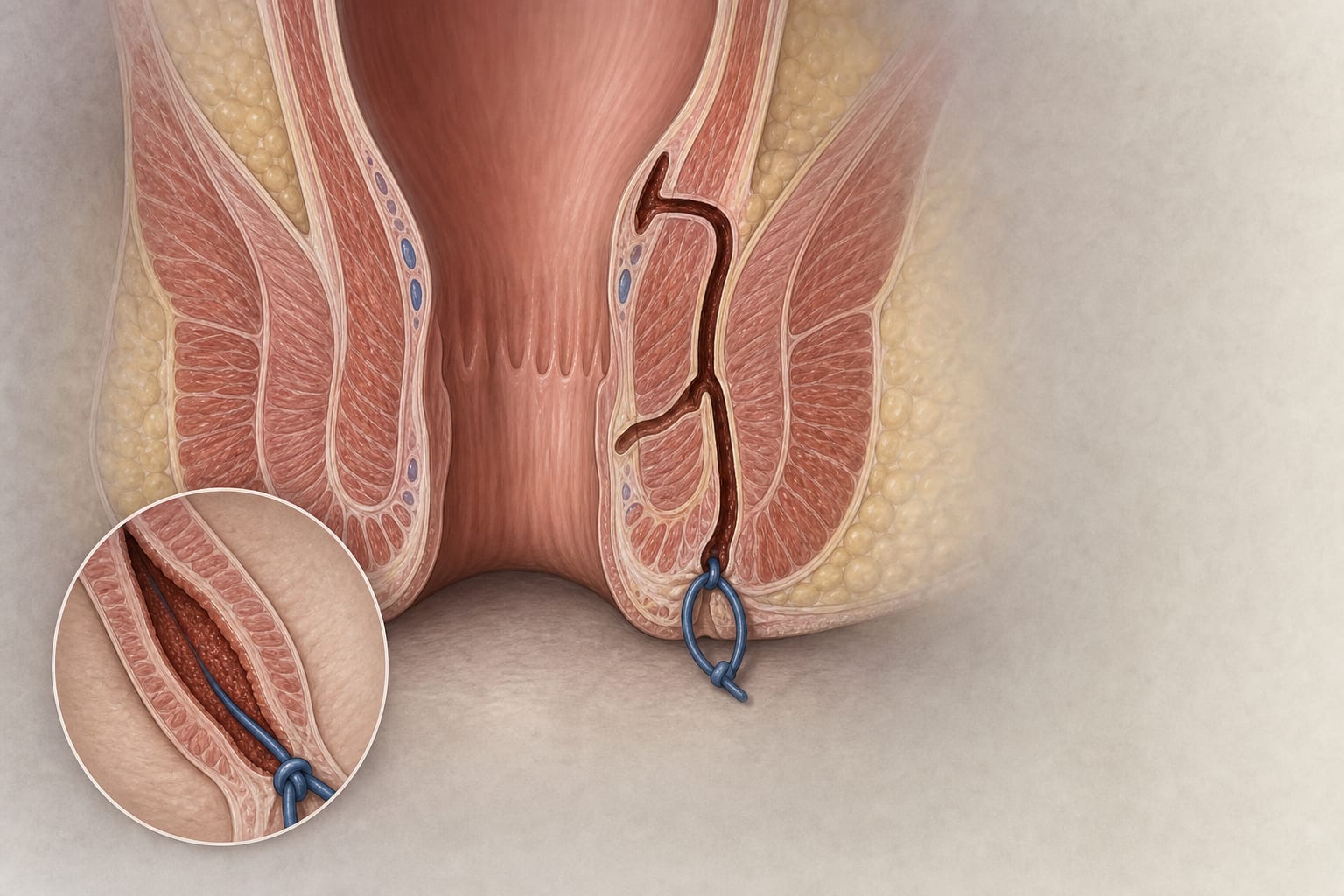
Risk factors for postoperative adverse outcomes in patients with high anal fistula undergoing modified TROPIS procedure combined with Parks’ fistulotomy with seton: a retrospective study - Summary - MDSpire
Advertisement
Identifying Risk Factors for Postoperative Complications in High Anal Fistula Patients Undergoing Modified TROPIS with Parks’ Fistulotomy and Seton: A Retrospective Analysis
To evaluate adverse outcomes and identify risk factors in patients undergoing modified TROPIS combined with Parks’ fistulotomy and seton for high anal fistula.
Key Findings:
Postoperative adverse outcomes occurred in 49 patients (22.5%).
Recurrence rate was 8.3%, incontinence 6.9%, delayed healing 10.1%, and major complications 3.7%.
Five independent risk factors identified: diabetes mellitus (adjusted OR 3.42, 95% CI 1.58–7.41), horseshoe extension (OR 2.98, 95% CI 1.45–6.12), internal sphincter incision >50% circumference (OR 2.76, 95% CI 1.32–5.78), operative time >60 min (OR 2.35, 95% CI 1.12–4.93), and BMI ≥ 28 kg/m2 (OR 2.08, 95% CI 1.05–4.12).
Model B demonstrated good discrimination (C-statistic 0.82, 95% CI 0.76–0.88; optimism-corrected 0.80) and outperformed Model A (0.74; p = 0.008).
Risk stratification identified 31.2% as high-risk with observed adverse outcome rates of 41.2% versus 14.0% in low-risk patients (p < 0.001).
Interpretation:
Limitations:
Findings require external validation in a larger cohort before clinical implementation.
Retrospective design may introduce bias, potentially affecting the reliability of the results.
Conclusion:
In conclusion, this study highlights significant risk factors associated with postoperative complications in patients undergoing modified TROPIS with Parks’ fistulotomy and seton for high anal fistula. The identification of diabetes mellitus, horseshoe extension, extensive internal sphincter incision, prolonged operative time, and elevated BMI as independent risk factors can aid in preoperative risk assessment and patient counseling. The findings underscore the necessity for careful patient selection and monitoring, particularly for those classified as high-risk, to improve surgical outcomes.