Effect of total ligamentum flavum removal on increased motion and reduced stiffness: an ex vivo biomechanical study in a lamb spine model - Summary - MDSpire
Advertisement
Effect of total ligamentum flavum removal on increased motion and reduced stiffness: an ex vivo biomechanical study in a lamb spine model
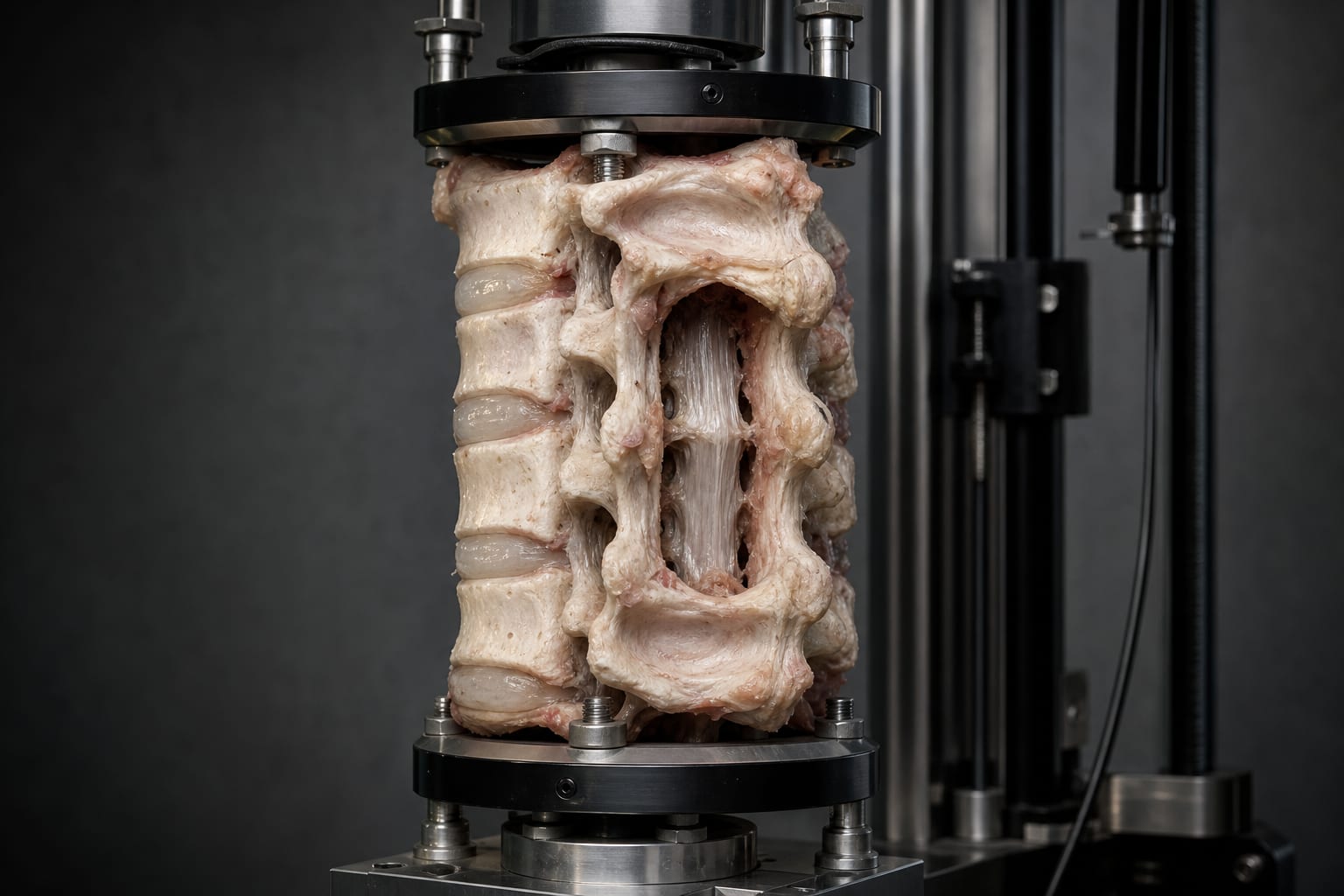
To evaluate the effects of laminotomy and total flavectomy on displacement and stiffness in a lamb lumbar spine model, specifically comparing the two procedures under various loading conditions.
Key Findings:
Total flavectomy resulted in significantly increased displacement in axial compression (p = 0.001), left bending (p = 0.001), flexion (p < 0.001), and extension (p = 0.003) compared to controls.
Stiffness was significantly reduced in left bending (p < 0.001), flexion (p = 0.004), and extension (p = 0.016) in the Laminotomy + Flavectomy group.
Isolated laminotomy caused only minor, non-significant changes in most planes.
Interpretation:
Total removal of the LF significantly increases motion and decreases stiffness, indicating its essential role in maintaining posterior tension band stability, which has important implications for surgical practice.
Limitations:
The study was conducted in an ex vivo lamb spine model, which may not fully replicate human spinal biomechanics, potentially limiting clinical applicability.
The sample size was limited to 24 spinal units, which may affect the generalizability of the findings.
Conclusion:
Total flavectomy substantially compromises segmental stability compared to laminotomy alone, suggesting that LF-preserving strategies should be prioritized when feasible to minimize the risk of postoperative instability.