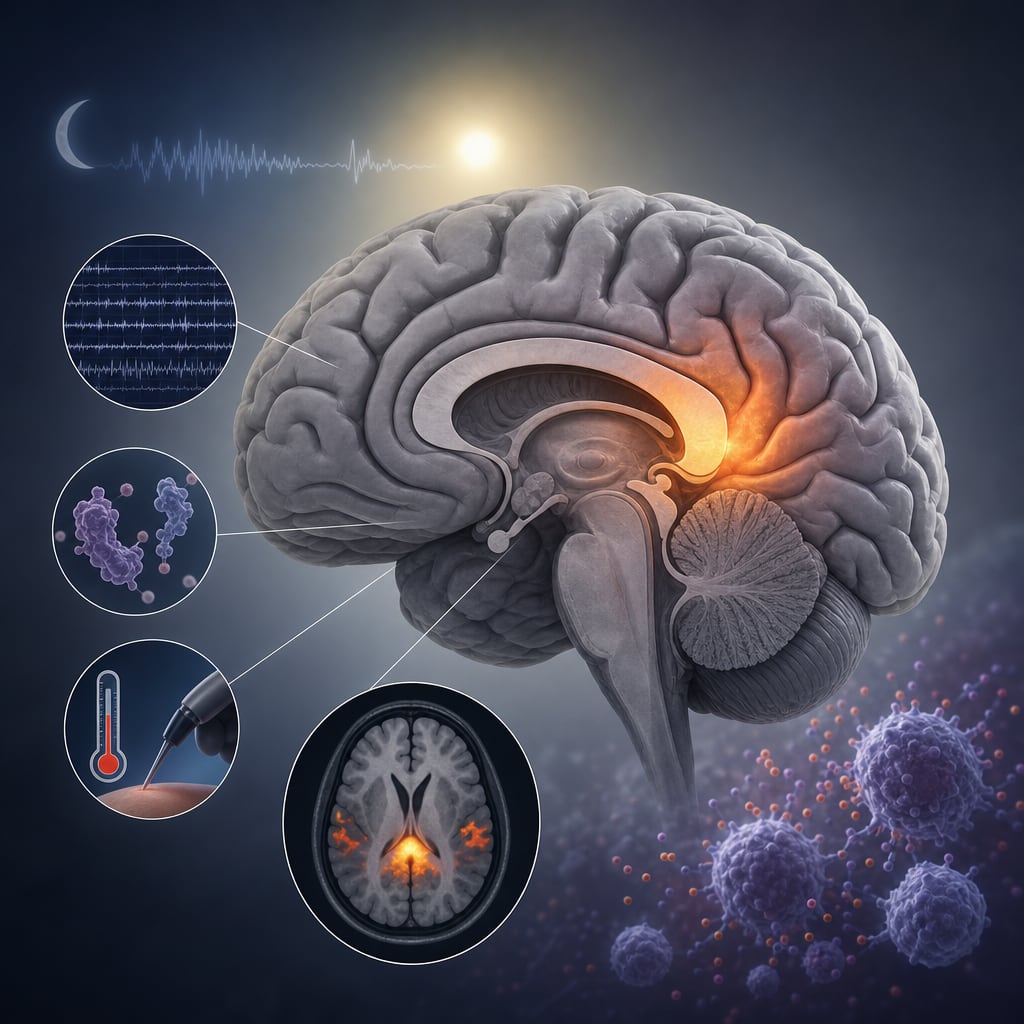
To explore inflammation-linked pain hypersensitivity triggered by sleep disturbance and define the neural correlates mediating interactions between the neuroimmune system and pain.
Approach:
Key Findings:
FA participants exhibited reduced total/slow-wave sleep, increased IL-6 levels, and decreased pain thresholds compared to US.
Task-fMRI revealed heightened activation in the precuneus and middle temporal gyrus during pain processing after FA.
Serum IL-6 inversely correlated with pain thresholds and positively correlated with precuneus activation.
Mediation analysis indicated that precuneus hyperactivity mediates the relationship between IL-6 and pain hypersensitivity.
Longitudinal data indicated that abnormal precuneus normalization was linked to worsened pain and sleep quality.
Interpretation:
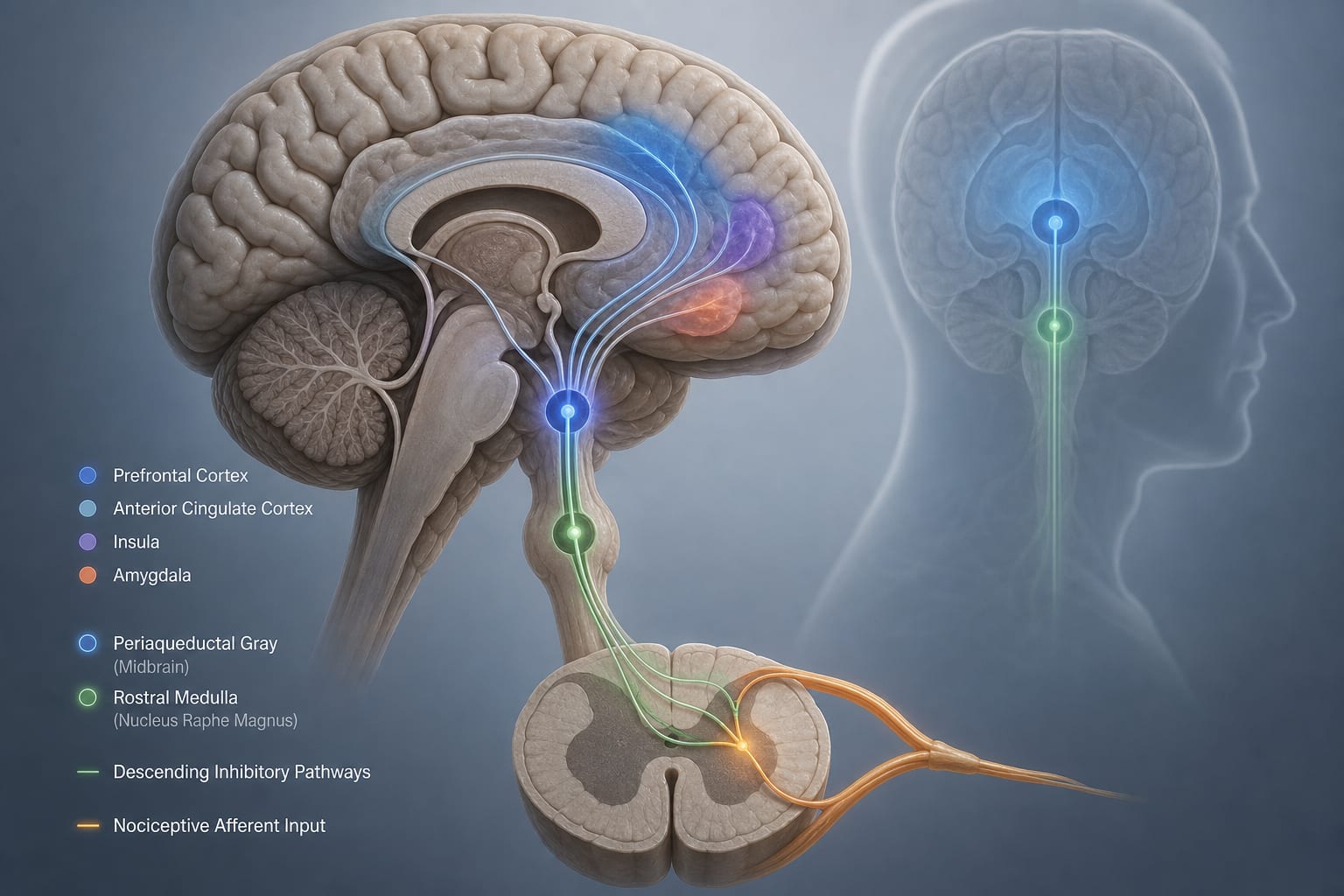
The precuneus serves as a cortical hub linking sleep disturbances, inflammatory responses, and increased pain sensitivity, suggesting a new neuroimmune pathway for pain amplification associated with sleep, warranting further investigation.
Limitations:
Limited sample size may affect generalizability of the findings.
Exclusion of participants with certain conditions may limit the applicability of findings to a specific population.
Conclusion:
The study identifies the precuneus as a critical area in the neuroimmune interaction between sleep disturbances and pain sensitivity, providing insights into potential therapeutic targets for pain management.
Patients with preoperative vitamin D deficiency had higher postoperative pain scores and opioid use after mastectomy, including more than triple the odds of moderate to severe pain within 24 hours of surgery.
A small observational study in collegiate football players found microbiome associations after nonconcussive head impacts, though findings were limited by severe underpowering and high attrition