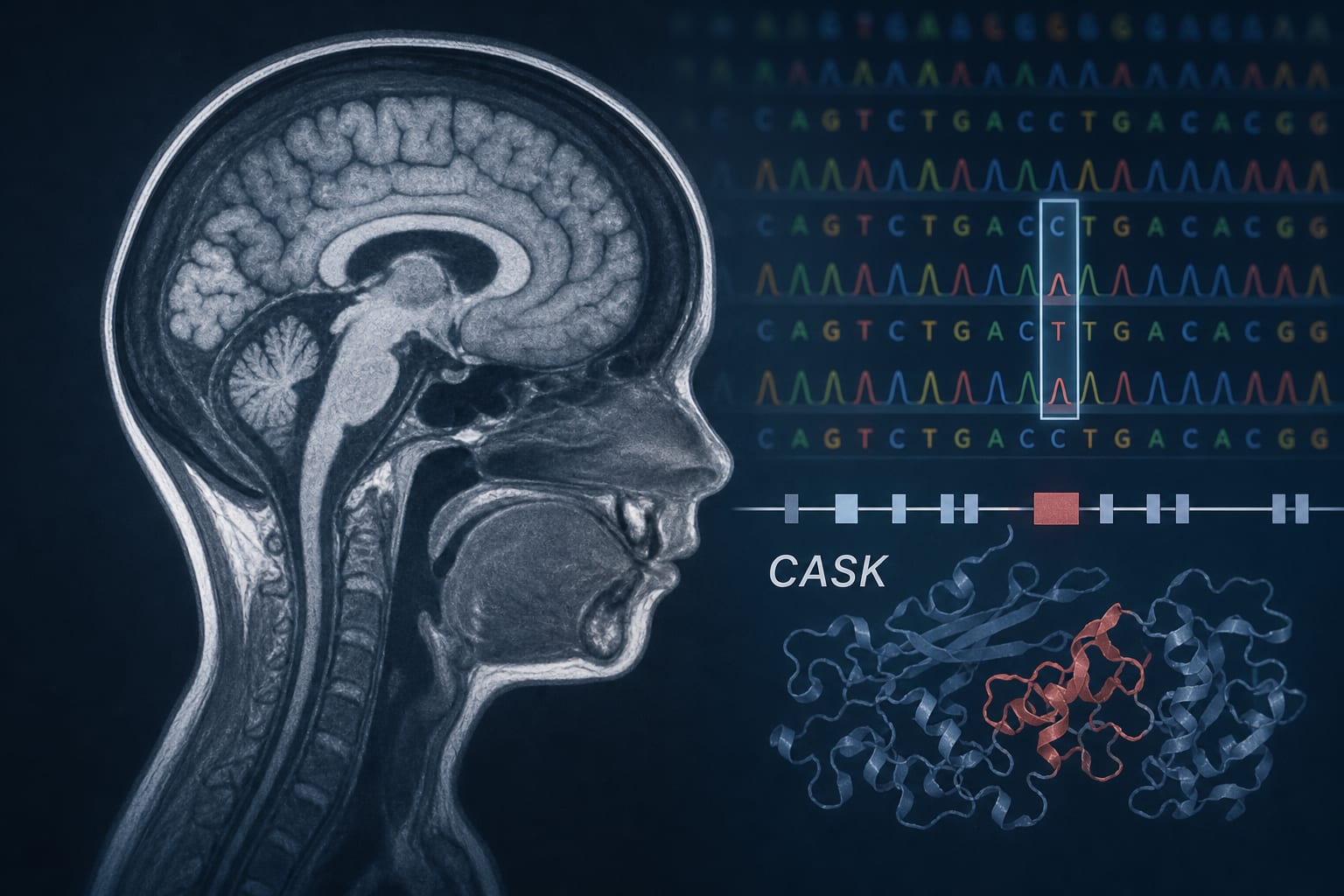
To report cases of CASK-related neurodevelopmental disorders and highlight diagnostic challenges in clinical practice.
Approach:
Study Design: Retrospective observational study with longitudinal follow-up at a tertiary pediatric neurology center over 10 years.
Patient Ascertainment: Evaluation of 6,179 pediatric patients with neurological disorders, focusing on those with clinical features suggestive of CASK-related disorders.
Clinical Evaluation: Detailed physical and neurological examinations, developmental assessments, EEG, and MRI when clinically indicated.
Genetic Analysis: Next-generation sequencing (NGS) for targeted gene panels and whole-exome sequencing to identify pathogenic CASK variants.
Key Findings:
Two female patients with de novo loss-of-function CASK variants presented with MICPCH and progressive developmental impairment, with one case also exhibiting epilepsy.
One male patient with an inherited likely pathogenic missense variant exhibited severe intellectual disability, drug-resistant epilepsy, autistic features, and a cerebral palsy-like phenotype without microcephaly or pontocerebellar malformations.
All patients demonstrated periods of developmental arrest or regression, indicating non-linear developmental trajectories.
Marked intrafamilial phenotypic variability was observed among the patients.
Interpretation:
CASK-related disorders may present with severe neurodevelopmental impairment and cerebral palsy-like phenotypes, even in the absence of characteristic neuroimaging findings.
Limitations:
The study is retrospective and may not capture all cases of CASK-related disorders.
The true prevalence of CASK-related disorders is likely underestimated, particularly in milder presentations.
Conclusion:
Comprehensive genetic testing, including next-generation sequencing, is essential for accurate diagnosis of CASK-related disorders.