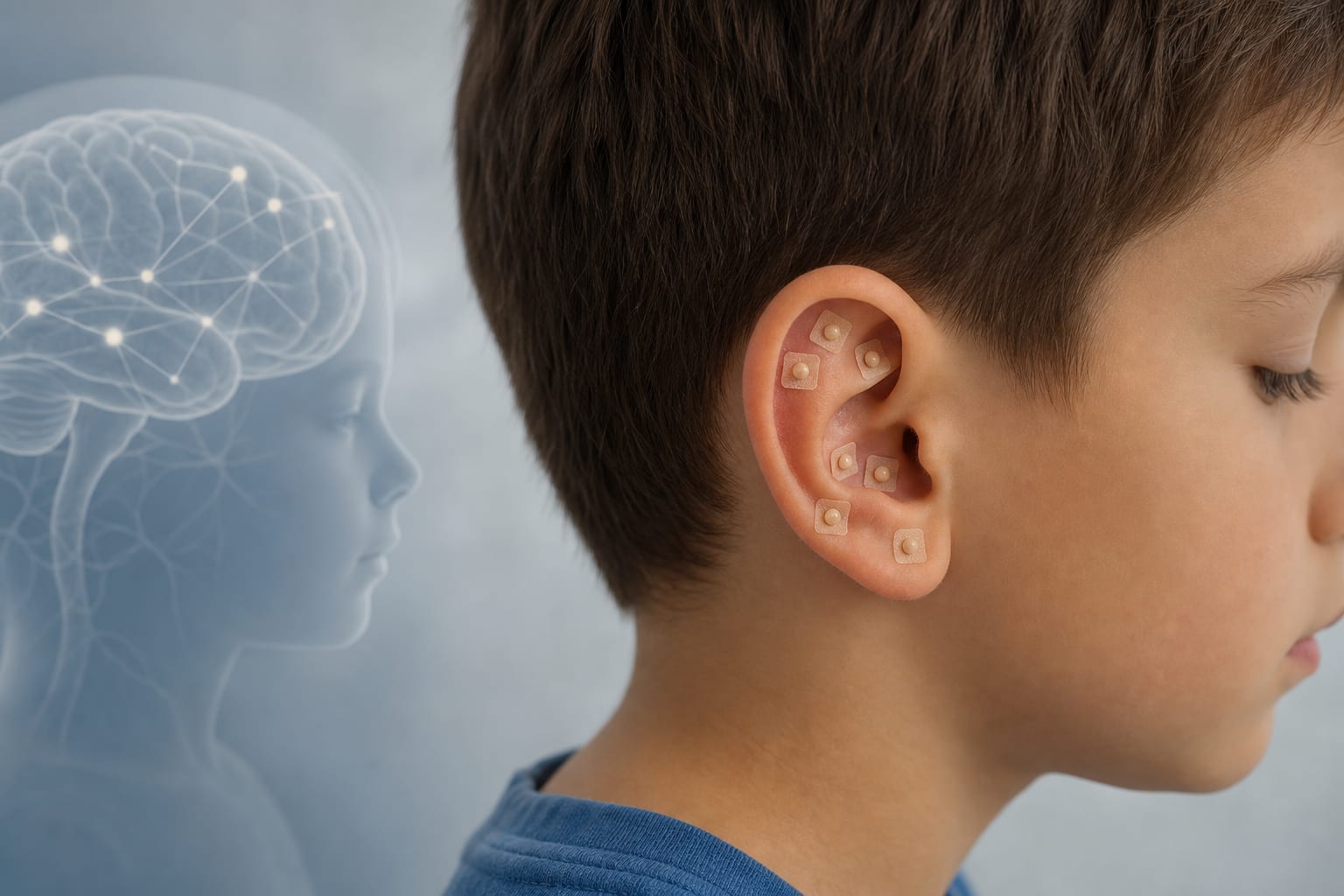
To synthesize current evidence from randomized controlled trials (RCTs) and non-randomized controlled trials (NRCTs) regarding the efficacy of auricular therapy as an adjunctive treatment for ADHD.
Approach:
Study Design: Conducted a scoping review by searching 7 databases for randomized and non-randomized controlled trials related to ADHD and auricular therapy.
Data Analysis: Risk of bias was assessed using Cochrane ROB2 and ROBINS-I tools, study characteristics were tabulated, and meta-analyses were performed.
Key Findings:
21 studies involving 2,270 participants were included.
Auricular therapy significantly improved scores on Conners' Parent Rating Scale, Hamilton Anxiety Scale, and Hamilton Depression Rating Scale (all P < 0.05).
Quality of life questionnaire scores were also enhanced (P < 0.05).
A non-significant trend toward higher overall efficacy rate was observed (P > 0.05).
No serious adverse events were reported.
Interpretation:
Current evidence suggests that auricular therapy may alleviate ADHD-related symptoms among children with long-term interventions, but the evidence is insufficient for a definitive conclusion.
Limitations:
Risk of bias assessed as low-and-moderate-certainty evidence.
Current evidence is insufficient to support a definitive conclusion.
Conclusion:
Future studies with rigorously designed pragmatic randomized controlled trials are needed in real-world settings.