To examine the phenotypes and mechanisms of sleep-disordered breathing (SDB) in heart failure (HF) and critically evaluate therapeutic strategies for obstructive sleep apnea (OSA) and central sleep apnea (CSA) in patients with reduced and preserved ejection fraction.
Approach:
Literature Review: The article reviewed evidence on the pathophysiology, clinical consequences, and treatment of OSA and CSA in HF, including respiratory instability occurring during sleep and wakefulness.
Treatment Evidence: Therapeutic strategies were evaluated with particular emphasis on randomized clinical trials, clinically meaningful outcomes, HF phenotype, and the limitations of conventional measures such as the apnea-hypopnea index.
Key Findings:
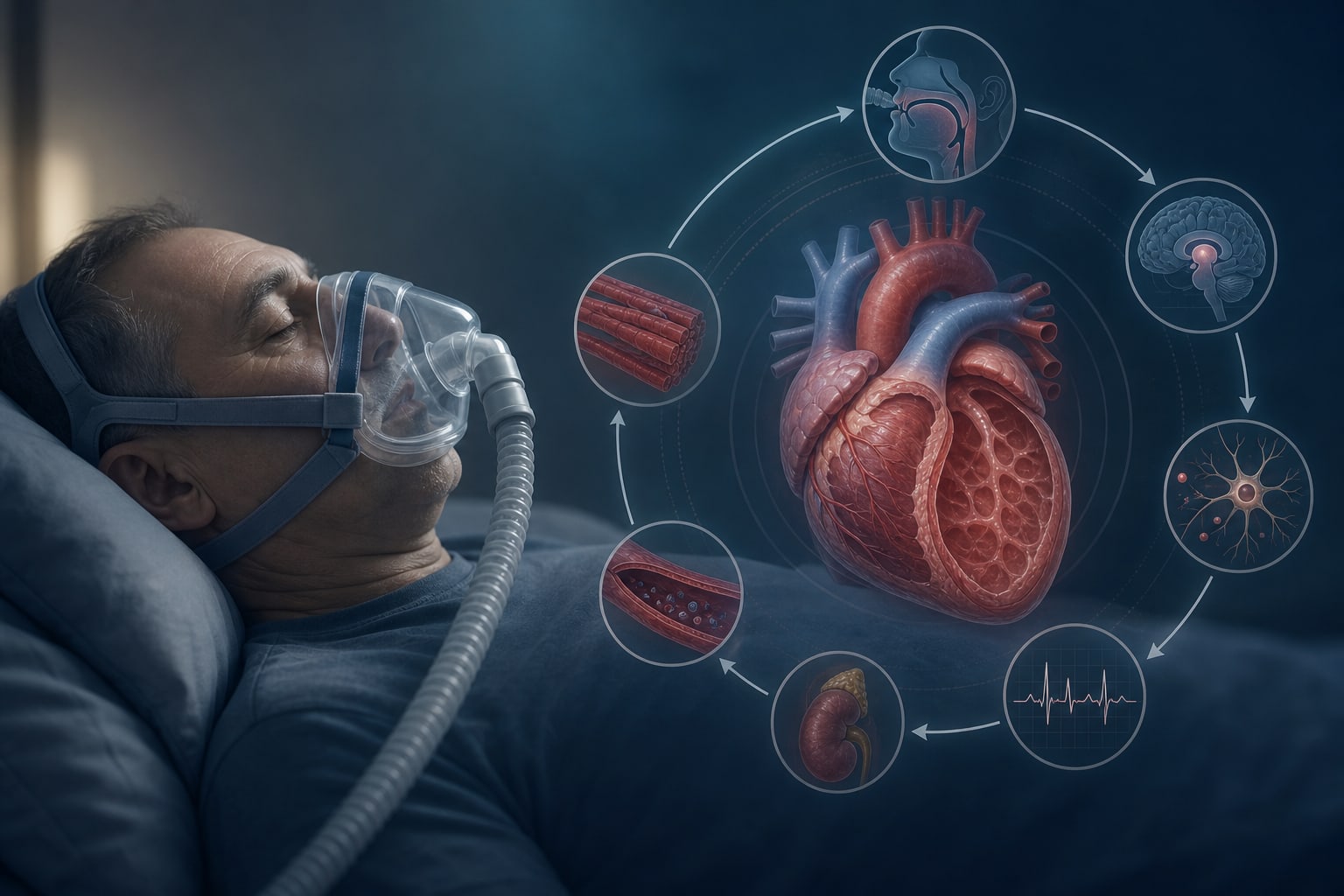
OSA is both a risk factor and prognostic marker in HF and may worsen cardiac function through negative intrathoracic pressure, increased LV afterload and myocardial oxygen demand, intermittent hypoxia, arousals, and sympathetic activation.
CPAP can improve symptoms, oxygenation, apnea severity, and selected physiological measures in patients with OSA, but HF evidence is derived largely from small, short-term studies, and reductions in mortality or HF hospitalization have not been demonstrated.
CSA is generally considered a consequence of HF and reflects ventilatory-control instability. CPAP and adaptive servo-ventilation have not consistently improved long-term clinical outcomes despite effects on surrogate measures.
Respiratory instability may persist during wakefulness and in the upright position, indicating a broader cardiorespiratory disorder that conventional nocturnal testing may not fully characterize.
HF phenotype, sex, etiology, obesity, hypoxic burden, autonomic responses, and ventilatory-control characteristics may influence cardiovascular risk and treatment response, although supporting evidence remains limited.
Interpretation:
SDB is common in HF and is associated with adverse remodeling, arrhythmias, and worse clinical outcomes, but physiological improvement after treatment has not consistently translated into better survival or fewer HF hospitalizations. OSA and CSA should not be treated as equivalent disorders: OSA represents a potentially modifiable contributor to HF, whereas CSA may primarily reflect HF severity or a compensatory response. These distinctions support phenotype-specific assessment and management rather than treatment based solely on the apnea-hypopnea index.
Limitations:
Evidence for treating OSA in HF is based largely on small, short-term trials using surrogate endpoints, many conducted before contemporary guideline-directed HF therapy.
Evidence is strongest in HFrEF, whereas data for OSA and CSA treatment in HFpEF remain limited and frequently derive from observational studies, small trials, or subgroup analyses.
Evidence regarding sex differences, HF etiology, and individual treatment responsiveness remains incomplete.
Conventional nocturnal metrics, particularly the apnea-hypopnea index, may not adequately capture hypoxic burden, autonomic responses, daytime respiratory instability, or cardiovascular risk.
Conclusion:
SDB in HF is a heterogeneous cardiorespiratory disorder for which improvements in physiological measures have not consistently produced better clinical outcomes. CPAP may improve symptoms and selected measures in OSA, whereas therapies targeting CSA have generally shown neutral or adverse long-term results in HFrEF. Management and future trials should integrate HF phenotype, symptoms, oxygenation, underlying pathophysiology, and patient characteristics rather than focus solely on reducing the apnea-hypopnea index.
Advanced heart failure and transplant cardiologist Sanjeev Kumar Gulati, M.D., FACC, has joined Baptist Health Heart & Vascular Care, and will serve as executive deputy director and system chief of cardiovascular medicine