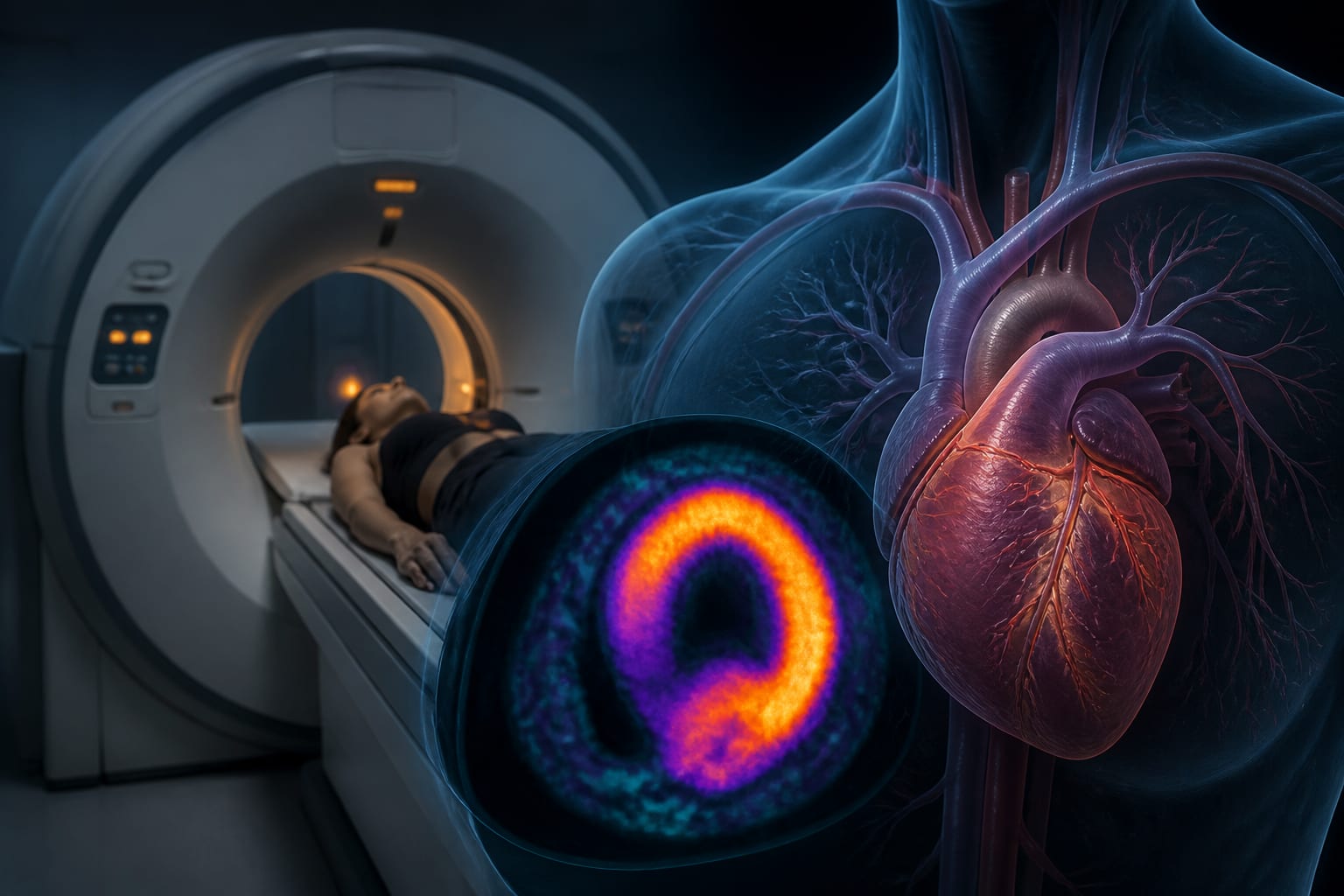
To examine whether current or former anabolic-androgenic steroid (AAS) use is associated with coronary microcirculation in women.
Approach:
Design and participants: Cross-sectional substudy of 54 resistance-training women without a history of cardiovascular disease: 20 current AAS users, 17 former users, and 17 never-users.
Assessment: Myocardial flow reserve (MFR) was measured using resting and adenosine-stressed rubidium-82 PET/CT as the ratio of stressed to resting myocardial blood flow.
Key Findings:
Mean MFR and the frequency of clinically or subclinically impaired MFR did not differ between AAS-use groups and controls.
Among former users, longer cumulative AAS exposure was associated with lower MFR; the association remained after adjustment for age and time since cessation.
Resting myocardial blood flow was lower in current users than in controls.
Interpretation:
The authors report no overall MFR difference among current users, former users, and nonusers, but found an association between longer AAS exposure and lower MFR among former users.
Limitations:
The cross-sectional design does not permit causal inference.
The sample size was small.
Conclusion:
Overall MFR did not differ by AAS-use history, while longer cumulative exposure was associated with lower MFR among former users.
New research identifies metabolic signatures that could help predict which patients with Chagas disease are most likely to develop serious cardiac complications