VR-based nature interventions for health promotion in long-term care facilities (Nature Boost)—a mixed-methods feasibility study protocol - Summary - MDSpire
Advertisement
VR-based nature interventions for health promotion in long-term care facilities (Nature Boost)—a mixed-methods feasibility study protocol
To assess the feasibility and acceptability of a virtual reality-based nature intervention in long-term care facilities and explore psychosocial effects ahead of a future randomised controlled trial.
Approach:
Study Design: Two-centre feasibility study using a mixed-methods design, focusing on qualitative evaluation.
Participants: Ten residents and ten nursing staff members from two long-term care facilities.
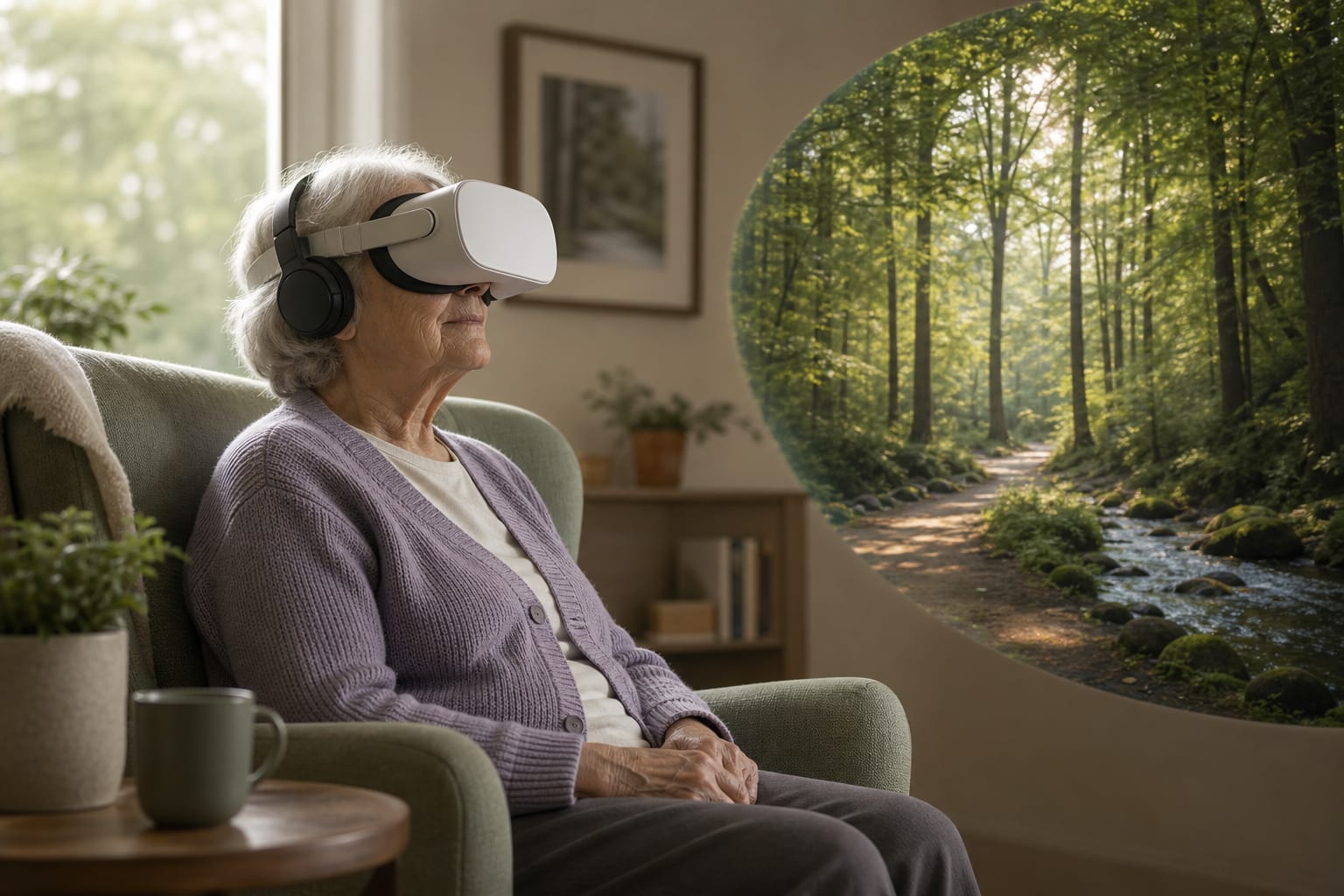
Intervention: Participants complete twelve 15-minute virtual reality sessions using a 360° forest video over four weeks.
Assessment: Feasibility assessed through semi-structured interviews; secondary outcomes analyzed using quantitative descriptive analysis.
Key Findings:
The study aims to provide insights into the feasibility of implementing virtual reality-based nature interventions in long-term care.
The intervention addresses barriers and facilitators for residents and nursing staff.
The feasibility framework may serve as a template for international adaptation of virtual nature interventions.
Interpretation:
Limitations:
The study is limited to two centers and a small sample size.
Results may not be generalizable to all long-term care facilities.
Conclusion:
The feasibility study will inform a full-scale effectiveness trial and provide valuable insights into the implementation of VR interventions in long-term care.
The largest study of former National Football League players found excess persisted even after accounting for the lower overall mortality associated with elite athletic participation.