Research progress on the effects of epidural electrical stimulation on lower extremity function in patients with spinal cord injury - Summary - MDSpire
Advertisement
Research progress on the effects of epidural electrical stimulation on lower extremity function in patients with spinal cord injury
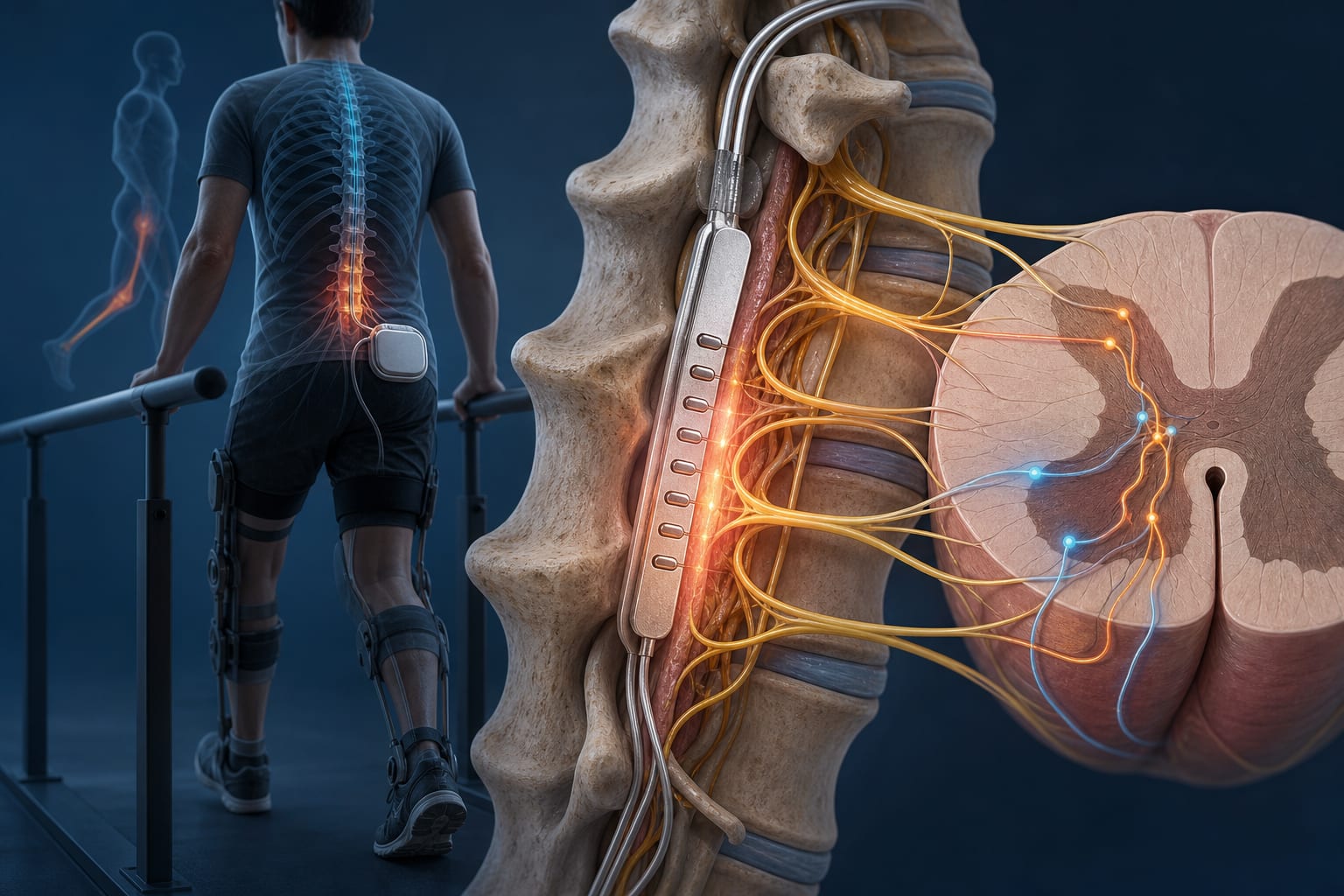
To review the pathophysiological basis of spinal cord injury (SCI), the neural mechanisms underlying epidural electrical stimulation (EES), its clinical efficacy, and combined therapeutic approaches.
Approach:
Narrative Review: The study narratively reviews the mechanisms, efficacy, and limitations of EES in enhancing lower extremity motor function in SCI patients.
Key Findings:
EES can increase spinal motor network excitability and improve lower extremity functions such as standing, stepping, walking, and spasticity control.
EES shows potential benefits in patients with chronic incomplete SCI and in a subset of those classified as having motor-complete SCI.
Therapeutic benefits of EES are influenced by factors such as injury severity, stimulation parameters, electrode configuration, and rehabilitation intensity.
Interpretation:
EES may promote functional recovery in patients with chronic incomplete SCI and in some with motor-complete SCI, but its effectiveness is influenced by various patient-specific and technological factors.
Limitations:
Current evidence is limited by small sample sizes and study heterogeneity.
Further research is needed in multicenter randomized controlled trials, standardized outcome assessments, closed-loop programming, and long-term safety evaluations.
Conclusion:
Further studies are required to establish the clinical application of EES for enhancing lower extremity function in SCI.