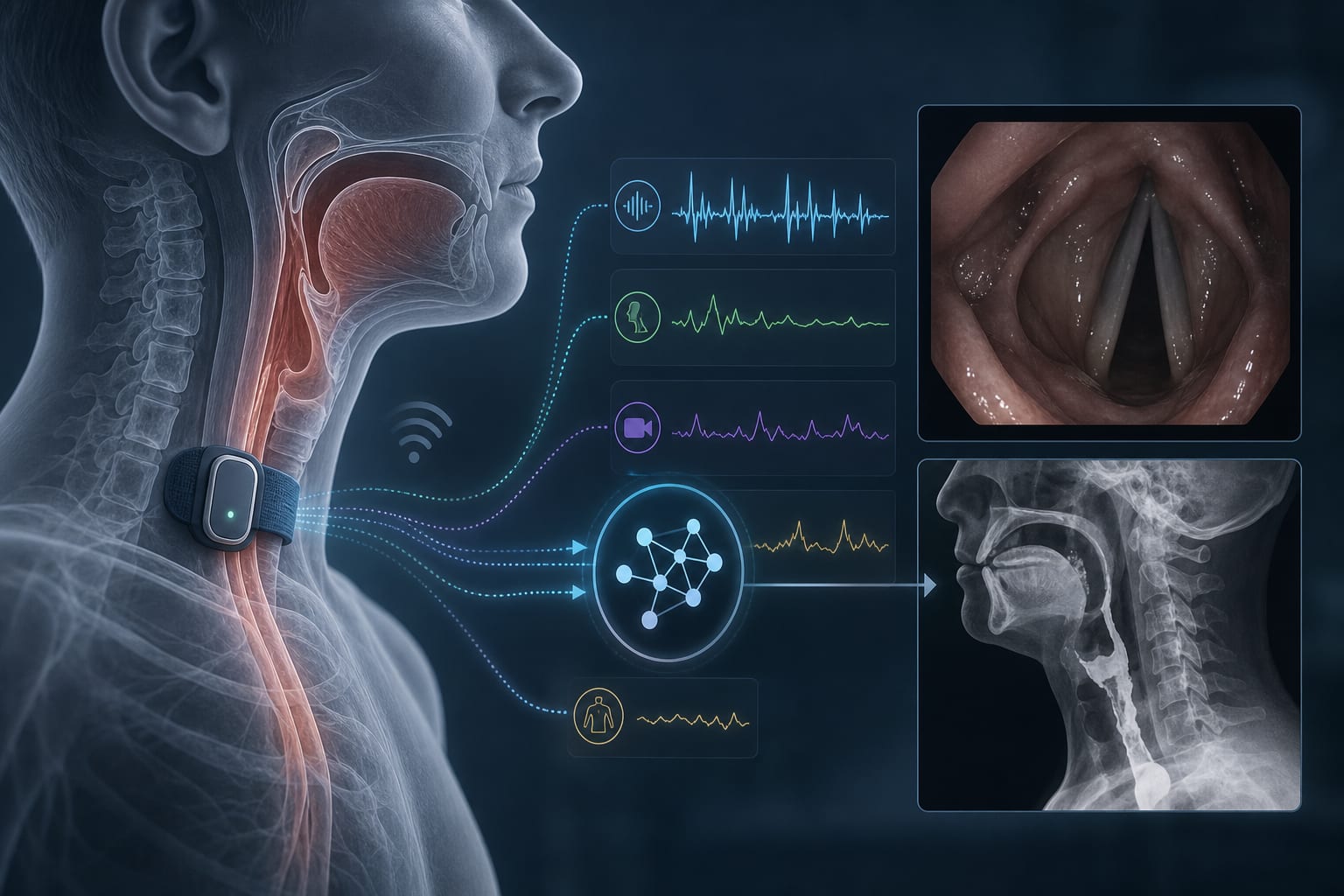
To evaluate the effectiveness of a specific multi-sensor system in discriminating between normal swallows in healthy adults and abnormal swallows in patients with post-stroke dysphagia.
Approach:
Participants: Two groups were included: 108 healthy adults with no dysphagia history and 108 stroke patients diagnosed with dysphagia, both assessed using videofluoroscopic swallowing study (VFSS).
Key Findings:
Multi-sensor systems showed improved differentiation between normal and abnormal swallowing patterns compared to single sensors.
The study focused exclusively on post-stroke dysphagia to reduce heterogeneity in the sample.
Interpretation:
The findings suggest that integrating multiple non-invasive sensors may enhance the assessment of dysphagia in post-stroke patients.
Limitations:
Existing literature on multi-sensor fusion for dysphagia assessment is limited and methodologically constrained, particularly regarding sample size and diversity.
The study may not generalize to other populations with dysphagia due to its focus on post-stroke patients.
Conclusion:
The study indicates the potential of multi-sensor systems for non-invasive dysphagia assessment.
Plasma proteomic models of more than 40 cell types were associated with incident Alzheimer's disease, amyotrophic lateral sclerosis, cancer, and mortality across three large cohorts.