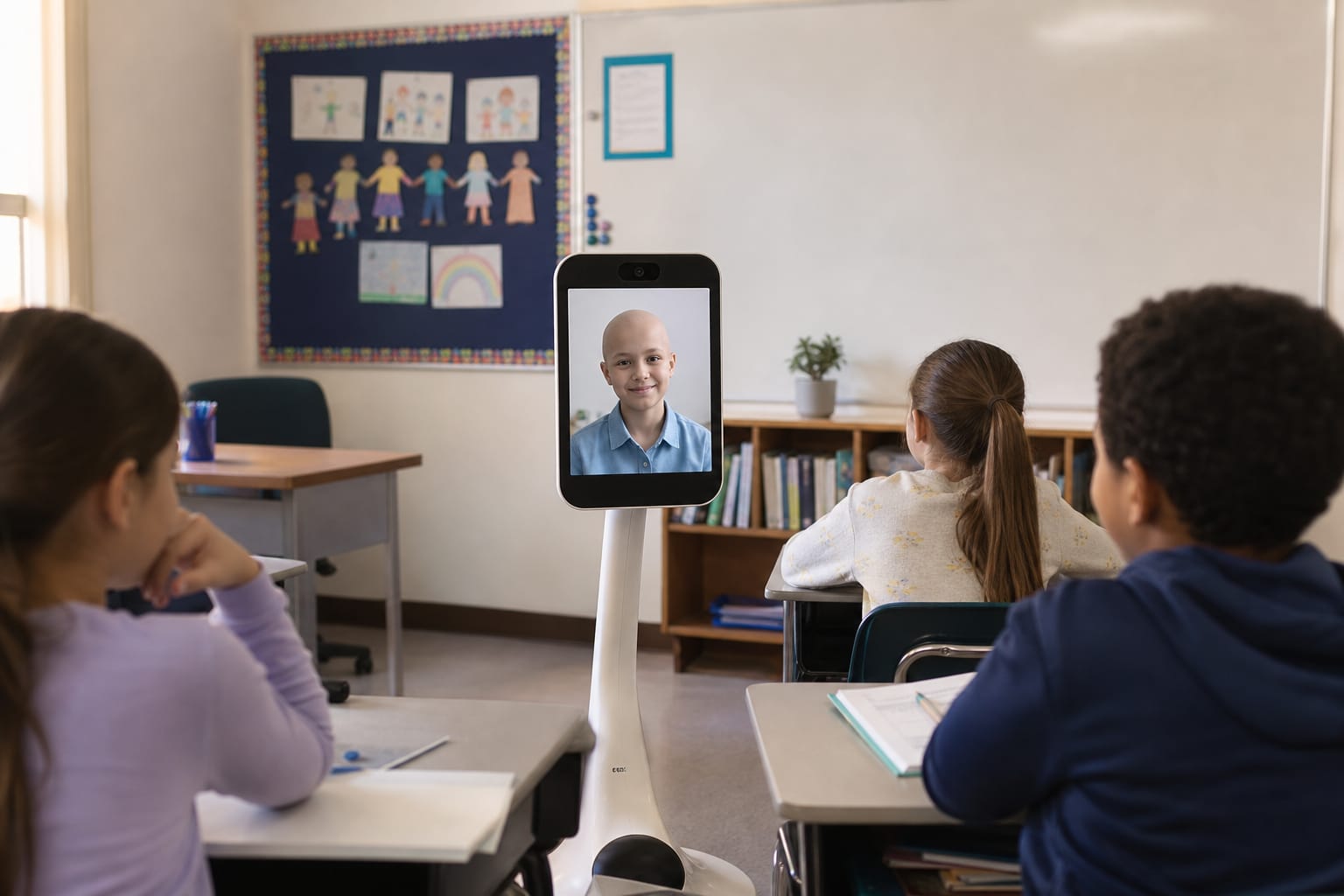
To examine perceived barriers and facilitators to the implementation of telepresence avatars in schools from the perspectives of teachers and parents.
Approach:
Survey: A cross-sectional teacher survey was conducted, assessing perceptions via a quantitative questionnaire.
Interviews: Exploratory qualitative interviews were conducted with three parents of children with cancer who used telepresence avatars.
Key Findings:
Teachers (N = 298) reported moderate technical and organizational barriers to telepresence avatar use.
Teachers with experience in pediatric cancer and telepresence avatar use reported lower barrier levels.
Key facilitators included technical resources, organizational support, leadership endorsement, and training.
Parents highlighted the potential of telepresence avatars for maintaining academic and social participation, alongside challenges like technical instability and unclear responsibilities.
Interpretation:
Successful implementation of telepresence avatars depends on contextual and organizational conditions rather than solely on the technology.
Limitations:
The study's findings are based on a limited sample size of teachers and parents.
The perspectives of other stakeholders, such as peers and school administrators, were not included.
Conclusion:
Telepresence avatars have the potential to support the social and academic participation of children with cancer during school absences.