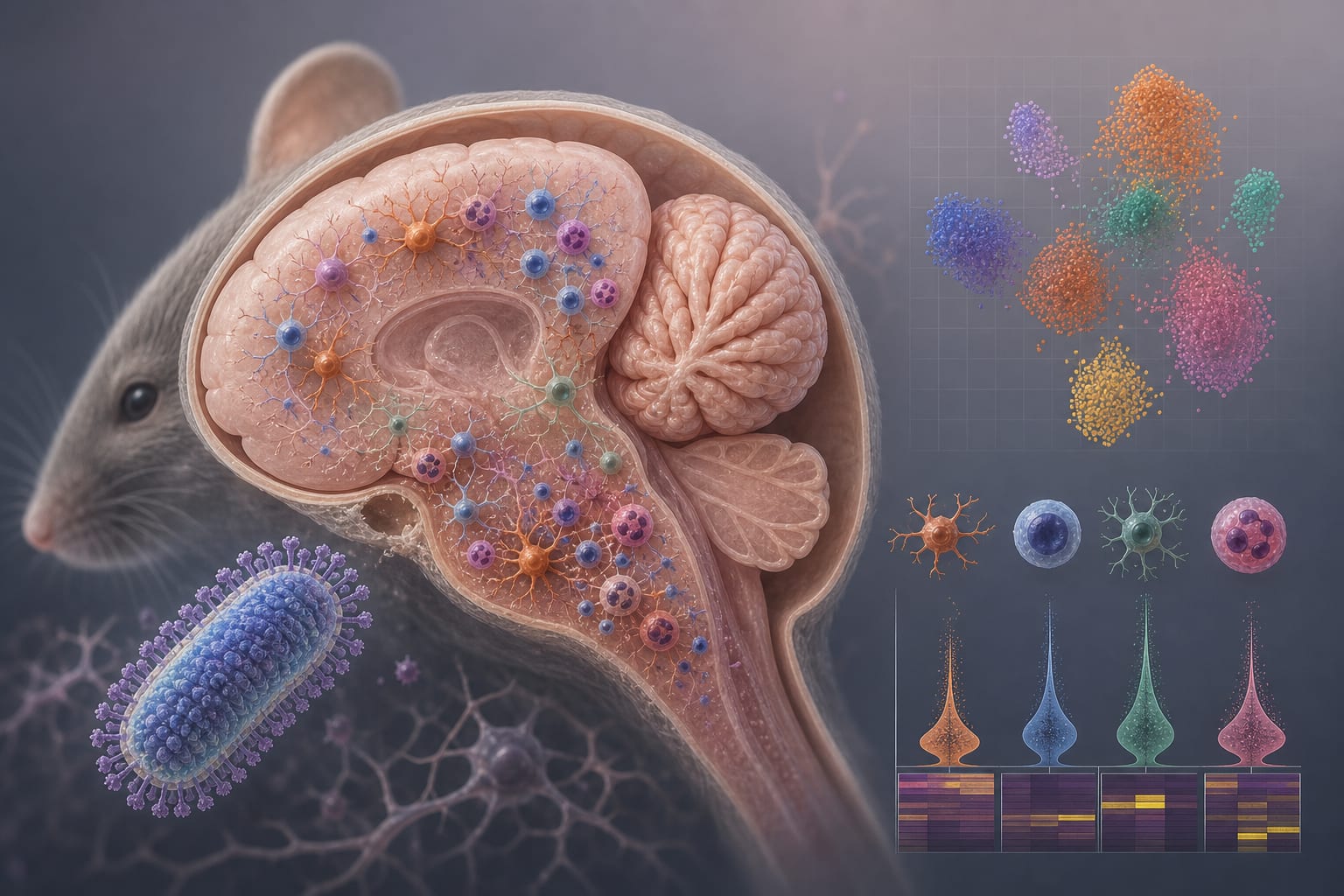
To depict the immune response after CVS-11 and SRV9 infections at single-cell resolution, addressing the immune mechanisms influencing RABV infection outcomes.
Approach:
Single-cell RNA sequencing: Performed on brains from CVS-11 infected, SRV9 infected, and mock infected mice, analyzing over 100,000 cells to construct a comprehensive atlas of CNS immune responses.
Key Findings:
CVS-11 infection was associated with transcriptional signatures indicative of a trend of microglial shifting toward a phagocytic signature, elevated expression of genes related to excessive neutrophilic inflammation, downregulation of NK cell functional genes, and increased expression of T cell exhaustion-related genes.
SRV9 infection correlated with microglial features indicative of an immunoregulatory phenotype, enhanced NK cell antiviral function, and more coordinated T cell activation and memory formation.
Distinct patterns of immune responses were observed between virulent and attenuated RABV strains, with CVS-11 associated with dysfunctional responses and SRV9 with protective features.
Interpretation:
The study indicates that virulent and attenuated RABV strains induce different immune responses in the CNS.
Limitations:
The study focuses on mouse models, which may not fully replicate human immune responses.
The analysis is limited to specific immune cell types and may not encompass all relevant cellular interactions.
Conclusion:
The findings provide insights into the immune mechanisms underlying RABV infection outcomes.