Interaction between fatty pancreas disease and genetically predicted glucose-dependent insulinotropic polypeptide on incident type 2 diabetes: evidence from the UK Biobank - Summary - MDSpire
Advertisement
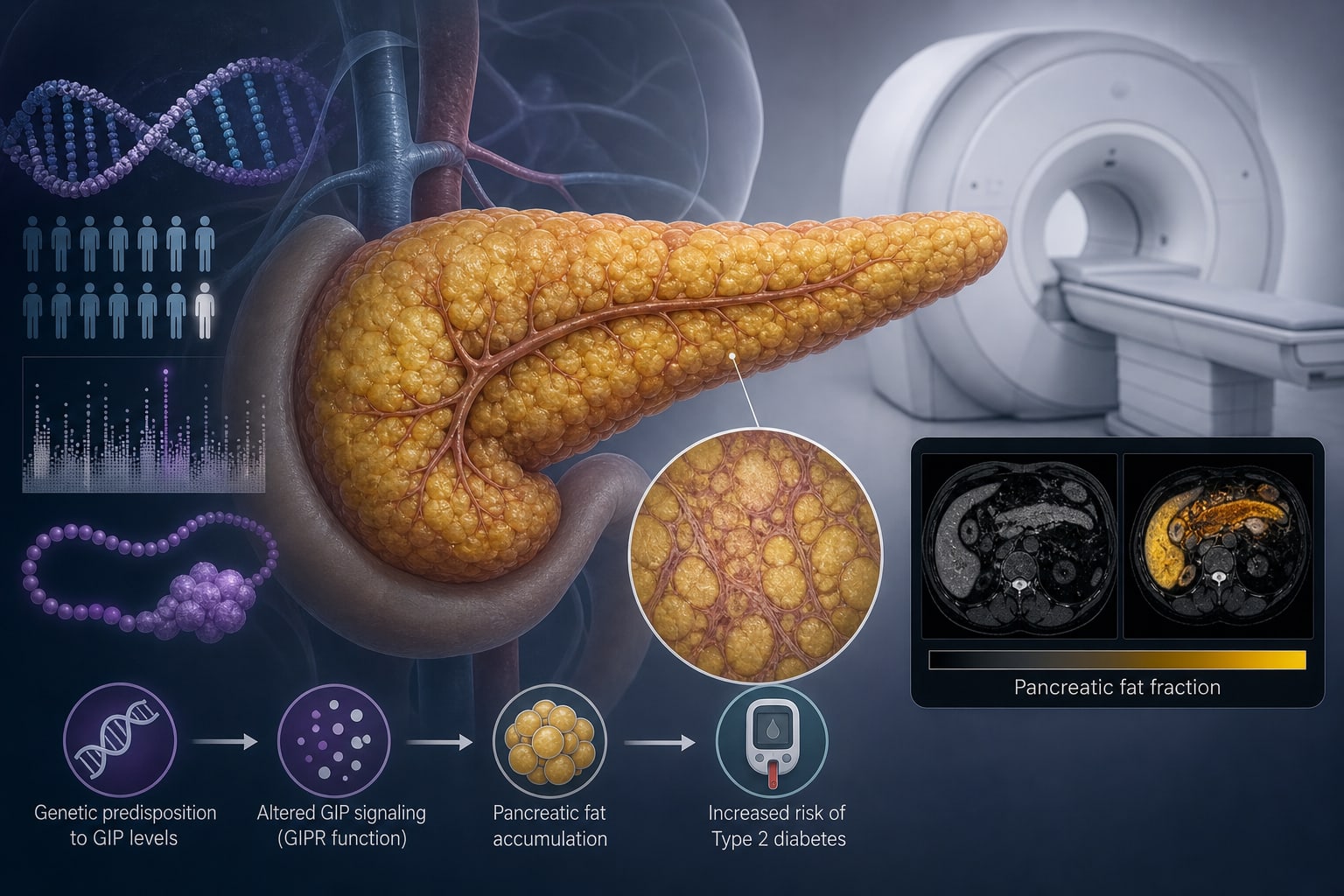
Interaction between fatty pancreas disease and genetically predicted glucose-dependent insulinotropic polypeptide on incident type 2 diabetes: evidence from the UK Biobank
To investigate the interaction between genetically predicted GIP levels and fatty pancreas in the development of type 2 diabetes (T2D).
Key Findings:
Significant interaction between E354Q carrying status and FPD in T2D development (p for interaction = 0.018).
Significant interaction between 2hGIP PRS and FPD in T2D development (p for interaction = 0.015).
FPD is associated with increased T2D risk in individuals without E354Q (HR 2.44) and with higher genetically predicted postprandial GIP (HR 2.64).
Interpretation:
Genetically predicted GIP modifies the risk of T2D associated with FPD, indicating a potential link between pancreatic fat accumulation and metabolic dysfunction.
Limitations:
Study limited to individuals of White ethnicity, which may affect generalizability.
Findings based on genetically predicted rather than directly measured GIP levels.
Conclusion:
The study suggests that GIP may play a role in linking pancreatic fat accumulation to metabolic dysfunction.
Age-related macular degeneration (AMD) is among the most common retinal diagnoses. Although the clinical features of the disease are well known, ICD-10 coding can be confusing if details such as stage, activity, and laterality are not clearly documented. Incomplete documentation may prompt questions about the medical necessity of diagnostic tests or intravitreal injections. This Q&A addresses common sources of confusion and offers practical guidance to support clear, accurate documentation.